EPISODE #123
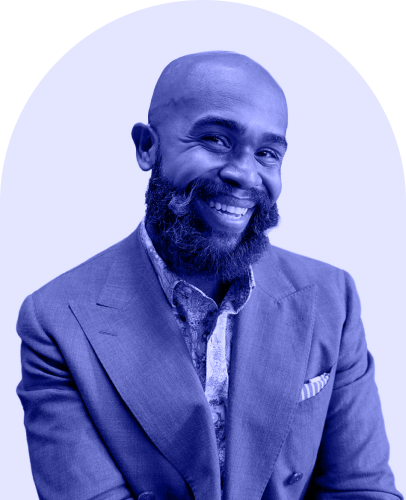
DAVID QUARLES
Seeing Music, Designing Emotion, and Turning Hardship into Joy




Some people see the world differently. David Quarles IV happens to hear it differently, too — and that difference changed the course of his life.
This week on The Market Makers, Jon Pertchik sits down with, as he puts it, “one of the most fascinating guests,” and dives deep into Quarles career. While he’s known for his interior design work and content creation, at heart, he’s always a creative first. A self-described multi-hyphenate who refuses to be put in a box, his talents include designing jewelry and Zumba instruction.
But what sets him apart from everyone else in the industry isn't just the range of his work. It's the way his brain works. David has synesthesia and chromesthesia. This means he sees numbers as colors, and when music plays, he doesn't just hear it. He sees it. "When I hear music, it's as if I'm thrown into a kaleidoscope," he explains to Pertchik. "At the end of a song, I'm able to pick out an entire color palette."
His second-grade teacher was the first to recognize it, but what could have become a hurdle turned into the foundation of his work — spanning jewelry collections assembled on Sunday mornings to interior spaces designed not from a mood board but from a playlist. If his clients don’t know how to describe the feeling of a room, he gives them a simple request. "Make me a playlist.” From there, he pulls the colors, the textures, the entire feel of a room straight from the music they chose. It's one of the most original design processes in the industry that generates real results.
Underneath all of it is a philosophy that keeps surfacing throughout the conversation: home should make you feel like the best version of yourself. "We charge our phones every single day," Quarles says. "Why can't we charge ourselves? That's what a home should do." That conviction traces back to a childhood shaped by a father who made silver jewelry by hand and sketched building plans on napkins, and a grandmother who mixed her own paint colors every season because what came from the store was never quite right. He absorbed all of it — and has spent his career giving it back to his community and clients.
Quarles took what could have been a huge obstacle and turned it into a superpower. He only remembers his childhood in summer, through a golden filter. And that's exactly how he wants to make the world feel.
Next on the horizon? A move to Puerto Rico, and his sights set on slowing down and making time for new and intentional projects. And for David Quarles, slowing down and scaling up somehow look the same.
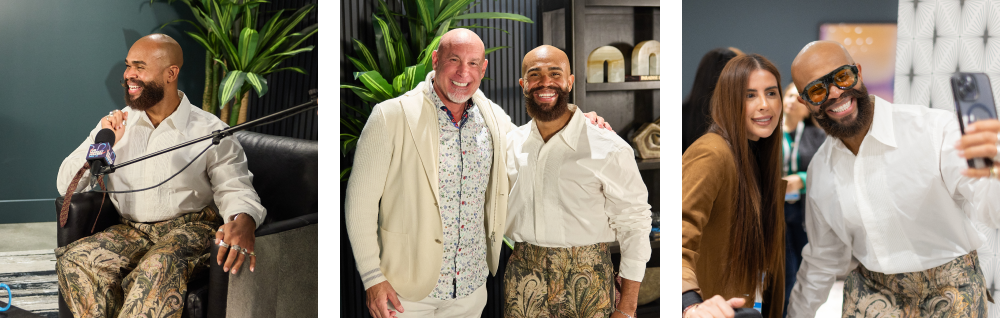
David Quarles
When I hear music, it's as if I'm thrown into a kaleidoscope and at the end of a song it's kind of like I would go into a room of whatever the color assignment is and I'm able to pick out a color palette of a song.
Jon Perchik
Today on The Market Makers, David Quarles, multi-hyphenate creative with synesthesia, chromesthesia, lots of syllables, amazing, one of the most interesting people I've ever had a chance to speak to. And not only just was he fascinating how he sees the world and hears the world, but he's taken things that to most people would've been disabilities, lack of capability, and then turn them into his superpower, turn them into something that creates value and beauty for the rest of the world. It's an amazing, amazing experience getting to speak with David.
Boy, there's a lot of places to start. What's so impressive about you, there's a number of things that are impressive, but the range of how you express yourself creatively is... I'll start again like Zumba instructor. I know that's a little tiny, small part of you, but designer and I love this term which I had never heard before and I'm going to ask you to explain it or define it. What is a multi-hyphenate creator?
David Quarles
Yes, multi-hyphenate creative, because I feel that so many of us, especially just in general, feel that we have to be stuck in one lane. So if we are a photographer, we have to be the photographer and we have to take on the personality of whatever a photographer is or what a drummer is or we can't be an artist and be something else. So multi-hyphenate means that, of course, like with the Zumba, because I used to feel so uncomfortable being an interior designer who was a Zumba instructor, because you really think of interior designers sometimes have to be very serious, very austere, very like I'm a designer all the time. Which is fine, but I'm like, no, I am a Zumba instructor. I have been for 15 years now. Make jewelry. I have a jewelry company. I'd like to do a whole lot of things and I shouldn't just, I guess, pigeonhole myself into one name. And so that's what just like multifaceted, multi-hyphenate.
Jon Perchik
I love it. And so how do you prioritize allowing your creativity to manifest when you are capable of... I mean, you're maybe the first person I've met who's a jewelry maker, wallpaperer, designer, and Zumba instructor and about 50 other things. How do you choose how you're going to express yourself? How does that work in you?
David Quarles
It's a question that someone asked me a long time ago and it's kind of what I ask my design clients, is what emotion do I want to experience in that day? And from there, if I know that I have a lot of work tied to one discipline, I may not do it just because it's going to feel like work. But when I want to really do it, when I just want to wake up and create a reel, or when I want to wake up and just practice designing a room that has no clients, I'm not the client, I just want to design a room. That's kind of how I do it, but then it's also from a sense of duty because I mean, I have businesses to run, but I will wake up in the morning and I section out my days. So I'll do either interior design first thing in the morning or since I like to wake up earlier than the rest of the world, I'll take care of a lot of the emails that's on the content creator side.
And so, I can have those questions already answered. That'll leave me to do the design during the day, content creation at night and I save jewelry making for every Sunday, because that is kind of like my... well, for everyone, it's like your rest day. But for me, jewelry is one thing that I don't have to necessarily share in order to make someone happy. I don't have to share my person, but I share my creativity and I'm weaving a story in what I'm creating for someone. And so it's just a good day to do that, like zone out on music and everything like that. So yeah. And then Zumba, it happens at night and the weekend. So I can divide it.
Jon Perchik
I see.
David Quarles
Yeah. So everything has its place.
Jon Perchik
Is the jewelry making almost like meditative? The way I was listening to what you were describing, what I was hearing was not making jewelry like I would think of it. I'm using my hands here, but it sounded almost like it was meditative for you. Is that sort of serves a place like that?
David Quarles
Yeah. To be honest, the way that I have my beats and my materials organized is by color. And so a lot of times a lot of my collections for jewelry will be based upon what genre of music I'm listening to or what is the music. And so I'll just put on a playlist and kind of pick out the colors of what I'm hearing in the music through the materials that I use. So it's fun.
Jon Perchik
It sounds like you almost go into this different head space and you wake up out of it and there's these things you've created.
David Quarles
And it's dark.
Jon Perchik
That's amazing. Well, I mean, let's jump into the color thing, because what I'm really... And there's a number of reasons. I mean, part of this is I'm curious about your journey and sort of the origin story of your creativity. And so share the story, if you would, starting in second grade with your teacher.
David Quarles
So I mean, yeah, it started at home that I would be listening to music with my dad because he's a musician. He's a guitarist. Jimi Hendrix is some of his favorite. So my dad was playing music and I was sitting down and drawing, and he would see that I'm just scribbling a lot of these colors. And he's like, "What is going on down there?"
But he didn't know. And I would always show him, I was like, "Well, it's your music."
And he still never made that connection and I didn't either. But then I started having difficulties in second grade and with just doing math and my teacher would notice that when she would give us math problems, I would respond in color or I would either not say anything, take a little bit and I would delay in giving an answer or I would respond in color. And she's like, "Well, something's getting crossed. I don't know what it is, but I'm thankful." Ms. Roten, she's still out there. Thank you.
Jon Perchik
Ms. Roten, wow.
David Quarles
So she was amazing because she ended up looking and was like, "Well, no, this is what synesthesia is."
And it's a type of neurodivergence, but it's just the way that I take in information. And so thanks to her, she made sure that I did not fail math and kind of customized my learning for math through colors. And so now I'm able to remember different math problems or numbers in general based on the colors that my brain naturally assigned to the numbers. So for me, one is white, so zero is black. And then two and seven are kind of the same color of a terracotta, three is blue, four is yellow and five is red. And so of course when I was going through it, when I was little, I was like, "Oh my goodness, wait a minute, I'm becoming an X-Men."
It felt like a superpower, but it also I think I was a little bit... I wasn't allowed to feel down about it for very long because I saw that it was giving me difficulty in learning, but thankfully my teacher got with my parents and they were like, "This is not going to happen. No, you're good. It's just the way that you understand information."
And so they ended up turning what would, I guess, be a difficulty for learning and they turned it into a superpower and it's how I'm able to retain information now. But from that point forward, I will say it's how I started creating. And when I would personally get stumped, I would listen to music and that's what I'm inspired by. I'm starting to sing colors and textures.
Jon Perchik
This is really interesting. David doesn't just hear music. He actually sees it and throughout his life that has completely rewired how he thinks about design. Speak to chromesthesia then. So the synesthesia, as I understand it, is that visual sort of orientation where a number you see as a color and you assign, that's how you take it in. And chromesthesia is-
David Quarles
Is through music. And so for me, when I hear music as if I'm thrown into a kaleidoscope, so yes, you do see patterns, but you see colors and it's kind of like, I don't know, was it Batman, like the old Batman when they used to go through this tunnel? That's what I see. And at the end of a song, it's kind of like I would go into a room of whatever the color assignment is and I'm able to pick out a color palette of a song. And so with that, I have used that in my creativity as far as my jewelry making. And when I got deeper into my interior design practice and I would see where clients are, they know how they want their space to function. That's great. We can take care of that. But then how do you want the space to look? How do you want it to feel?
And one of the questions that I do ask them is the one that was asked me like, "What emotion do you want to experience when you walk into this room or into your home, but throughout the day?"
So in the morning when there's nice little morning light coming in, midday, at night when you're winding down. From there, if they're not able to express that and I'm seeing them having difficulty, they may say that they just want it to be pretty or they want it to look good. I want to know how is it going to make your soul feel better? So make me a playlist and if you make me a playlist based upon how you're wanting to, or just make me a playlist of what that room represents, I'm able to get what feeling you're trying to have or assign to that room through the song and then we pick out the colors. We pick out all of the materiality based upon what music.
Jon Perchik
The other thing that jumped out at me when you did your TED Talk was you showed a kaleidoscope and to me that made me understand as much as one can understand what you experience. I mean, maybe share that. Music plays and I might hear the music just comes into my ear and I experience the sound. What I gathered from that is you hear that music and you get this visual aura. I don't know. How would you explain it? It was like a kaleidoscope you shared.
David Quarles
Yeah. And I think one of my favorite things with music is hearing a song for the first time and I love it, because it almost... You know how you get so excited? Maybe this just happens to me, I don't know, but you get so excited, you get nauseous a little bit. You're like, "Oh my God, it's just so many emotions and I can't take it right now."
And that's what happens with me whenever I hear music and more than just getting goosebumps, it's almost as if your soul gets goosebumps and it's so many emotions in one. And that's what happens when I hear music because it's not just me hearing it, but I'm seeing the music and I'm feeling the music, and almost I guess smelling the music because it attacks all of my senses. I guess that's why my work is so emotional, because with using the words like drenched or with using the thing like color drenching, this room is kind of like that now. It communicates the intensity with which I like to design, but how I want a person to feel their home from a place of love. So I want them to feel drenched in love. I want them to feel saturated in joy. That's how I design, but that's how I want them to connect to their home through music that they chose.
Jon Perchik
So I'm going to jump off of that, but sort of like as I'm picturing this is this puzzle or this mosaic, which is you, that's a big part of it.
David Quarles
Yeah.
Jon Perchik
Another part of it, and you used the word I think three or four times already as soul or soulful and I love that. Speak to where that comes from and even maybe if it does tie to your heritage, Dominican heritage or tell me where that comes from.
David Quarles
I think since my learning of interior design initially came from my family. So my dad, although a musician-
Jon Perchik
Jewelry maker too?
David Quarles
Yeah, jewelry maker. So he's the one who taught me to make jewelry, because he used to make jewelry from my mom. And that's a great benefit, but it would be like turquoise and coral jewelry but silver, and he would do all of the silversmithing himself. And so besides that, on the weekends I would see him just like drawing maybe on a napkin, a structure has all of the measurements and it's also the structure that we're going to be building that next weekend because I did carpentry with him. But when my grandmother used to keep me as well, I would always see her every season, or every weekend it felt like, changing out her pillows, changing out the flowers in her home and she was never satisfied with the paint that would come directly from the store.
So she used to just get white bases of paint and make her own paint colors. And so I learned how to express myself in curating spaces through my family, but because of the emotion that was tied to, I was so happy to work with my dad or I was so excited to go over my grandmother's house, because I'm like, "What color is it going to be today?"
And after I learned that my love for doing that to my own space is also a profession, that's kind of how I came into wanting to study interior design, but it was always a familiar thing because it meant connection to family.
Jon Perchik
So what happens when someone with that much creative instinct ends up in a corporate job? One thing I love about this industry down to its core is, this is corny a little bit, but I really love this is the word home is a noun, but I love the word home as a verb, like to home. And what you described, your home, that place as a child, whether your grandmother, your dad, the relationship doing carpentry and watching him make jewelry gave you this joy and this deep happiness. So you were surrounded by creative people who cared about you, which is amazing. How do you go from those realizations and that young period with this great familial sort of support, how do you go from there to starting to head toward what you've become and what you've achieved? What does that journey look like?
David Quarles
Yeah, and I'm trying to see how to answer this and there's no safe way of doing it, but I think I had to have it taken away from me. And so the thing is I ended up working a very corporate job and it didn't fulfill me in any sense whatsoever. I liked the mission that we were working on, so never get that wrong, but it just wasn't my mission necessarily. I felt that I could do it better from a communal standpoint rather than being on staff. And so I felt like I was just being drained. And I think having that taken away from me and almost having my childlike imagination taken away is what gave me a better love for it now. And it's just kind of reconnecting with that seven-year-old David, with six-year-old David and all of the dreams that he had and how he saw the world. Because whenever I think of my childhood or any of my memories, it's as if there's a golden filter over my eyes and I only remember things in summer.
And so that's like, I don't remember winter, period. I don't know why, but that's how I want to make the world feel. We need it now more than ever. And if I can do it through my social media, through content creation with the videos that I get a chance to create, but if I'd get a chance to do it as well with our homes and letting that be your first point. Like we charge our phones every single day, why can't we charge ourselves up too? And that's how I feel that we do in a home. It doesn't have to be expensive. It doesn't have to have every single thing. Cleanliness is also something that we can all take care of and it brings joy, or I can only think when everything is organized. But if I have a hand in helping someone feel like the best version of themselves from the time that they put their feet into their slippers, that's what I want to do.
Jon Perchik
So tell me about moving into content creation. That's such a big part and you really do a lot from vegan recipes and cooking, and wellness and fitness and other things. Tell me about that. Tell me about how the move in migration into that.
David Quarles
It was, I won't say a mistake. It was something that I fell into during the pandemic like a lot of people. I've always wanted to have my TV show, my very own TV show and I've always loved music videos. Me and my sister would always look at music videos and learn the choreography to them. And I think when I had, all of us had a lot of time on our hands during quarantine and so I just took to my camera, just my phone and I'm like, "Wait a minute, what would the scene be to this song?"
So music is always the epicenter of what I do. And from there it kind of became a thing that I would like nerd out on. I always need something to nerd out on. But as well, it came from teaching Zumba during quarantine and I had to find a way to make people feel like they were in the room with me. And you can't do that just like dancing by yourself. I needed to go up and I was like, "No, no, no, I see you in that square. Let me make sure, okay, I see you dancing. Let's dance together."
And I would like hold hands with the person there and the same thing as what I wanted to do in my videos. So it's almost as if I'm holding your hand and-
Jon Perchik
So how do you do that? That's a little tricky. So it's a level of engage... You're trying to engage physically in Zoom, but you can physically, I can reach your hands and I can pull you in. How do you do that?
David Quarles
Through eye contact, through literally making sure that you... I don't know. It's forgetting that the camera's even there and it's going almost through the screen to the person. It's like, no, I know that you're there. I know that you're watching.
Jon Perchik
So you're not looking into the lens, you were looking past the lens, you're looking into the eyes of your audience.
David Quarles
Yeah. And almost like especially within quarantine too, you didn't know who was watching your videos or for content creation period, you know who your audience is, but you don't know who's watching it. I try to take it from the point of maybe it's someone who's watching it that needs a bright spot in their day. So I'll focus on that person when I'm recording and then I go and just try to pull them into my world, and cheer them up through whatever I'm creating. So I see the camera, I guess, as a way of communicating. I don't see it as an apparatus. It's just a channel for me and that's how I kind of got into it, and I love it so much because it's literally you're creating a world or welcoming someone into the world or creating a world for someone to feel better.
Jon Perchik
One of the other areas I really enjoyed reading about your background a little bit and the expression of this was so interesting. It spoke to sort of your design process, your thought process. It was your own space and your carpet named Narissa. Tell me about that. And tell me about the collaboration of designing that carpet. I found that fascinating too and the meaning of the carpet and the central position it occupies in your thought process.
David Quarles
Yeah. So that is for, and it's odd how it came about too, because one, I didn't know that I was on Architectural Digest radar. So I got an email when I was at the gym and randomly started crying and my trainer was like, "What's wrong with you? We're not doing that hard of work."
Jon Perchik
It's not like art, don't cry.
David Quarles
"Shut up. It's not about you. It's not all about you."
Sorry, Courtney. But it became part of being what part of their American Voices of '23. And from there we were tasked with designing rugs with Ruggable. Super cool. Everyone knows of Ruggable and it's like, oh my God, the ones that you can wash. And so I wanted to really challenge myself though because I think that we may see, well, Ruggable is doing an amazing job first of all with their designs, but I wanted to really go for it and make something so maybe not necessarily complex, but so common and I wanted people to have it. And so with Narissa, for me it was the two unknown worlds meeting together. And so, one of my favorite things to do is, and I designed this with going back to Puerto Rico, because PR for me is the coffee bean to fragrance shopping.
So when you just need to clear up your senses and you smell a coffee bean when you're fragrance shopping, that's what Puerto Rico is to me when I'm overwhelmed on mainland.
Jon Perchik
Just let me go. Just level set.
David Quarles
Yeah. And so, one thing that I like to do is just sit in the water, honestly, in the ocean. And I love looking at that line of when the water meets the heavens basically, because it's like, oh my God, is there life up there? But we know there's an endless amount of life there and Narissa is actually the name of a sea nymph. And so that's how I wanted to just kind of merge those two worlds together or communicate the love that I have for the unknown and how we should explore it, and not just in those two realms, but just in life. And so the way of making the unknown beautiful, but also how it's designed.
I love conversation pits, the ones that were like very famous in the '70s, mid-century, but in the '70s. And the way that I designed it is to where you can put furniture around it to where it creates a conversation pit. Why? Because I feel that we need to be a lot more communal now in the world.
Jon Perchik
Also, I remember there's a part, something about the design was sort of a border. It created a sense of gathering. It's a little sort of nudge toward people to come together and gather.
David Quarles
Even if you don't plan on putting furniture around how it's designed, you can sit around it and it almost kind of communicates a configuration of how you can have a conversation without furniture even need to be present. So you can just sit there. And so I always do things from, I guess, an epicenter of joy, community, and making life happy.
Jon Perchik
Again, another area that's really interesting about you, and you sort of started to touch it there was Afro-Caribbean, African-American, you're Dominican, I think you mentioned Liberia. How does that come out through you? How do those different parts and pieces, some of them overlap with others, some of them are distinct. How does that come out in you, like in your creative expression?
David Quarles
I think instead of just like with being a multi-hyphenate, I like to express all parts of me instead of just letting it be one. And so if it's going to be culturally, of course, through the textures that may have been used ancestrally, what were some of the baskets woven out of? And how can I apply that to maybe how velvet can be woven or what colors were used? What colors did they experience? What did color look like back then? We have an imagination of what color may have looked like, but I like to wonder again too, how did they experience things? How did they experience the moon? How did they experience the sun? What did flowers look like back then? And so a lot of it is imaginative work, but with bringing it in how they live their lives. So honoring everything that they went through but everything that they did to create smiles on the daily.
And so it is going to be through the textures and some of the artwork or in some of the things that were made handmade. And the colors of the food, because even in my wallpaper collection that I have, one of them that is Conversations with Rosie, all of her colors are ingredients of food because it's what she liked to use to express her love other than her words, cooking for people. And so it's just going to be, what do plates look like? What does artwork look like? And I'll pick the colors from there and put it into how a space is designed.
Jon Perchik
So much of your perspective underneath it is this theme, a little bit of hardship into joy. So you've said that, not those words, that's me trying to reach a conclusion, but you said that like seven different times here, which is so interesting. You have such an optimistic perspective, whether it's the hardship of your part of your heritage into making people smile or some of what could have been the synesthesia and some of the challenges as a kid into memories of summer. It's amazing your level of optimism. You see it looking at your face right now, you're like glowing over it. I see it coming out of you right now. Is that your family? Is that just... You probably have no idea, but I'm curious if you do have some... Where does that come from? It's so intense in a good way.
David Quarles
Oh, thank you. No, I think it definitely has a lot to do with my family. It has to do with the love that they've shown, but I'd see how they love each other and how they love my siblings, how they love me. It's all different, but it's just as intense. And I think it comes from being in that same situation because I mean, if you're growing up, you have three kids, there's going to be some level of challenge. I'm very thankful to my parents that they never let us witness or feel that. And so it's that same kind of thing, I guess, like how they made sure that we experienced all of the joy that we were supposed to experience as kids. I would like to do that for people who may not.
Jon Perchik
From Memphis to Puerto Rico, David's not slowing down. He's redirecting and his next chapter might be his most intentional yet. David is always adapting. He's always improving. He's always looking ahead and evolving and changing. What is on the horizon? What can you share with folks? Where is your head space as you look ahead? What do you want to do? What do you want to achieve? How do you think about where are you heading next? Again, curious to hear a little bit about Puerto Rico. I think it's part of that, but also more broadly, where are you heading?
David Quarles
Where I'm going physically, yes, Puerto Rico. What do I want to do? Take a year off, and I say a year off. I don't know what off, non-activity is.
Jon Perchik
I don't know that you have an off button.
David Quarles
No.
Jon Perchik
I didn't think so.
David Quarles
But to do less, I'll say.
Jon Perchik
All right.
David Quarles
But I want to study the architectural environment there. I want to study the design environment there first. And then I plan on opening up Studio 417 there, which is our design company that's here on mainland, but opening up to where it's only hospitality. We'll still do residential, but I really want to focus since tourism is such a big thing and I see short-term rentals falling short of design. I think that it would be very beautiful to create experiences that reflect the beauty of the island in homes. And so that's what I want to do.
Jon Perchik
Interesting. Okay.
David Quarles
Short-term rentals, but I also want to have a boutique hotel ultimately there and a coffee shop.
Jon Perchik
Wow. I definitely know where I'm going to go on vacation when you have that.
David Quarles
Yes.
Jon Perchik
David Quarles the fourth. I can't thank you enough. I mean, we should all have a life full of summers and all remember life through just that lens. That is such an amazingly optimistic thing to take away. Thank you so much for taking time. Grateful for the time we had together.
David Quarles
Thank you for having me.
Jon Perchik
Thank you so much. Thinking back, David only remembers his childhood in summer. He remembers things through a golden filter. Everything he recalls is through the lens of summer, no winters. That's how he wants to make the world feel. And if his TED Talk on joyful superpowers doesn't convince you he can do it, his work will. He took what could have been a learning disability and turned it into a design language. "Make me a playlist," he tells his clients, and from there he builds rooms that feel like love.
"We charge our phones every day," he said. "Why can't we charge ourselves? That's what a home should do." That's awesome. I love that. I'm Jon Perchik. Thanks for listening to The Market Makers. If you enjoy today's conversation, follow for more stories of transformation from the people shaping how we live, work, and gather.
Want more conversations like this?
More amazing guests are on deck. Subscribe to stay in the loop.