
EPISODE #124
ALEX SHUFORD III
170 Years of Grit, Debt-Free Growth, and Knowing When to Buy




Behind every family business is a unique story, and for Alex Shuford III, CEO of Rock House Designer Brands, it begins with his great-great-grandfather walking home from a Civil War POW camp at Gettysburg and opening a general store in Hickory, NC. What followed was a remarkable family legacy that included decades of textile manufacturing, a poker game that may or may not have sparked the creation of Valdese Weavers, and the founding of Century Furniture in 1947. Three generations later, Shuford leads Rock House Designer Brands, the company behind Century, Hickory Chair, Hancock & Moore and several of the industry's most respected names.
But as Shuford explains throughout this episode, the family's history isn't a straight line of success. It's a story of repeated near misses. "I think my takeaway was how close they were, how many times, to failure," he says of his grandfather's generation. "But for fortitude and grit, the company would have been lost multiple times."
Shuford didn't set out to join the family business, either. He studied English in college, then spent his early career in the San Francisco Bay Area, eventually buying a small fabric store from two longtime owners. He grew it from two employees to 45, riding the dot-com boom before living through its bust. It was, he says, a real-world MBA. "The buck stops with you," he tells Pertchik, describing days that ranged from fixing a clogged toilet to handling a six-figure account.
That experience shaped how Shuford runs Rock House today. The company is debt-free, deliberately so, after learning hard lessons during the 2008 housing collapse. When Shuford later acquired Hickory Chair, he discovered the deal would leave several small vendors unpaid. Rock House paid them anyway, because it was the right thing to do, and better for their business. "It's selfish for our business," Shuford says. "We've got to take care of the ecosystem."
Looking ahead, Shuford’s candid about where they’re leading with technology and what parts of the business are grounded in human connections. What stays with you throughout this conversation is how often Shuford returns to the idea of preparation. Not luck. Not timing. Just the discipline to be ready when opportunity knocks.
As Pertchik notes in his closing reflection, Shuford was born into a legacy most people only dream of. But legacy, in this case, comes with a mandate: stay prepared, stay humble and never stop earning it.
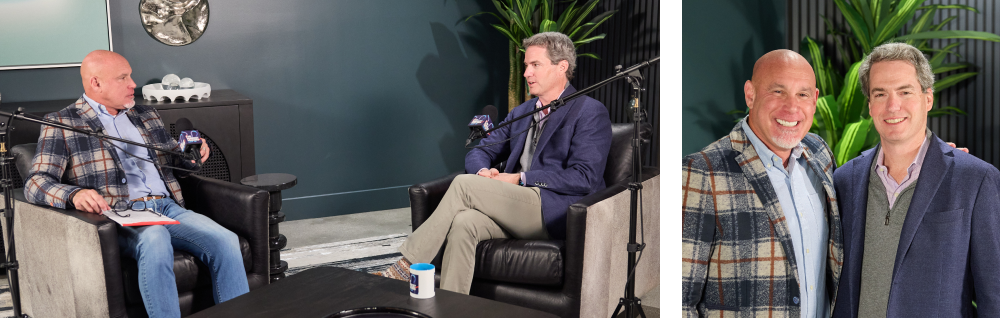
Alex Shuford III
In this three-person group, including my grandfather, met him at the train station and said, "We'll pay you $200,000 more than you paid if you get back on the train and leave." And the guy said, "Quickest 200,000 we've ever made."
Jon Pertchik
Really?
Alex Shuford III
Done. Got back on the train, signed the paper, he got back on the train and left town same day.
Jon Pertchik
Hey, everybody. I'm Jon Pertchik. Welcome back to another episode of our Scale Up Stories. In this series, we step out of the showrooms and into the boardrooms, speaking with CEOs, founders, and business leaders who shape the design, furniture, and lifestyle industries.
Today, I sit down with Alex Shuford III, CEO of Rock House Designer Brands, the family behind Century Furniture, Hickory Chair, Hancock and Moore, and several others of the most respected names in the industry. The first Alex Shuford walked home from a POW camp at Gettysburg and started a general store. Yes, the man actually walked from a POW camp and started a general store. His grandson started Century Furniture, possibly by winning a poker game. Three generations later, the current Alex is running one of the largest private furniture companies in the world. I hope you enjoy the Scale Up Story.
Alex Shuford III
The original furniture company was Century Furniture, and my granddad founded that in 1947, but we go back, as you mentioned, to the 1800s as a textile family. So we were yarn spinners and twine spinners, and before adhesive tape, we, I think, were the world's largest producer of waxed packaging twine. So, that was really the original family.
Jon Pertchik
And where was that? The 1800-
Alex Shuford III
It's all in the Southeast.
Jon Pertchik
Yeah.
Alex Shuford III
Yeah, in North Carolina and we had mills in Georgia and South Carolina, etc. It was a pretty big concern by the time we got into the early-
Jon Pertchik
Do you happen to know the origin of your family getting into textiles in that window?
Alex Shuford III
Yeah. So my namesake, I'm actually, I go by the third, but when they die, we get rid of them. So I'm technically the fifth and the first Alex Shuford. After the Civil War, the classic story was wounded in battle, was actually captured and prisoner at Gettysburg.
Jon Pertchik
Wow, wow.
Alex Shuford III
While a prisoner started trading among other prisoners and got a feel for commerce instead of farming, if you will. Literally walked back to Hickory, North Carolina when released and started a general store in Hickory. And the general store connected him with a few other business people, and-
Jon Pertchik
Do you know how he did that? If you know, I mean, it's such a long time ago. But do you know?
Alex Shuford III
Yeah, it's-
Jon Pertchik
I mean, you just say he just walked home and he started a [inaudible 00:02:26]-
Alex Shuford III
I know, it's like that cold mountain story, right? It's kind of crazy. I just think that, yeah, grittier people back then, right? Now-
Jon Pertchik
For sure. Yeah, no, for sure.
Alex Shuford III
And I'm sure it was weeks and weeks of travel and village to village. But once he got back to town, got into commerce because he-
Jon Pertchik
Was family around? Did he have family around there?
Alex Shuford III
Yeah, it was family in the area, farming sort of area at the time. And Hickory itself was really nascent at that period, but it was a crossroads and it was a trading area because of some of the roads west that went through the area. So he got partnered with a couple other guys, they started a small textile operation. The classic at the time, near a water source that could run a mill will and the whole nine yards. And that became Shuford Mills over time and they had, call it half a dozen to 10 facilities across the Southeast at their peak. Became a pretty big family company, a lot of shareholders, the whole nine yards. Matter of fact, my grandfather worked for his uncle in the '30s, famously. And while working in the textile operation, bought a company called Valdese Weavers in the '30s. And the family story is he either-
Jon Pertchik
Yeah, is this where there was a little bit of a bet?
Alex Shuford III
That's right. Yeah.
Jon Pertchik
Yeah, tell me a little bit about that.
Alex Shuford III
Either won it at a poker game or bought it for the value of its debt. Basically said, "I'll assume the debt for a dollar and take on the liabilities." I like to believe it's the poker game story that... yeah, yeah.
Jon Pertchik
Yeah, either way, but I prefer that story.
Alex Shuford III
You put your house in there and... Or I'll put my house, you put your textile mill. So, ends up with Valdese Weavers in the '30s. It was a struggling little textile company, gets it turned around working nights and weekends at his new textile operation and working during the day for Shuford Mills. But once he gets that turned around, war breaks out and we all convert over to the war effort, right? We're spinning for the war effort, we're weaving for the war effort, the whole nine yards.
And then post World War II, with the GIs returning, he saw an opportunity, given that he had access to fabric. He knew somebody in the government that could get him metal springs and he basically went around Hickory and connected a bunch of upholstery, little small upholstery [inaudible 00:04:33]-
Jon Pertchik
So you're getting metal springs from the post-war effort, basically?
Alex Shuford III
That's right, yeah.
Jon Pertchik
[inaudible 00:04:33] government surplus, kind of?
Alex Shuford III
Government surplus guy, yeah.
Jon Pertchik
Wow.
Alex Shuford III
Yeah, my granddad was the consummate ice to Eskimos salesman. Find the [inaudible 00:04:44]-
Jon Pertchik
Do you remember him personally?
Alex Shuford III
I do, yeah. [inaudible 00:04:46].
Jon Pertchik
What was he like as a person, as from a grandchild perspective?
Alex Shuford III
Incredibly charismatic, larger than life character. The stories go on and on. He was a professional tennis player for a while, a member at a fairly famous Georgia country club kind of thing.
Jon Pertchik
I think I know which one, yeah.
Alex Shuford III
And just one of those, enjoyed life, gambling, business, connected quickly with people, and probably more of a kind of a connector and charisma leader than a details leader. Smart enough to know that he needed capable and intelligent operators around him, and didn't have such a large ego that he was unwilling to let them shine.
Jon Pertchik
I see, interesting.
Alex Shuford III
Yeah, and that worked. Matter of fact, he had a great saying. He said, "Look, never read your own press clippings. You're never that good or that bad. Don't read your own presence."
Jon Pertchik
That's amazing. What did you take away from him, if you can encapsulate it? And what kind of burden does that legacy leave on your shoulders?
Alex Shuford III
The beautiful thing about a family company is it acts as a gravitational center, right? So the next generation is pulled in and it circles and stays close, and then the generation after that's done the same thing. So that's been one of his legacies, is he's been able to keep his family pretty tightly knit. And I'd say the takeaway from his period, and it was the Wild West when they were building these businesses-
Jon Pertchik
Sure.
Alex Shuford III
... back in the '40s and '50s, and there was so much opportunity. And if you had the acumen to see where trends were going, you could be quite successful. But I think my takeaway was how close they were how many times to failure. But for fortitude and grit, the company would have been lost multiple times.
Jon Pertchik
What I love about that is it's on the one hand, it's this very strong, big legacy, but with a deep sense of humility from what you just said. That boy, failure could be around the corner so don't lose sight of that. Two, if there is, there's still some level of maybe quiet, humble confidence that through grit and hard work we can still overcome things, but there's a humility mixed with confidence there, which is pretty amazing.
Alex Shuford III
No, I think that's exactly right. I think one of my philosophies in management I tell our young executives all the time is that there are a lot of God-given gifts in the world that you can't do anything if you don't have them and somebody else does, but you can always choose to outwork the other person.
Jon Pertchik
Right, right.
Alex Shuford III
That's just a choice. So they make eight sales calls, you make nine, they wake up at 7:00, you wake up at 6:00. Work and effort is just a choice, and over time that tends to prevail. So for my granddad, there were multiple instances throughout his career where we were on the cusp of not making it, but for the next order, but for a kindness from a customer, but for a timely loan.
My dad tells a funny story. As kids, they all had these passport checking accounts, which were these little checking accounts that you'd give your kids their allowance in and they'd keep a little checkbook and balance it, etc. And he used to have his checkbook where for a two month period of time, the balance went to zero in his and his sibling's checking account, as my granddad to make payroll, had to go sweep-
Jon Pertchik
Wow.
Alex Shuford III
... the kids' money out of their small passport checking accounts in order to make payroll at the company. And then two months later, put it back to the same balance and they had to account for that, right?
Jon Pertchik
That's amazing.
Alex Shuford III
I have a great old letter from my granddad written to a friend of his up in Asheville, where he writes this letter and he says, "In confidence, unfortunately, I need to call back that loan that I gave you early because my business is on the cusp of failure and it could be the difference between me surviving this next period or not. Yours truly, Harley Shuford." And it's just those moments where you look back at it now and we've built a company that's quite durable and we feel like we can weather-
Jon Pertchik
Obviously. I mean, but definitionally.
Alex Shuford III
Yeah, we try. But part of that is from that understanding that where the industry is cyclical, you always have to consider success tenuous, be looking for the next opportunities, and be really appreciative of the people's shoulders on which you stand. And I think that was instilled down.
And then my grandfather's children, each of them was in the business in their own way. And by that point in time, the business had multiple branches. He had reconsolidated the family businesses into one legal entity, and so Shuford Mills still the yarn spinning operation, had spun off a tape company called Shurtape, which was part of the family. And then we had Valdese Weaver still, and Century Furniture. And so each of the families specialized in one of those areas, and like family companies do, different agendas emerged and we've split the companies now multiple times. And Shuford Mills has been spun off to a branch of the family, my cousins run it and own it, and Shurtape's part of it and they've become quite a successful adhesive tape company. Valdese Weavers, we separated from Century a number of years ago and it actually ended up doing 100% ESOP, so owned by the employees now, which is a fabulous mechanism.
And then my siblings, I've got three sisters and I, my father bought the Century Furniture entity away from the rest of the family during that transition period. And at the point in time we did that, classic story, we took on debt and we were sitting there-
Jon Pertchik
Where are we talking about historically in this moment?
Alex Shuford III
So this was 2013-ish.
Jon Pertchik
Got it, okay. Gotcha.
Alex Shuford III
So, 12 years ago. At that point in time, I became President of Century. I was a young executive during that period of time. I had experience in the boom bust cycle out in California in the late '90s, early 2000s. I had a business out there, but this was really the first time I'd been within a large organization when you're really dealing with the sort of brutality of the down cycle, and that one obviously accelerated by the whole housing collapse. So, Century's business at that point in time dropped nearly 40% within-
Jon Pertchik
Wow, yeah.
Alex Shuford III
... Like a nine month period of time. At that point in time, we were still connected with Valdese Weavers, great company that had a strong earning stream. They shrunk obviously because they were connected to the home industry tightly too, but we were able to weather it.
We had great relationships with our bank. We bank with Bank of America, have for an awful long time. With a bank, it's about the people, like any organization.
Jon Pertchik
No question.
Alex Shuford III
So the nameless, faceless banks, once you pierce that veil and you get a senior banker who sees you and understands you, and they were kind in their patience because we were quickly trying to reorganize the company for that lower sales volume and trying to protect the rapidly shrinking earnings. Obviously, we had to do plant closures and layoffs and all the ugly that comes with that.
Jon Pertchik
Right, of course.
Alex Shuford III
But the nice thing was the relationships with our customers, which in many cases go back decades, because they were struggling too.
Jon Pertchik
Sure, right.
Alex Shuford III
Everybody was in the same crucible. And so we were trying to find ways to support each other. Our banks were part of that.
Valdese Weavers was providing earnings, and interestingly, a furniture company is an asset rich organization. Right? We carry lots of inventory, lots of production facilities, lots of equipment. And so, we were able to generate a lot of cash flow even though we were in a negative earnings environment. Where Valdez Weavers, not so heavy on an inventory side, couldn't generate as much cash but was generating earnings.
Jon Pertchik
Interesting.
Alex Shuford III
And so the bank liked that recipe.
Jon Pertchik
Interesting hedge.
Alex Shuford III
Yeah. The ability to shrink the asset base, generate cash, and manage through what was still, we carried leverage at the time. We learned an interesting lesson.
Nowadays, Rock House Designer Brands is a debt-free organization and we sit on lots of availability that irritates our bank because they'd like to see us deploy it so they can make a little interest income off of us. But that was a real, I think, learning lesson for us that coming out of that and the depth of that sort of cycle, that part of the recession, drove home this desire to always be low leverage. And then over the course of buying Century, we took on a fairly significant amount of debt to do that, but our bias was very quickly to pay it down. That was our primary use of free cash flow. We paid it down fairly quickly and much faster than our banking partners thought we could or wanted us to.
And then an opportunity presented itself very shortly thereafter to buy Hancock and Moore. Fabulous founder-run company that had about a 40-year legacy at that point in time, and a key competitor within a segment of our space. And they really sought us out, and they sought us out because of the way they saw us running our company, the way we treated our people. That sort of conservativeness on the financial side, but a more aggressive stance from a marketplace standpoint. And so we were able to do that deal and quite frankly, we paid them a fair price, but they probably could have gotten more transacting with somebody else, but they wanted to feel good about the post-transaction structure. But we took on more debt to do that. But again, we had that discipline and that bias to quickly pay it down. So we really harnessed the earnings potential, used our asset base creatively and got that debt paid back down.
A couple years transpired again, and then Hickory Chair was all of a sudden on the M&A block and was available. And Hickory Chair for us was one of these lifetime competitors, where Hancock & Moore was a segment competitor and somebody we respected a lot. Hickory Chair was really a legacy company in the area. 1911 founding, on the founding charter, one of my family members was one of their original investor group. The story goes, they literally met them at the train station when they got to Hickory, because they were coming down from New York to take a look at their assets and decide how they were going to liquidate them. And this three person group, including my grandfather, met them at the train station and said, "We'll pay you $200,000 more than you paid if you get back on the train and leave." And the guy said, "Quickest 200,000 we've ever made."
Jon Pertchik
Really?
Alex Shuford III
Done. Got back on the train, signed the paper, he got back on the train and left town same day.
Jon Pertchik
Wow.
Alex Shuford III
And then they went back to my grandfather's house, these three gentlemen, and divvied up what they had just bought, but with the intention of continuing to operate them as operating companies. And at that point in time, we didn't end up with Hickory Chair. So, but it's funny how we had circled and connected-
Jon Pertchik
Sure.
Alex Shuford III
... throughout time. And then later when we got the opportunity, super excited, they were part of a big organization that was struggling in a lot of ways, that HHG company that had Henredon and Thomasville and Drexel Heritage. And we were really trying to pull Hickory Chair out and give it a safe harbor.
In the process of buying Hickory Chair, the parent company that we were buying them from went bankrupt. They called us up and said, "Unfortunately, we're going to have to do this." We said, "Just wait another month and we'll close this deal." And they said, "We can't wait." And so, we had to become the stalking horse. You got a whole new education around that whole process.
Jon Pertchik
Different product process.
Alex Shuford III
Oh yeah. But same thing, we took on a little bit of debt then, biased to pay it back down. And then really for us that idea was, have the financial flexibility to always do the things you need to do to be a ready buyer when something good becomes available, and which we are today.
Jon Pertchik
I mean, that readiness, that financial discipline when needed, transactionally undertake, taking on leverage, but then aggressively in a very disciplined way, paying it down, back to the readiness again.
Alex Shuford III
That's right.
Jon Pertchik
So you can be opportunistic when others can't be flexible or nimble.
Alex Shuford III
That's right. And I think that's a core part of people say, "Well, y'all have gotten lucky." And it's that classic argument that the prepared are often lucky. And so, we're in that sort of stance ready to spring if necessary, but also we can stand in that stance ongoing and not have to make a move.
And I think our goal is to never be a foolish buyer. And it's often tempting to buy something broken because the value proposition appears really strong, but you end up spending so much money and energy fixing the broken that you've taken your eye off the mothership. And then before you know it, you got something in your core operating scenario that's not working.
Jon Pertchik
Right, split open, right.
Alex Shuford III
Yeah, and so we've sort of taken that mindset that we don't want to overpay, but we want to find things that run smoothly that can benefit from being part of a large organization, because there's a lot of backend synergies from what we do.
Jon Pertchik
Sure.
Alex Shuford III
And we found more over time, people, they're always confused. They're like, "Don't you compete? Your brands compete with each other." And I say, "Absolutely, we love that." We want them competing because it keeps them sharp, it keeps them nimble. Each of our brands has a president that is focused on what's best for their brand. Now they're friendly on the backside, but trust me, they want each other's business-
Jon Pertchik
Oh, I'm sure. Right.
Alex Shuford III
... just as much as they want a competitor's business. And we laugh, we're like siblings, we're constantly bickering and fighting with each other until somebody not in the family comes into the room. And then we're locking elbows and we're one big happy family and we're going to compete against you. But what it ends up with is an organization that can provide a lot of interesting separation segmentation within the marketplace.
Jon Pertchik
Sure.
Alex Shuford III
And as you get to know the brands better, they have stylistic trends.
Jon Pertchik
I do want to go back to just a little bit more about you and going back to college timeframe. And then post-college, at the time, it sounded like you really were not looking to enter the family business.
Alex Shuford III
Not at all.
Jon Pertchik
Maybe speak to that and then where that part of the journey went before then coming somewhat full circle.
Alex Shuford III
Yeah. So it always surprises people and they say, "Well, what'd you major in?" And I said, "I was an English major." So, "Oh, that's surprising." Well, communications is a fundamental component in good business success, but my father really either brilliantly with little reverse psychology or honestly, because he thought I should be doing something else, pushed me away from the business, which of course anybody with kids knows is the perfect recipe for getting that child interested in whatever you're pushing away from.
Jon Pertchik
That right.
Alex Shuford III
But yeah, I had a late college epiphany that I didn't know, it became obvious I was running away from something that was a great opportunity and maybe I needed to look at it a little bit more deeply. But we had a rule in the family and it's one we still abide by today, which is, the first two or three years of your career need to be spent somewhere else. You don't get to graduate from college and come right back into the business. A, you need perspective, you need to make sure that this is something you want to work at, there are no free rides within the organization. And just because you are connected to us by blood doesn't mean you're going to rise through our executive ranks.
So not for nothing, I went out to San Francisco Bay Area after college down in Southern California, and got in with an investing company that wanted me to go out and prospect and because the only thing I knew anything about was the furniture and fabric business, I started prospecting that way. And long story short, ended up buying a small decorating fabric store from a couple of ladies in San Francisco.
Jon Pertchik
Right, and it was one store.
Alex Shuford III
One store. We had two ladies that ran it. They had founded it.
Jon Pertchik
Retail?
Alex Shuford III
Yep, retail. Literally we were in a Home Depot anchored shopping center, had an interesting but terrible name that told customers nothing about what we did. It had a product assortment that was okay but had become stale. And the two ladies that were running it were fabulous, but they were just tired, it was an everyday job for them. And I'm this young, 20 something that comes in full of spit and vinegar and I quickly changed the name and refreshed the merchandise, and all of a sudden we started having some success and I thought, this is easy. And I was talking to my father some, I had announced to him at that Christmas of the year I bought the store that I was going to buy this business, because I needed a little bit of his help to make that happen. The cost of the business was not high. I bought it for, frankly, less than the book value of the inventory because they were just happy to have somebody else take.
Jon Pertchik
It's a great start, right.
Alex Shuford III
Yeah, it's a good start. But a lot of it was intuition, because you come at it with this idea of, well, when I stand back and look at this as a customer, where do I struggle? I don't even, I thought they were an Italian restaurant the first time I rode past them. Their name didn't tell me what they were. And so, some of it was just fundamental common sense things. I was also one of these kids that once I got interested in a subject, I was reading on that subject as much as possible. And I'd bought a great book by an author named Paco Underhill called, Why We Buy, and it was a book on the science of retail, and it gave me a lot of those early pointers about just common sense retail things to do.
And frankly, it didn't take much to get the engine started, but then I made one of the classic mistakes of a young business person. My intention was to roll up a number of these and say, "I want to scale." And the problem with a small business is as you're scaling, you got to get through the adolescent phase quickly, because the adolescence phase can kill you. It's expensive and consumptive of your own time and energy. So I had opened a second store, I bought a third store, I opened a workroom and I got to this awkward middle size where I wasn't big enough to really hire true professional management, but the company needed professional management. The only one they had was me, and so I was working 70, 80 hours a week. I was IT, I was delivery when that guy was out sick, I was installation, I was sales if somebody called out sick of the store, and I got stuck in that middle size.
And then again, we were in the Bay Area during the late '90s. It was the dotcom boom and everybody remembers the pets.com world.
Jon Pertchik
Right, sure, sure, sure.
Alex Shuford III
And so it was a real target rich environment and I was in some great trading areas and I was learning on the fly. It was the sort of real world MBA, if you will. Sole proprietor was my foundational structure, so when we wrote a check, we wrote it out of my checking account. You want to talk about getting really sensitive. I'd often go sit down with my lady that did my books and she'd say, "All right, I printed out 120 checks. We need to decide which ones we can mail. I've written in pencil in the corner how much is in each of these sealed envelopes and here's your amount. You decide who gets paid." And it was one of my processes every couple of days.
Jon Pertchik
So this is how a 60 day terms, they just don't know it.
Alex Shuford III
That's right. They have 60 day terms and don't know it, that's a good way to put it.
Jon Pertchik
[inaudible 00:22:14], right.
Alex Shuford III
They thought they gave me 30, but we're going to use 60. But during that period, I got this broad sort of education in the different parts of the business. And I think that was really formative for me, and also this sort of understanding that when people say, "The buck stops with you," in a small business, it is a fundamental tenant. You are the person that is taking care of the clogged up toilet, and then 20 minutes later out dealing with a millionaire and his wife on the installation of their draperies that are wrong, and then dealing with a vendor whose product didn't... I mean, it's everything, figuring out the books. And so I wasn't a specialist in any of it, but I became a pretty strong generalist, and I think my tolerance for stress, it's like any muscle, was increased.
Jon Pertchik
Getting exercised a whole bunch.
Alex Shuford III
Yeah. Matter of fact, later in life when I came back to the family company and I was running a division we had at the time called Expressions Furniture and we were going through a lot of turmoil and it was a high stress environment. And my dad pulled me aside one day and almost apologized to me and really looked me in the eye and said, "Are you okay?" And I said, "Dad, not for nothing, but I'm not even in the red yet." Y'all are writing the checks and I'm going to get a paycheck every week and it's not coming out of my check. This is, I mean, it's not nothing, but I'm still in second year. And I think that was really formative for me, that sort of grit, that understanding of the amount of stress that can happen and how much, as you put it, you can handle. And then just once you find that limit, now you're operating more comfortably in a higher stress environment, a fast paced environment. And so, it really set me up later in life.
And then during that period out in California, I was in that boom period where I was expanding, went from two employees to 45 employees, but then we went through that bust period on the flip side of it. And so at a small scale, but in a very personal way, I had to deal with laying people off and closing locations and going through the opposite side of that cycle. So I saw both, that rapid growth and how the business needed to consume as it grew, capital, time, energy, it needed more from you. And then on the flip side of that in a shrink, the emotional suffering that I and my staff were going through as I was shrinking the business. And so then when I came back to the family company on a much bigger scale, I'd already been through that at a smaller sort of trial level that didn't feel like a trial at the time-
Jon Pertchik
Sure, sure. It's very real.
Alex Shuford III
... because that was me on every check and every lease, but I was more set up to deal with things like the 2008, '09 cycle, and really 2016 when we had a little mini downturn. And I think for nothing else, it also instilled in me both an aggressiveness, but also it sounds like a dichotomy, but also a conservatism around how we run the finances of a company, because I always wanted to be able to look a customer in the eye and say, "We got you. If something goes wrong, I got the financial fortitude to be able to make it right for you."
If not for nothing, and we don't talk about it a lot, but when we were buying Hickory Chair, they had a lot of vendors that were not going to get paid. And one of the things that we just couldn't live with was a company that we were acquiring having vendors and often very small vendors who these would have been really difficult things for them to swallow were going to suffer despite the fact that we didn't need to. We went ahead and paid all those vendors, and a lot of people were surprised by it. It was surprising for me to think that it was surprising for them, but these are vendors that service our other businesses already and that we need over the next five, 10, 15 years. And doing the right thing by them is, and yeah, it can be seen as altruistic, but in a lot of ways it's selfish for our business. We got to take care of them.
Jon Pertchik
Well, right, I was going to point that out.
Alex Shuford III
Very good for us.
Jon Pertchik
I mean, it's selfish and maybe a longer term as running a family business with such a legacy, you don't survive the test of time like that without living principles. Principles is what carries a business through thick and thin. As you said it earlier, customers gave you guys grace at different points in time.
Alex Shuford III
Absolutely.
Jon Pertchik
And it's not paying back. I mean, maybe it is, but it really is selfish in a long run standpoint.
Alex Shuford III
It's taking care of the ecosystem. Right.
Jon Pertchik
Right, because we're sharing common air, we're sharing... yeah.
Alex Shuford III
We are all... Even our competition in a lot of ways, and I'm very friendly with a lot of the leaders and some of our competitors. And if they need to come by and see a piece of equipment operating, or if we can give them some advice on the backside from a marketing standpoint, we want to eat first, but then we want there to be enough on the table for everybody.
Jon Pertchik
As you talk about resilience and a conservative approach, whether it's the leverage or just in general, maybe aggressively looking for growth, but at the same time doing so with a very conservative approach to leverage. Taking that mentality and that mindset that has approaching 100 years of history behind it now and now layering in some of the challenges and opportunities, AI is the big word that's really scary to a lot of folks.
Alex Shuford III
It is.
Jon Pertchik
And I think people may... How do you think about technology, whether you want to call it AI specifically, looking ahead for century, applying that mindset and that mentality, how do you think about or embrace some of the opportunities that are right in front of us today? And how do you balance your approach to say, AI or other opportunities?
Alex Shuford III
Technology for us is an interesting one. There's equipment evolution, which as an industry, some of the older players like us have lagged in situations that we probably shouldn't have, because the cost of upgrading is so high. And then also, you want the equipment to be matched with the skill of the craftsperson that's on your staff. So if I've got somebody that's 66 and knows how to run a particular machine, while there may be a newer generation of that machine, I may obsolete the 66-year-old craftsperson. They may not be able to come forward with it. And so, we might wait until retirement creates the opportunity for us-
Jon Pertchik
Sure.
Alex Shuford III
... to bring in more automation. And we're in that process right now. We're in a funny time from a staffing standpoint, not for nothing. You can imagine in 2008, '09, '10, there was a void in hiring, and there was also a bit of a stigma within the industry for people that were either encouraging their kids along career paths or whatever the case may be. So when you look forward now, we are missing a lot of people within that age band. So when our factories are audited, we've got a lot of people that are 55 to 70, and we've got a decent chunk of people that are 35 and younger, but we're hollowed out in the middle right now, and that's going to become a problem for us as retirement really impacts the workforce.
And so with that in mind, we are right now auditing and beginning to purchase a lot more CNC equipment that can be run in a, what you might call a more cleaner, tech friendly kind of mindset by younger employees that might not understand bandsaws and drill presses, etc.
Jon Pertchik
Sure, right.
Alex Shuford III
But that's on the factory floor. We think there'll be automation that comes in this sort of intelligent robotics world, and we think it's a lot faster than people realize. We think it's in the two to three year scenario that obviously there's plenty of material handling that happens right now and some of the large distribution centers, we think that'll make its way on the factory floor. But not for nothing, the next step up will be sanding robots, spraying and finishing robots. Things like upholstery are going to be incredibly hard to automate.
Jon Pertchik
Sure.
Alex Shuford III
I think Elon has said it well, "Robots are a hands problem." Right?
Jon Pertchik
Right, sure.
Alex Shuford III
We can make everything else work pretty well, but the human hand is an amazing instrument. It's very tactile, it's got great touch, and sewing is all about feel and pressure, and the same thing with upholstery. So, we think that'll lag, but in the office environment, in the AI world, we're excited about the prospect of giving superpowers to our information providers. We think the industry is a very human to human industry, right? That when somebody calls in, they want to pick up the phone at Century and get Sherry Moore, one of our top customer service people, or Lisa Dellinger, they know Sherry and they know Lisa or Ryan. They know about their kids, they know where they went on vacation, there's a personal connection there. But they won't share a Lisa, Ryan, or whoever it is to have the information at their fingertips.
Jon Pertchik
Absolutely to be empowered.
Alex Shuford III
Right, to dig through PDFs is no longer acceptable. To have to find it on the website, let me get back to you in an hour, I'll let you know, or call the factory, and that information needs to be in their ear, voice ready. And so, we're working right now on an internally trained AI with the idea that it'll be a ride along, genius companion for each one of our customer service people that then later will be deployed out to our reps and out to our accounts in the field, and be able to take that 70% of the inquiry, which is just Q&A. Just, I need to know stock status. How many yards do you have in the factory? When is this order going to ship? And allow our CSRs, our customer service reps and our sales reps to elevate more into relationship management and building.
Now, our marketing teams are using all of these kind of cutting edge AI image manipulation tools. They're fabulous, it's lowering the cost of imagery so rapidly that again, there's no excuse any longer to have a bad picture on your website or to have only one picture on your website. And then we're going to take that next step and say, all right, the consumer and her or his designer, their journey earlier on can be richer. And if it's a richer experience that they're more likely to make the decision about buying quicker and better, and it can be a revenue driver for all of us. And ultimately, the industry is fighting with other industries for share of wallet. And other industries that do a really good job of romancing the product better are going to get bigger share of wallet. So we're finally going to catch up, because we've always been a low margin industry.
Jon Pertchik
At the end of the day, you can't fight the human condition. And I think we've learned, we've proven through COVID that people, human beings still want to shake a hand.
Alex Shuford III
Exactly.
Jon Pertchik
Now, Zoom's great and it's a great tool and it'll continue to leverage, but whether it's... Even the point about question of markets, physical markets. We're sitting here in Vegas, and there are technology platforms that are proliferating and growing, and you still see differences in average price and retention and all of that. And the end of the day, and I deeply believe, people want to touch the boucle, smell the leather, make sure ergonomically this chair is human size and not this little thing that I ordered, that's why it was cheap, etc, etc, or feel the quality of it. Those things and the interaction, those things don't go away.
Alex Shuford III
Interaction, yeah. And I think a lot of the markets here in Vegas and High Point, Atlanta and others, have become these places where you go to re-energize to see your other friends in the industry that maybe you only see once or twice a year, share-
Jon Pertchik
Right, a sense of community.
Alex Shuford III
Oh, that community is critical. And I think as AI allows some of the nuts and bolts pieces to be lower friction, then that sense of community will be the driving piece and authenticity. And not for nothing, the Japanese have a fabulous term called Wabi-sabi, which is the sort of perfect imperfect, right? And there's something for the hand thrown clay pot that's got a little wobble to it.
Jon Pertchik
Absolutely.
Alex Shuford III
Because you know it was made by somebody by hand. And I think we'll see more of that breakthrough. I think the actual painted by artist original is going to have even more value.
Jon Pertchik
I agree completely. Those imperfections, that Wabi-sabi, I think is a really great point. I think we will, as human beings, as more things become closer to perfect, the more we will value these-
Alex Shuford III
That's right.
Jon Pertchik
... rare opportunities to have those Wabi-sabis.
Alex Shuford III
Yeah, I hope so.
Jon Pertchik
Alex Shuford III or the V, depending on how you look at you, Century and a great family legacy. Thank you so much for taking time today.
Alex Shuford III
Appreciate [inaudible 00:33:59].
Jon Pertchik
I wish I had another hour to spend with you, I really have enjoyed it.
Alex Shuford III
Yeah, delightful.
Jon Pertchik
And I'm grateful that you took the time.
Alex Shuford III
Yeah. Thanks for everything y'all do out here in Las Vegas. It's a great market. We enjoy coming out every year and seeing our customers and then also seeing y'all and your staff. You've always been delightful. So, thank you.
Jon Pertchik
Great people. Well, I appreciate the relationship, and again, thanks so much, Alex.
Alex Shuford III
Appreciate it.
Jon Pertchik
Thanks.
Let's be honest, Alex was lucky. He was born into one of the great American furniture dynasties. But here's the thing about that kind of luck, it comes with pressure. And pressure, Alex will tell you, is just a choice. As he said, the prepared are often lucky. What he's prepared for now, debt-free, technology ready, with a family of brands that compete as hard with each other as with the outside world, Alex is ready for whatever comes next.
Thanks for listening to this episode of Scale Up Stories, part of the Market Makers Podcast. I've been your host, Jon Pertchik. Follow the show wherever you get your podcasts and I'll see you next time.
When we launched The Market Makers, the idea was to sit down with the designers, founders, and business leaders shaping our industry. What I didn't expect was how often the answer came back to the same things. Determination, authenticity, and the courage to bet on yourself even when the outcome is not guaranteed. We have one more conversation to share with you before the end of season one. So, tune back in for our final episode.
Want more conversations like this?
More amazing guests are on deck. Subscribe to stay in the loop.