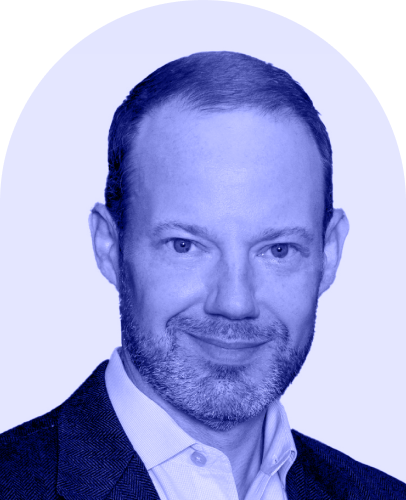
EPISODE #125
SCOTT HARPER
If You're Gonna Bet on Somebody, Bet On Yourself




Some careers are chosen. Others, you stumble upon by chance. For Scott Harper, CEO of the Harper Group, it happened by watching his mother build a career from scratch.
It started with a small gift section inside the family's marine supply store in Westbrook, CT. When the store was sold, she hit the road as a sales rep. Harper tagged along while she worked gift shows at Javits Center, and saw her grow a new business one relationship at a time. His mother was one of the best salespeople he'd ever met. What he didn't realize yet was that he was already being shaped by all of it.
Early in his career, Harper was on a different path. He earned a mechanical engineering degree from Villanova, MBA from NYU and was traveling the world at 25, working with his mom on the side. Then came an airport conversation that changed everything. On the way home from pitching one of their biggest customers, the future came into focus: they were going to open their first showroom in New York, and he was going all in.
"If I'm going to bet on somebody," he tells host Jon Pertchik, "I'd rather have my destiny in my own control. If I fail, I know it's my fault. If I succeed, I know it was due to my effort."
That conviction was tested almost immediately. Early into their new venture, Harper faced hurdles, like three of the company's five reps quitting on the same day. A mentor stepped in with a piece of advice that quietly became the foundation of everything the Harper Group stands for: it's not just about the product. It's about the people — how you treat them, how you show up for them, and the quality of relationships you build with your team, your brands and your retailers.
That lesson has never really left him. What sets Harper apart today is the lens he brings to a relationship-driven industry — an engineer's precision layered onto a business built on trust and connection. He's not just running one of the top rep agencies in the gift industry. He's building a data platform, a technology stack and a seamlessly integrated customer experience at a time when most companies are still operating in silos. "I've never been more excited about where we are as a company than I am today," he says. He's pushing the business forward, testing new tools and technologies, all while staying anchored to the same foundation he helped lay 25 years ago.
Twenty-five years, 200-plus people and multiple markets later, the instinct that pushed him to go all in hasn't changed at all.
Jon Pertchik
Hey, everybody. I'm Jon Pertchik, welcome back to another episode of Our Scale Up Stories. This will be the final episode of season one. In this series, we step out of the showrooms and into the boardrooms, speaking with CEOs, founders, and business leaders who shape the design, furniture, and lifestyle industries. Today, I sit down with Scott Harper, CEO of the Harper Group, one of the most respected and fastest growing sales rep agencies in the gift industry. It all started with Scott's mother and a small gift section inside the family's marine supply store in Connecticut. Scott, at the time, was about as far from the gift industry as you could get, a mechanical engineering graduate fresh off of his MBA at NYU. He'd been helping his mom build the business on the side, and he could see it growing.
Then an opportunity presented itself, their very first showroom in New York. Sitting in an airport on the way home from pitching one of their biggest customers, the conversation turned serious. He went all in with his mom. 25 years, 200-plus people, multiple markets, and many hard won lessons later, the Harper Group is a case study in what happens when an engineer's mind meets an entrepreneur's spirit. I hope you enjoy the scale-up story.
I'm here with my really good friend, Scott Harper of the Harper Group, CEO of the Harper Group, one of the top rep agencies, and really important relationship to our company. But besides that, we've become really good friends over a couple of years now, so I'm really excited to spend some time with you today. I know you're up in Greenwich, the business is really successful through some M&A, and otherwise. Maybe just introduce the company, the Harper Group, to folks. What is that business? Tell us a little bit about it, and then we'll start to go backwards in time.
Scott Harper
Yeah, sure. So first off, thanks for having me. It's really exciting to be here.
Jon Pertchik
You're a bud, man. It's like I just get to hang out with a buddy. We don't get this time.
Scott Harper
Yeah, yeah, yeah. Yeah, for sure. So the company's actually just celebrated its 25th anniversary last year.
Jon Pertchik
That's right. Congratulations. Wow.
Scott Harper
Yeah. I started it in 2000 with my mother. I was in a completely different industry myself, out of college and undergrad.
Jon Pertchik
We're going to get to that too.
Scott Harper
Yeah, of course. Yeah. And we had a marine supply store in Connecticut that she created a little gift section in. We sold that store. It's a family store, we sold it, and she started repping a couple of lines, gained some success, and said, "I need some help." And I was pretty entrepreneurial myself, and said, "Hey, why don't we start a company," thinking nothing of it. And I was on my career path, and my undergrad is mechanical engineering.
Jon Pertchik
Right.
Scott Harper
I was on my career path there, and it just started to grow and ebb and flow over the years. And then I realized that the industry's a really unique industry, and it's got a great group of people, it's got a great community, and it's a very entrepreneurial industry, and so I was really attracted to that. I saw a unique opportunity from my standpoint, my skill set to come in, and do something with the company as it continued to grow.
And we started in a small section. We're a sales agency, so we work in four primary categories. We work in gift, we work in a little bit of giftable home, personal care, home fragrance, personal accessories, and some paper and publishing. We started very small and we grew it organically over the years. Our first showroom was in New York City, and just over the years, we've looked at strategic opportunities to grow the business. And our goal is to provide just an incredible value to our customers, meaning the brands that we partner with, and really, our retailers, right? We want to be that excellent service and provide extreme value through the relationships that we're building.
Jon Pertchik
I mean, the growth you've had obviously speaks to the fact you're probably hitting those objectives and goals. As a newbie to this industry the last couple of years, you're definitely one of the top dogs.
Scott Harper
Thanks, man.
Jon Pertchik
And not only as a company, but as a person. I mean, I know your mechanical engineering background, I remember learning that a while back, and being like, "Okay, that makes total sense to me," because you're a uniquely intelligent person who approaches things in a way that I think an engineer would, and so I value that in our relationship. Going back, I want to double, triple-click on a few things. So the marine supply, I didn't know that until right now. I know we talked a little bit about boating, but I had no idea your family business was-
Scott Harper
Yeah, just like boat parts. We sold cleats-
Jon Pertchik
It was like West Marine, but more of a family-owned version of that.
Scott Harper
Yeah, yeah. That's exactly right.
Jon Pertchik
And was it up in Connecticut, or where-
Scott Harper
Yeah, it was up in Westbrook, Connecticut.
Jon Pertchik
Westbrook.
Scott Harper
Yeah.
Jon Pertchik
And was that like an old legacy family business, was it just-
Scott Harper
No, it was a business that the family bought as kind of a retirement idea, and that just didn't work out the way that everybody thought it was going to, and so we sold the business, and kind of all went on with our other ventures. But the concept that my mom had was that she wanted to create this gift section in the store for people that were coming in that didn't necessarily want to buy life jackets or cleats, or stuff like that. She started with a couple brands.
Jon Pertchik
Were they related directly or indirectly to marine or boating, or lifestyle, or completely different in the beginning?
Scott Harper
I mean, related directly from the standpoint that they were like green and red patterns. Yeah, yeah, that was about it, right?
Jon Pertchik
Wow.
Scott Harper
And so it just kind of took off from there.
Jon Pertchik
It did.
Scott Harper
Yeah. And then I always like to say she's one of the best salespeople I've ever met, and so was able to really do a great job at generating that gift section. And then when we sold the store, she didn't really have much to do. My parents were going through a divorce at the time as well.
Jon Pertchik
I see.
Scott Harper
And she decided to become a rep. She saw it as a good financial opportunity, and so she hit the road, and I grew up going to gift shows at Javits, and things like that, watching it happen. I was in high school at the time, and it's just a really interesting story. And I think to your point, this industry is very unique in that way, right? I think I have yet to come across somebody in this industry that graduated college, or graduated school, and said, "Hey, I'm going to go into the gift industry," right?
Jon Pertchik
Right.
Scott Harper
,Everybody finds their way in here through different life experiences or career experiences and it's a really cool industry to become part of, because of the community, because of the entrepreneurial spirit, and that's what drew us all into it.
Jon Pertchik
Right. Super interesting. So going back to your mom, just one or two more things before the gift extension of the marine supply business. Had she been, in any parts of her life, in any actual jobs in sales? Had she been a salesperson doing salesperson things? Because it sounds like at least that moment, you said whether at heart she was a salesperson, that's what drove the gift, and she was also an entrepreneur. She started this thing from scratch, grew it because of some sales capabilities, then became a great rep, and so on. So, did she have earlier history in sales?
Scott Harper
She was a flight attendant, and so she-
Jon Pertchik
And your parents have been in aviation or airline business, right, I think?
Scott Harper
Yeah, they were both in the airlines business as I grew up.
Jon Pertchik
I see.
Scott Harper
So that was kind of part of it, and then she started her own practice with speech pathology, so she'd always been entrepreneurial and kind of sales-like from that standpoint, just as an entrepreneur.
Jon Pertchik
Right. So what's interesting, I was a psych major, so was my wife actually, undergrad, and I've always felt like while it didn't directly give me a skill, I do feel like I approach my relationships with people, whether it's a sales persuasive kind of relationship or just friendships like ours, there's something about what I took away there has helped me. And I imagine between a flight attendant, you have to have a good personality and get to engage with people by definition, hospitality, that whole thing. And I guess combined with a mindset, whether because of education or just who she is, understands people, and therefore can be an effective salesperson. Is that how you think about your mom?
Scott Harper
Yeah, I think so. And I think it's also conducive to the industry, right? You have these excellent salespeople, you have these excellent creatives that are able to do something entrepreneurial, and start something that can really have an impact on the industry, or consumers, or retailers. I think then you look at somebody like me, who's coming from more of a structured corporate background, technology background, and to me, it's nice to be able to come in and say, "All right, how can we take this creative business," or "How can we take this sales-oriented small business, and what do we need to do to structure and layer it and scale it?" And that's really what got me from the... That was the hook for me.
Jon Pertchik
So, you're sort of the scientist within the arts, right? I mean, there's this creative that tends to be like art, it tends to be qualitative, and you bring sort of a scientist mentality, more of an engineering mentality to it, which is interesting. So, let's shift. So that's interesting. So, your mom was clearly a heavy influence, her entrepreneurial spirit, her sales orientation, let's just say, and you were tagging along. The years you were tagging along going to Javits, and otherwise you mentioned with your mom, was that like pre-college, was it more... What age range are we talking about in your life?
Scott Harper
Yeah. So, it was about... We sold the store when I was in high school, or right when I was graduating high school, so it was high school into college.
Jon Pertchik
Got it.
Scott Harper
And then once I graduated engineering, then I worked for a company that built equipment for oil refineries.
Jon Pertchik
Right, I saw that.
Scott Harper
And so I did that for a number of years, and then transitioned up to New York when I was getting my MBA, and at that point-
Jon Pertchik
At NYU, right?
Scott Harper
NYU, yeah.
Jon Pertchik
Yeah, great school.
Scott Harper
And then at that point, we had the opportunity. I was still working part-time with my mom, and I was really enjoying my career. I was having success. I was traveling all over the world at a young age. It was great. They were flying me everywhere. And then the opportunity came up for our first showroom in New York, and I'll never forget it. We were sitting in a airport flying back from pitching one of our biggest customers, and say, "Hey, let's do the showroom." And we decided, "Holy shit, we're going to have to do this, and so I'm going to have to come full-time and run it." And that was the decision point for us to move forward.
Jon Pertchik
Let me hit right there for a second. About where are you in your life, like how many years out of college? I know there was grad school, but just to index, about how old were you?
Scott Harper
I was probably mid-20s.
Jon Pertchik
Wow. Oh, so you were still... I guess, you were pretty much just out of your MBA, and maybe what a year or two into life?
Scott Harper
Yeah, mid to late-20s.
Jon Pertchik
Wow, wow. So, you had gone and seen the world a little bit, you had gone and gotten some other skills, and whatever. I do want to come back to that. And then your mom is talking with you, taking this business forward, and you realize if we're going to do this, I need to jump in this.
Scott Harper
Yeah.
Jon Pertchik
So you now become like a 25-year-old CEO of this startup thing, but with a lot behind you, with your mom and what have you.
Scott Harper
Yeah, that's right. And I think-
Jon Pertchik
Wow, that's pretty bold, man.
Scott Harper
Yeah, it was interesting. I think it was a great challenge. I love big challenges, and I think we obviously started off small, and the MBA is great, but to get in and have to run a business that way, you just don't get that type of experience anywhere else.
Jon Pertchik
So true, right? I mean, and without diminishing education, education is amazing and critical and important, and all that, for the right people, but it's just not the same as the hard knocks school of business, where you're getting out there and waking up and dealing with customer issues and leasing copy issues in the small and the big, and everything in between. So I want to go back to this risk, this moment of this, because that's a pivot in your life. And I do want to even go back to college and the grad school thing for a second, but in that moment when you're talking to your mom, and it sounds like you had a fulfilling, at the time, career, like you were traveling, seeing, doing, you were a young guy, going around see the world.
Scott Harper
Yeah. I was heading up global sales. I was on track to continue to escalate into the executive ranks.
Jon Pertchik
Wow, as a young, mid-20s guy.
Scott Harper
Yeah.
Jon Pertchik
So, speak to that. Again, I think for the audience, here's a guy, and other people may be in this position, who have a career, it's an established path, engineering, MBA, following this corporate gig, head of global sales, and then it's like, "I'm going to go try this entrepreneurial thing with my mom." What gave you the... I'll rattle off a bunch of things, that none of them may be right, but either the confidence, the courage, the insanity, what gave you that compulsion to leave this track? Albeit, you were young at young, we should all be willing to take some risk, but what was it about that moment? What were the couple decision points that gave you that sort of like, "This is right for me?" Because clearly, these 24, 25 years later, it was the right choice, right?
Scott Harper
Of course, yeah.
Jon Pertchik
History has shown that, but you didn't know that then.
Scott Harper
No.
Jon Pertchik
So put those two things, those book ends together beginning and end.
Scott Harper
Yeah. I think one of the decision points is, you hit the nail on the head, when I was 25, I didn't know better, and I think that-
Jon Pertchik
Ignorance is bliss.
Scott Harper
Yeah, exactly, ignorance is bliss. And I think I also did it in a way that I hedged my bets as well. So, I kind of shifted my focus from the engineering business being the full-time job and Harper Group being the part-time job, I kind of flip-flopped that, and consulted for the engineering business for other-
Jon Pertchik
Okay, so you kept that.
Scott Harper
Yeah, yeah.
Jon Pertchik
So you still had a little insurance policy, although-
Scott Harper
Yeah.
Jon Pertchik
So again, takeaway for folks, if you're taking risks, try to figure out strategies for mitigating that risk, if there is.
Scott Harper
There's a way to mitigate it, and you also need to put the effort in too. I think that was the big thing, right, you got to get it done no matter what that takes, and that became very evident very quickly.
Jon Pertchik
I want to talk more about that too. That's one of my favorite perspectives, is, I've said this to my kids, you can't let fear paralyze you, but fear is the greatest motivator. I mean, fear of failure, and also there's no replacement for hard work, period, end of story, full stop.
Scott Harper
Right.
Jon Pertchik
There's no quick rich... You might win the lottery, but that's not a business plan. So putting that together, so you made this decision, partly you were able to create a bit of optionality in your back pocket, partly because you believed in it presumably. Speak to that too.
Scott Harper
Yeah. I think I believed in it. I also believed in the success of what we had had so far, and I think it was also an opportunity for me. That's how I really viewed it. And as an entrepreneur, as a leader, you have to continually bet down and double down on yourself, and I think that it made sense to me to say, "If I'm going to bet on somebody, I'd rather have my destiny and my own control, right, wrong, or indifferent. If I fail, I know it's my fault. If I succeed, I know that it was due to my effort." As opposed to in a more corporate environment, where you're relying on other people to make those decisions, and that just didn't track right for me.
Jon Pertchik
I mean, that sense of accountability was critical to you.
Scott Harper
Yeah, sure.
Jon Pertchik
Having that pure accountability, no hiding behind anything.
Scott Harper
Yeah.
Jon Pertchik
Well, let's go back for a sec. One thing I want to ask you about is during this time, so it's you and your mom getting this thing moving, how many other folks are working for the company at that very moment? Is literally you two or a few at this point?
Scott Harper
So, we founded the company, and then we hired about three reps.
Jon Pertchik
I see, okay.
Scott Harper
Yeah, out of the gates.
Jon Pertchik
So during this window of getting started, I mean for people who start things, anything you can reflect on that, any big or small failing that really, you took something away from during that window?
Scott Harper
Yeah. I mean, a pretty good one was-
Jon Pertchik
A pretty good one.
Scott Harper
We had about five or six people at the time, I think, and we were trying to open the showroom at the time as well, and it was incredibly chaotic, and we really didn't know what we were doing. I mean, we knew the product that we wanted, we knew the aesthetic, we knew what we were going to do, and we were confident in that, but the process to get there just wasn't baked at the time, and so we had three reps quit on the same day
Jon Pertchik
Wow. Out of how many?
Scott Harper
Out of five.
Jon Pertchik
Oh, geez. 60%.
Scott Harper
Yeah. And so it was a pretty big shock, and I was kind of crestfallen. I was like, "Oh, my God, what do we do?" And I was talking to one of my mentors at the time, and I said, "God, we just had three people quit, what do I do?" And he said, "Well, it's all about the people, and it's all about how you work with your people, how you treat them, what you're doing with them." And it was a big light bulb moment for me to realize, look, this isn't about product as much as it is about the people that you have, how you interact with them, the relationships that you have, not only with your employees, your team members, but your customers, your retailers, your partners, your great partners from leasing, and everything else. And I think that was a big eye-opener for me, to recognize that if we're really going to build a great business here, we need to focus on how we're treating our people, what we're doing there, as the first point.
Jon Pertchik
What's so interesting about that is just, and I encourage folks to get on Harper Group website, what you just said is pretty much the essence of your guys' almost like mission, or deep corporate philosophy about treating people, and I just heard you talk about it from a mentor from 20-some odd years ago. You don't have to name the person, but can you describe who was that mentor? Who were they to you? What part of your life were they? How did they come in your life, or who are they? You don't need to name them, [inaudible 00:16:07].
Scott Harper
Yeah. He was the owner of the company that I worked at in the oil business, and he was just a great guy.
Jon Pertchik
I see. Right.
Scott Harper
I've become very close with his son over the years, and we're great friends now, and he was a very hard-charging entrepreneur, but understood the kind of secrets of what it really takes to build a business. And he imparted a lot of knowledge on me. He was very patient with me, as I was younger and trying to figure out my way, and I'm still trying to figure it out today, right?
Jon Pertchik
Well, I think we all are. Life's a journey, right?
Scott Harper
Yeah, right. But he had a really big impact on my life, yeah.
Jon Pertchik
That's amazing. And is he still around? Is still alive or is he-
Scott Harper
No, he passed away.
Jon Pertchik
That's great, you have the continuity with his son. That's pretty cool.
Scott Harper:
Yeah.
Jon Pertchik
So I mean, again, big takeaway there, mentorship, find people who've been there, done that, who are good people, you trust them, they have integrity, and look to them for help. And they're always out there. I mean, it's amazing, people are always out there willing to help.
Scott Harper
And I think you and I've talked about this in the past too, Jon, I think being a CEO or being a leader or entrepreneur, it can be a lonely position, right?
Jon Pertchik
Right.
Scott Harper
I think you're looked at to make these decisions and really always have an answer. And I think the other thing that I've learned over the years is you need to surround yourself with people that you can rely on, right?
Jon Pertchik
Amen.
Scott Harper
And you need to find people that are smarter than you, that have the right skillsets that you don't, and supplement that, but also build out a great team of advisors and people that you can trust, and really be open and raw with.
Jon Pertchik
And so we have had those conversations, and it's a corny, and I think, weird thing for a lot of people who haven't been a CEO or an entrepreneur standing on their own feet, alone, to hear that. That your CEO, everybody wants to talk to you, and it really is a lonely place. And at the end of the day, it's you and your conscience trying to make choices, and the more you have an infrastructure network of people you trust, the easier that becomes, and you can mitigate risk by bouncing things off of... But those people aren't just automatically there, it's really an interesting point.
Scott Harper
Yeah. And you have to build those relationships, right?
Jon Pertchik
Right.
Scott Harper
And it's not a one-way street, it's a two-lane highway, and you have to give and take with it all, and really be there for them when they need it, and the return is tenfold.
Jon Pertchik
Right. Well, let's shift again. Going back, one more thing from early on was one of the things, again, I respect you so much for, is in this industry, you do have a unique, I want to say mindset, and I think a lot of it is like how your mind works. You are an engineer, and it's obvious anyone who gets to know you, the way you approach things is a little different than people aren't engineers. So maybe first, when you went to Villanova, what caused you to say, "I want to be an engineer of some kind," at that point? Was there experience that you had as a young... I mean, because your parents were in airline business, they then have this marine supply business, your mom starts to expand that into gift, and then you're sort of like going into engineering. Just speak to that. What sort of caused that choice at that time?
Scott Harper
I think I was always trying to figure out how things worked, and I was always building and tinkering with things as I was growing up.
Jon Pertchik
What kind of things, cars, bicycles? I mean, what did you like to mess with?
Scott Harper
Yeah, anything mechanical.
Jon Pertchik
Okay.
Scott Harper
And then also computers.
Jon Pertchik
Oh, really?
Scott Harper
I was big into computers growing up, and technology's really passionate for me as well.
Jon Pertchik
Right. That, I know. Yeah.
Scott Harper
And we've talked about that.
Jon Pertchik
So, it even goes back to then?
Scott Harper
Yeah.
Jon Pertchik
Really?
Scott Harper
Yeah, sure. Yeah, we had the old 8088 IBM PCs with the floppy disks.
Jon Pertchik
People have no idea what you're talking about.
Scott Harper
Yeah, that's exactly right. Yeah.
Jon Pertchik
Not the audience, right?
Scott Harper
Yeah, but that's where we started, and so all of that kind of led to me going down the engineering path. And I think as I got into engineering, I recognized that that path would go only so far. And I think there's a component of me that enjoys the creative aspect of it, not necessarily from what you're seeing in product, but really how to build a business, how to solve problems, and I think that's why it always tied nicely with engineering.
Jon Pertchik
So, let's jump ahead a little bit. So you're in Greenwich, that area. You got some little ones.
Scott Harper
Yep.
Jon Pertchik
What's life like now? So, we've gone from the extension out of the marine supply store, tagging along with your mom, side hustle goes from helping mom to being an engineer, consultant. Fast forward now through growth and all kinds of blood, sweat, and tears to get here, M&A, a lot of cool things to get here, talk about the business now, and what are some of the bigger challenges you face? I don't mean now meaning this moment or even this year, but more generally, running a big company. And other than the sort of being alone at the top, what are some of the other things that come to mind that people might hear that are interesting? What are some of the harder things about running a big company?
Scott Harper
Yeah, I think there's been a lot of studies about this, and I've read a lot of books about it, and I think we've had these conversations. In each stage of a growth company, the leadership, and I'm not saying just the CEO, I'm saying the entire team, has to go through these kind of metamorphosis on how they're leading and what they're doing and where their skillsets are. And I think that can be on the revenue targets you're hitting or the revenue kind of components, or it can be on the headcount, right?
Jon Pertchik
Right.
Scott Harper
And I think I've noticed that over the years, when we hit 10 people, and it was, "Oh, my gosh, we had double-digit employees, and how do you deal with that, and what do you do?" And then we hit 50, and then it was like, "Okay, now that's a different component, and it's a different skillset that we're all trying to use and manage to." I think at the place we're at now, we're a little over 200 people today, and I think my role is moving more towards not as much operationally, as more strategic and process-driven activities, and things like that. And I think for entrepreneurs that are trying to make that leap, or start that business, there is a process that you go through, and I think you have to be malleable enough to recognize you know what you know and you know what you don't. And if you don't know something, then find somebody that can help you, or figure out a way to make it work so that you can kind of continue on.
Jon Pertchik
I mean, this idea of malleable, and implicit in that is also open to learning, right, is... I mean, fundamentally human beings, what has made us successful on this planet is our ability to adapt, and I think that malleability is about that and learning. So, maybe speak to that. I mean, looking ahead as an engineer with kind of a techie background orientation from early on, and your role has become more strategic, as you said, less ops, where are we today? I mean, there's so many fears out there, and excitement too. It's kind of a mixed bag. But the two letters AI, the only word I heard more last year, the words I heard more last year were the T-word, tariffs. And thankfully, that's fading in the sunset hopefully, a little bit. But just high level, I'm sure people would love to hear someone with your orientation in this business, what are your thoughts? How do you think about how rapidly technology is changing, and what kind of opportunities does that create? How do you think about it related to your business?
Scott Harper
Yeah, I think it's a very unique time in the industry in general, and I think just generally in the world, right? I think the pace at this innovation on AI overall, and the impact that it's going to have on all of our lives, and it already is having, is unprecedented. And so when I look at it from our industry, I think I say to my team all the time, "I've never been more excited about where we are as a company and where we're going than I am today." And there's so much opportunity on that level with given these tools that are coming out, on how you can transform your business and really stay relevant and excel. And I think one of our big focuses and our big tenants is how do we create these extraordinary relationships while connecting these products and retailers together?
And I think we are doing a lot of that with the tech stack, and I think we're doing a lot of that with analytics and how we can apply a higher level of service for our sales team and enable them to be more effective at their job, and most importantly, provide a better level of service for their retailers and brands.
Jon Pertchik
And I'm not surprised to hear you say that at all. I mean, it's really like... You say analytics, and I think sometimes that can mean a lot of things, but what you're describing, I think very specifically, is the word analytics to suggest you can understand your customer and other partner and relationships, you can understand what their wants and needs are, and their behaviors are, and then tailor how your team engages with them to their specific and peculiar needs.
Scott Harper
Yeah, that's exactly right. I mean, we're using our kind of data platform to understand where the retailer has been, how we can work to present product that's going to be relevant to the retailer, and then at the end of the day, help them have better sales and provide a better product to their consumers.
Jon Pertchik
Right. And what I love about that, and I so deeply believe in this, again, implicit in what you just said is this idea that so many people, the word "AI," and you hear large language models, it's these big things, and certain companies investing billions and billions, there's this bigness to AI. I mean, AI is going to change the world.
Scott Harper
Yeah, I think there's no doubt that it already has, right?
Jon Pertchik
Right.
Scott Harper
I think, and to your point, it's a good one. It's not when people hear the word "AI," I think it has taken on such a broad connotation in lexicon that it's not just start today, and figure out a way to start using it today in an easy way that's going to help you do your job better and provide a better quality of service, and provide a greater relationship.
Jon Pertchik
No, exactly. I mean, one of our teammates, that's our chief technology officer, started something called our AI disruptor series. And it's intended to encourage people, our teammates, to change their habits in small ways, leveraging... It's as simple as ChatGPT or Copilot, or whatever, and then that's one, to encourage that. Two, by virtue of recognizing those people in this monthly forum, to encourage more of it so it becomes a cultural phenomenon. And I think that's the way forward, not to look for that external whiz bang, cool, change the world thing. I mean, I think the number was $368 billion was invested last year by just four companies in AI. That's 1% of GDP. 1% of every dollar spent by all of us Americans was on one thing.
Scott Harper
Yeah.
Jon Pertchik
So, share with me that. I mean, maybe as we start to think about our time together, where are you guys heading? I mean, AI is starting to look forward-looking, whether... Jump ahead, where do you see, if you have a vision, Harper Group in 25 years, or in five years? Where are you guys heading now, and maybe what are you aiming for long term?
Scott Harper
Yeah, I think where we're heading now is our real focus is to really provide an exemplary level of service for our brands and our retailers, right? And I think the way that we're able to do that is by using technology, and using the locations and the platforms that we have to create a seamless experience. So you, as a retailer, if you're working with one of our salespeople in your store, if you come to one of our showrooms, if you're ordering online, if somebody picks up the phone and calls us, it's the exact same experience, the exact same information, and it's one relationship. It's not, "I have an online relationship here, I have a showroom relationship there." We're moving past those silos, and we have to get to a point that we have this integrated seamless experience, because to be honest, that's what our retailers demand.
Jon Pertchik
And again, what I love parroting back to you, what I love about that is it's truly, truly customer-centric.
Scott Harper
Yep.
Jon Pertchik
It's so whatever the opposite of egocentric is, right? Egocentric is we have all these ways of delivering, so we deliver, meaning it's about us delivering outward, and you're turning that around to say it's the opposite. How do we serve this customer, this client, this retailer here, and it doesn't matter what we have to figure out on our end, but we got to figure it out.
Scott Harper
Right.
Jon Pertchik
And if they want to engage with us this way or that way, digitally, reel, whatever, it's our job to figure that out and make it just as easy and seamless as possible.
Scott Harper
Yeah. And I think then on the brand side, really our customer base is our brands, the people that contract with us to represent them. I think we want to provide again, just an incredible experience that is high quality, high touch, customized, and bespoke for what they really need, right? If they're working with us-
Jon Pertchik
That's got to be hard. Can I just interrupt?
Scott Harper
Yeah, of course.
Jon Pertchik
Talk about the challenge of that, representing so many brands.
Scott Harper
Yeah. It's a real challenge.
Jon Pertchik
How do you adapt to all of that?
Scott Harper
It's a real challenge. And I think that our team, we spend a lot of time thinking about that, and we spend a lot of time whiteboarding it out, because that's a real tenant of what we're trying to do. Our belief as well, is this industry... My belief is this industry has been built on large established brands and a lot of startup brands as well, and so having a nice mix of both in our portfolio becomes that much of more of a resource for our retailers to buy from us and experience that product discovery at shows on the road for us.
Because at the end of the day, if retailers don't have new, it's not going to work, right? And so we really spend a lot of time thinking about that and how we can balance the two, and as we continue to grow, improve the quality of our service. So that's kind of what we look at when we look at brand life cycles, when we look at retailer life cycles, how we're integrating the data to drive a lot of those decisions as well, and then presenting it in a way that doesn't geek everybody out.
Jon Pertchik
Again, what's so interesting, and I'll point this potential conflict here, is, and it's a question, you just answered it for your company, but this question of scale, I'll say it this way, scale versus quality. It doesn't have to be versus, but those two things are almost automatically in conflict. The bigger you get, how do you maintain the high touch, high quality, boutique, high quality feel to the relationship, but at the same time scale? And that's always a challenge, because those two things, if you're not intentional and thoughtful about that, they definitely are in conflict. If you're intentional and thoughtful, they don't have to be, but they are otherwise. So I have to ask, since we're sitting, we're looking through this window at Winter Market Atlanta, how's this market been so far? I'm hearing good things, but it doesn't matter what I'm hearing, what are you seeing? And whatever you can share, just since we're actually doing this at market, how's it been going so far?
Scott Harper
Yeah, it's been great.
Jon Pertchik
Okay.
Scott Harper
I mean, we were fortunate enough to expand again with Anne Moore for this show and the-
Jon Pertchik
Your own little neighborhood now.
Scott Harper
Yeah, we got our own little neighborhood.
Jon Pertchik
It's the Harper Group neighborhood.
Scott Harper
Yeah, exactly. And the feedback from brands, retailers, and the team overall has been very positive. And again, creating that experience and that environment that is providing more than just product for the retailers. The feedback in general on the market has been really positive, I think. Retailers are buying, that's great. We're seeing large orders, which is really nice. And we're just feeling a great sentiment, and that's nice.
Jon Pertchik
Awesome. Well, Scott Harper, the CEO of the Harper Group, a buddy, a pal, someone I look to, who I respect for guidance, really appreciate our relationship and your perspective. And I really appreciate during market, taking time with me today, so thanks so much, Scott.
Scott Harper
Yeah, of course, Jon. I can't thank you enough. It's really great.
Jon Pertchik
Appreciate it. Thanks.
Scott will tell you the decision came down to one simple belief, if you're going to bet on somebody, bet on yourself. Own the outcome, right, wrong, or indifferent. But here's the thing about that kind of conviction, it only pays off if you back it up. He didn't leap blindly. He hedged his bets and put in the work. Because as Scott sees it, when you bet on yourself, you own every outcome. The wins and the losses are all yours. That's a harder thing to choose than most people realize. What Scott built isn't just a bigger company, it's a more intentional one. Every chapter traces back to the same thing, treating people right and showing up ready. Thanks for listening to this episode of Scale Up Stories, part of the Market Makers Podcast. I've been your host, Jon Pertchik.
That wraps up season one of the Market Makers, 26 episodes, 26 conversations with some of the most fascinating people working in this industry today. And honestly, it's been the most fascinating journey getting to explore the psyche of these incredibly creative, wildly intelligent business leaders, who've all achieved success in many, many different ways. And again, it's amazing to me the ingredients of authenticity, hard work, no shortcuts are all the same despite we're talking to people who are super creative, super logical, and rational, and yet all of them, more or less, have followed a similar path and yet the journeys couldn't have been more different. From synesthesia to M&A, we've covered some wild ground with some amazingly different people, and yet it comes back to some simple truths, and the ingredients are really, in the end, very simple. Thanks for listening, and I've really enjoyed season one.
Want more conversations like this?
More amazing guests are on deck. Subscribe to stay in the loop.