
EPISODE #111
MIKEL WELCH
Why Saying Yes Matters: Mikel Welch on Instinct, Hustle and Building a Design Career




“It was like a scene out of a movie. I spent 40 of my 45-minute break in Crate & Barrel. And when I looked up at the clock, I only had five minutes left on the break... And it was this montage playing in my head. You have all these magazines stacked up about design. You've been purchasing all these accessories. You don't have clients; they're just sitting in a closet. And that was my aha moment.”
That aha moment would become a defining pattern in Welch’s career, throughout every trial and triumph. On this episode of The Market Makers, the designer, TV personality and lead design expert on The Drew Barrymore Show shares how hustle, trusting his instincts and a willingness to say yes turned into an incredible design career.
Raised just outside Detroit, Welch grew up in a household that valued creativity and communication. His mother worked in radio and television journalism, while his father later became a minister. As a child, Welch’s imagination and creativity were constant, spending his days building houses and furniture out of Lego. Even then, he was pursuing interior design, long before he ever knew it would become his career.
Fast forward to that fated lunch break spent wandering Crate & Barrel. Welch was at a crossroads, trying to understand what was next while working at Bloomingdale's, when he suddenly realized the truth was already there. As his mother once told him, passion reveals itself in the work you’d do for free.
That realization led to Craigslist clients, unpaid rooms, and eventually a bold move to New York City. With just $500, a miniature schnauzer and a borrowed sofa, Welch pursued his dream to design. Overnight shifts at The Container Store funded days spent chasing opportunity. A chance conversation introduced him to his mentor and the world of show houses, where six-figure rugs and creative risks were the norm.
From there, Welch’s momentum accelerated: set decorating gigs, HGTV’s Design Star and ultimately a pivotal moment on The Steve Harvey Show that launched him into television. What followed was not overnight success, but compounding opportunity that he built through preparation, persistence and an openness to take the long way around.
Today, Welch’s sights are set on what’s next and sharing his knowledge. His recent book The Forever Home, is his way of giving back to the community he loves, sharing his resources and beloved projects. His newest project: his very own New York antique shop, which he envisions as his retirement project. Amidst time on television, show houses, publishing his book and working on his storefront, Mikel’s journey is grounded in the principle that got him here: authenticity is the advantage.
As Welch puts it, success doesn’t come from chasing money. It comes from a desire to give something back. And sometimes, all it takes to change everything is the nerve to ask one honest question and say yes to what comes next.
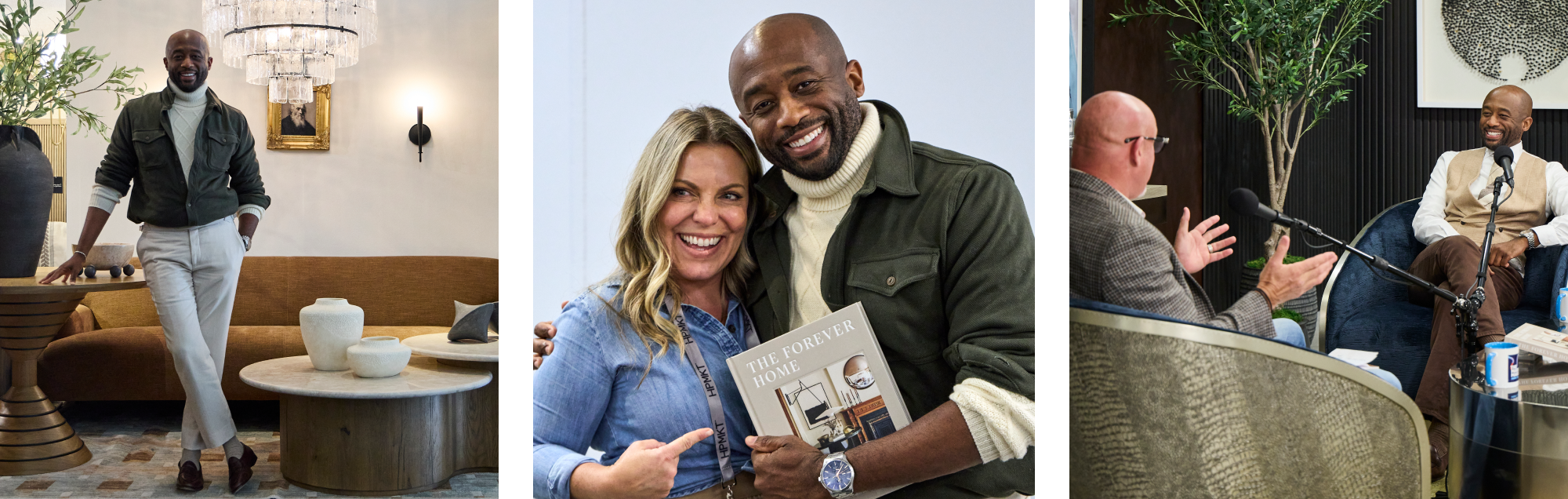
Mikel Welch:
A guy came into the store and I'm at the register and he had eight assistants and they're all putting things at the counter. And I said, "Wait a minute, what do you do? This is not normal. Please teach me what you do. You don't have to pay me. Just help me get from behind this cash register, please."
Jon Pertchik:
So today we answer the age-old question of what does Steve Harvey, Drew Barry Moore, and Craigslist have in common? They all contributed to the success of Mikel Welch in a major way. Mikel's an amazingly talented, driven person, relentless faith, not give up-edness if that's a word, a deep belief in self. Just an honest, pure belief that if he just follows his inner voice, he will achieve whatever it is he is meant to achieve. He moved to New York City with nothing but a miniature Schnauzer, a borrowed sofa, and an amount of faith that would terrify most of us.
Overnight shifts, Craigslist clients, set decorating for the chance at one open door. From Legos in Detroit to Green Rooms for Michelle Obama, Mikel's journey proves a simple truth. Authenticity, even when it's uncomfortable, is the thing that gets you noticed. I've got Mikel Welch here with me, who I'm honored to have TV personality, influencer, designer extraordinaire. Thank you so much for being here.
Mikel Welch:
No-
Jon Pertchik:
First of all, I'm really excited-
Mikel Welch:
... thank you for the kind words and I'm excited to be here.
Jon Pertchik:
You've had so many amazing shows and your relationship with Drew Barrymore and Michelle Obama, and this long list of amazing people. And I want to get to that in a little bit, but maybe jump back in time.
Mikel Welch:
Okay.
Jon Pertchik:
Starting in the beginning, growing up in Detroit, I found it really interesting. I read a little bit about your parents and what their vocations were, which really obviously resonates to who you are today.
Mikel Welch:
Right.
Jon Pertchik:
So maybe tell me a little bit about your parents, what they did and how that sort of started you on a course to ultimately getting here.
Mikel Welch:
Absolutely. So interestingly enough, my mother was a journalist. So she did the traffic and weather on the radio, my entire elementary up to high school life. As well as had a local talk show in the city of Detroit. My dad later in life became a minister. So I guess everyone in that sense was not afraid to be in front of the public eye, if you will. Never thought I would end up being there, but I think it was one of those innate things that was just kind of in me that just later revealed itself, if you will.
Jon Pertchik:
And it sounded like, I mean, you described in something I read, your family created this environment of imagination and creativity. You know, speak to that. What was that like? And I think you have three siblings, growing up in Detroit with parents probably had imagined big personalities because of what they did. Had to have been. And you have a huge personality. It's got to come from all of that. Share a little bit about what the little home environment was like as a child.
Mikel Welch:
Yeah. I mean, honestly, I grew up in a normal middle class family. We stayed about 20 minutes outside of Detroit. Creativity was something that was stressed at an early age. I think me, my brother and my sister, we all played instruments, or we were encouraged to play some type of sport. They encouraged me to play baseball, but I wasn't great at it but-
Jon Pertchik:
What instrument was your instrument or do you know?
Mikel Welch:
I played the clarinet. You want to know the honest reason why I played that clarinet?
Jon Pertchik:
Yeah.
Mikel Welch:
Because you got gym credit if you were in the marching band. So I'm like, okay, if I can march in the band, I don't have to take gym. So that's how the clarinet came about.
Jon Pertchik:
Young kids with orchestral instruments can be frightening. When my kids played for a year or so of very traditional instruments. And boy, when they'd hit certain notes, our dog would just kick his head back and howl.
Mikel Welch:
Oh my gosh. And don't even think about that little plastic recorder that you learn how to play on. It's like, forget it.
Jon Pertchik:
So you came from an environment, your parents were encouraging that stuff.
Mikel Welch:
Yes.
Jon Pertchik:
I read a little bit about Legos was a big sort of you started to use your imagination that maybe-
Mikel Welch:
Oh gosh.
Jon Pertchik:
... relates to today.
Mikel Welch:
So as a kid, my imagination was just out of the roof. And so I asked my parents if they could just build me a city out of Legos. And they're like, "Okay, now we're going to give you some Legos and you go for it." And that became me at a early age, just building little houses. Then I'm like, "Oh, they need furniture." And so I was slowly beginning to build my version of interior design. I just didn't know what it was called.
Jon Pertchik:
Right. So young people really finding that thing inside themselves that gets them excited.
Mikel Welch:
Yes.
Jon Pertchik:
The whole little cliche, if you love what you do, never work a day in your life, right?
Mikel Welch:
Yes. Yeah.
Jon Pertchik:
It sounds like the Lego experience was with a benefit of hindsight. How did that start to manifest as you got a little bit older?
Mikel Welch:
So I graduated from Morehouse College in Atlanta, had a degree in marketing. And I felt like I went to college because that's what you're supposed to do.
Jon Pertchik:
Right.
Mikel Welch:
So now I have this degree. I don't know what in the heck to do with it because I don't want to work in a marketing office. And I remembered saying to myself like, "Okay, you like clothes, go work at Bloomingdale's." It had just come to Atlanta and just kind of maybe become a buyer, figure it out. While I was on a lunch break, honestly, it was like a scene out of a movie. I will never forget this. I took a lunch break and I spent 40 of my 45-minute break in Crate and Barrel. And when I looked up at the clock, I only had five minutes left on the break.
So I'm like, "Oh shoot, I can't eat." And it was this montage playing in my head of like, wait a minute, you have all these magazines stacked up about design. You've been purchasing all these accessories, you don't have clients/ they're just sitting in a closet. And that was my aha moment that, wait a minute, you need to lean into this. And my mom told me early on, I was trying to figure out life. She said, "Find something that you'd be willing to do for free, and that's something that you'll know is your passion." And it was like the light bulb went off instantly.
Jon Pertchik:
Some of the most significant moments for Mikel happened at unexpected times. That 40-minute detour into Crate & Barrel wasn't just an epiphany, it was an interruption. A moment that forced him to confront what he already knew. He didn't need another job, he needed direction. And for the first time he let that instinct pull him forward.
Mikel Welch:
I'm crazy. So that very next day, I went to go work for a furniture company called Storehouse. I worked in their logistics warehouse. I was a coordinator. I love Nate Burkes now, but I always had to send products to his team for photo shoots. And I said, "I don't want to be the one boxing it. I want to be the one designing it." And I ended up going on Craigslist, and there was a gentleman looking for a design assistant and I applied. Got the job, worked for him for a year, and it was just the two of us. And anytime it's just you and one other person, you soak in so much because you are their everything.
Jon Pertchik:
Right.
Mikel Welch:
So after a year, I said, "I don't know that I necessarily need to work with him. I think I can do it on my own." So I went on Craigslist myself and I posted an ad where I would design one room for free, as long as people pay for the furniture. And I was using my marketing degree then. I'm like, "This is how you build a portfolio." So I did that for a year, and I had about five or six projects. And I said, "This wasn't enough." I said, "I want an office in New York, LA, Miami," da, da, da, da, da. So I post that same ad and I said, "Wherever you get the most hits, that's where you're going to move to."
Of course you post a hit in New York, you're going to get flooded, which I didn't know. So I ended up moving to New York two months later.
Jon Pertchik:
So now you're starting to make this move toward New York.
Mikel Welch:
Yeah.
Jon Pertchik:
I mean, that's pretty bold, right?
Mikel Welch:
It was bold.
Jon Pertchik:
Tell me about that, like the courage to-
Mikel Welch:
Oh gosh.
Jon Pertchik:
... just go to this other place and-
Mikel Welch:
That was crazy. I mean, it was like God aligned all the stars. I had a friend who had an apartment, her roommate had just moved out. And so she said, "Hey, you can crash on the sofa, but I'm looking for a new roommate, so don't keep the living room a mess type of thing." And I said, "Well, what if I take the room?" And she's like, "Oh, immediately do it." And I felt like, okay, this is the only time you'll ever get to just move to New York. So packed up with my dog and $500 like a crazy person. And I got a part-time job at the container store on 59th and Lexington.
My job was to do the unload the overnight truck from 8:00 PM until 2:00 AM. And on that job, I ended up meeting who is now my mentor, and she said, "Hey, someone told me you're trying to break into design. I'm working on an interior designer show house. You should come and help me as an assistant." I had no idea what an interior design show house was. But I do know when I walked in there, these people had $30,000 rugs and $800 trash receptacles. And it was the craziest thing I had ever been exposed to. But that, Jillian is her name. Jillian changed my life. The exposure she gave me, and I will never forget she said-
Jon Pertchik:
Jillian Browder?
Mikel Welch:
Jillian Browder.
Jon Pertchik:
Browder.
Mikel Welch:
She said, "You will do a show house of your own one day." I've done eight now.
Jon Pertchik:
I definitely want to get to that. How did you discover her? She, you? How did that ... And by the way, before, what kind of dog?
Mikel Welch:
A miniature Schnauzer.
Jon Pertchik:
I think that dog's in the book. I want to ask about that-
Mikel Welch:
Yes, the dog is in the book.
Jon Pertchik:
And more seriously, how did you two connect?
Mikel Welch:
That was just honestly me running my mouth to my other coworkers. Because when I just moved to New York, you're excited, you're in a new city, you just want to tell everybody what your ... Everybody's like, "What did you move for? What did you move for?" And so a friend of mine at work said, "Well, Jillian's an interior designer. You two need to meet." And I'm like, "Oh, okay."
And Jillian, she's such a New Yorker. We're on the elevator together and she's not even looking at me. She's like, "Hey, you want to work on the job next week?" I'm like, "Sure." And that was really the short of it. That's what I love about New York. New Yorkers would give you a shot and a chance and she took a chance on me, and it turned into just a wonderful working relationship.
Jon Pertchik:
Well, I want to pick up on that, but I want to go back one more thing you said that the first job you took in New York working late hours loading trucks.
Mikel Welch:
Yeah, at the container store.
Jon Pertchik:
Where did that work ethic come from? Is that something was ingrained from your parents? Was it just you had this drive and willing to do anything for it? How do you think about that? I mean, not everybody ... Part of success is being willing just to put it out there. Even the hard, dirty stuff, like where did that come from for you?
Mikel Welch:
You know what? Probably my dad, because he's that way. He, my grandfather, they always have eight different businesses running. But I honestly don't have a real answer. It's just something that's in me. I'm always doing five things. You and I just talked. I'm literally leaving here to go get ready to go on the Today Show.
Jon Pertchik:
It's amazing.
Mikel Welch:
So I don't have an off switch. And so I'm always going, going, going for whatever the next thing is on my bucket list. You have to put in the work, and that's something that I tell people all the time. I've done so many projects for free, not to encourage that. But I've often found that people are more apt to let you in to try things when you're not asking anything of them. They're more apt to get you in the door, and then you can ask for money.
Jon Pertchik:
Right. And then the handoff is made and then it's what you do with it and whatever you want-
Mikel Welch:
Exactly.
Jon Pertchik:
... and put it out there. And people see that and now you make it impossible for them to not keep you.
Mikel Welch:
Exactly.
Jon Pertchik:
I'm really curious when you're more the younger guy at that earlier phase, after a while you become famous yourself. But in the early days, you've got to be a little awestruck. Where were you in your head space and what was that like?
Mikel Welch:
I mean, that was interesting because at that point I'm watching Sheila Bridges and Billy Siglia, all these big New York names. Jamie Drake, all of these people. And I'm just mesmerized by who they are, how they're able to turn out the plethora of projects and the caliber of projects. I'm sitting over here still on Craigslist working off of Ikea West Elm type budgets. So it was a very humbling, but at the same time, inspiring time. Because I just had aspiration to be just like every single one of them. And I just knew I had to fight until I got it.
Jon Pertchik:
And I mean, at that point, early in your career, you've entered the big league.
Mikel Welch:
Yeah. You know what? Things spiraled for me. So I was working with a Jewish developer in Brooklyn and they hired me to work on a few projects. And they had multiple projects and I was working on them, and I failed on one of them and they fired me. And it was the most depressing thing ever because I'm like, oh my gosh, I'm throwing it all out the window. I'm going to have to go back to Crate & Barrel. But a friend of mine said, "You got to get up and get a job. You cannot sit here like this."
So I ended up going to CB2 Furniture. Worked with them for two years. And a guy came into the store and I'm at the register and he had eight assistants and they're all putting things at the counter. And I said, "Wait a minute, what do you do? This is not normal. Please teach me what you do. You don't have to pay me. Just help me get from behind this cash register, please." And he was a set decorator for Dexter on Showtime, who's shooting one scene. And he said, "If you ever come to LA, call me and I will get you as a set decorator on the show." So of course you already know what I did.
Jon Pertchik:
[inaudible 00:13:18].
Mikel Welch:
You already know. I went to my boss and I said, "I need you to transfer me to the LA store." Of course, blow the man up, never answers the phone. But I'm like, okay, God has me here for a reason and I'm going to see it through. And anyone who came into that showroom who looked like they were shopping for someone other than themselves, I would ask, "Can I just shadow you? " And within the course of a month, I got a job with Teen Vogue, HGTV. There was another production I can't remember now.
But it was just crazy because I had this decent resume for my projects and now TV projects within a 60-day time period. And that's when I ended up getting a call back in New York for a show called Jerseylicious, and they asked me to be a set decorator. And don't ask me how I got the job, but I did. And I worked really hard on that show and a coworker says, "Hey, there's something on Craigslist for this show-"
Jon Pertchik:
Come on.
Mikel Welch:
... yes. "Called Design Star. You should audition for it." And I'm like, "I know Design Star." So auditioned and I ended up getting cast on season seven.
Jon Pertchik:
There's so many great gems in what you just said. One of them, I just want to, again, hit that pause button is the fearlessness of this person and the curiosity. The person comes to your register, the guy at Dexter Show. And even if that didn't pan out, but you just kept going. You just kept going. But just in that moment to have the guts to say, "Excuse me, sir, this is not normal what I'm seeing here tell me." Just to have the self-awareness that something different is happening here. To have the guts to ask about it, have the curiosity to ask about it. And then to go do it. It's a little nuts in a great way.
Mikel Welch:
It is.
Jon Pertchik:
There's a lot there for-
Mikel Welch:
I'm not wired completely correct. I'm telling you, I'm a little off. Don't grow up and be like me because I-
Jon Pertchik:
Well, maybe people should grow up and be like you, but just take some risks.
Mikel Welch:
Yes. Don't take me to Vegas. Your money will be gone.
Jon Pertchik:
Oh my goodness. Wow. So I mean, what a transition through that. You are back in New York now.
Mikel Welch:
So now I'm back in New York to be a set decorator on Jerseylicious. And I worked on the show for a year. What was interesting is my executive director said, "I like you a lot. Don't want you to leave." Because once shows are done for the summer, you go work elsewhere until the next gig. And she says, "Just stay here in LA or go back to LA and just work in accounting." She's like, "You got a marketing degree. You can work-"
Jon Pertchik:
Accounting?
Mikel Welch:
Oh, but it was the best thing ever because I learned how much everybody made. So I knew-
Jon Pertchik:
Okay, so now you're even more hungry?
Mikel Welch:
That was a best. Oh, exactly. So now I know what I should-
Jon Pertchik:
Fuel to the fire.
Mikel Welch:
... be asking for. But anyhow, I ended up auditioning for this design star show, Get Cast for HGTV. I came in fourth place. And after I came off of the show, my Jerseylicious boss called me and said, "Hey, want to offer you your job back, but also get ready we're going to Chicago to shoot the Steve Harvey Show. And I want you to come on as a set decorator."
Jon Pertchik:
So each of these triumphs, I mean, even getting cast, for example. Go back to that place in your head, what was that like again as a young person and that scary? Exciting? A little bit of everything?
Mikel Welch:
It was nerve-wracking just because one, I didn't want to let myself down. I didn't want to let my parents down. And my parents were not very excited about me going to New York without a plan. They're like, "We spent all this money and now you're working in retail. What are you doing?" And I was really nervous, but I learned a lot in that time period and I was really fearless I had that. Because at that point, I think when you're poor, because I was poor because my parents told me not to go to New York and they didn't want to help me. And so I'm like, "I'm going to do this on my own. I'm not calling home asking for anything." And when you're desperate, it makes you hungry.
Jon Pertchik:
Hunger, desperation, fear, these aren't weaknesses, they're fuel. And for Mikel, they became the accelerant. From the first moment you spend with Mikel, he has a positive energy. He has a warm smile that's effervescent. He's got a goodness to him. One of the lessons today is listen to that inner voice. In his case, that inner voice is faith in a religious sense, but it doesn't have to be. You don't have to be a religious person to listen to that voice. The key is to commit to it. You may have an awareness, but do you do something about it? Do you recognize it? And then finally, do you actually take action and do something about it? And let it leave your mind and convert into movement and action?
One thing I'm curious about, about some of the fear you talked about, a lot of people experience this. And at this still earlier phase in your care, you're starting to get successful and recognized maybe a bit. But people often suffer from a little bit of this imposter syndrome, like this feeling like-
Mikel Welch:
Oh yeah.
Jon Pertchik:
And you were touching on it, that's why I'm asking this is like, I'm not good enough. People are going to figure me out somehow. Was that part of where your head space was back then?
Mikel Welch:
It was a little bit of that because I'm up against set decorators who've been doing this for years. I've been doing it for months. And I can't draw, I can't sketch, but I can use PowerPoint at that time before Canva came along. And I'm like, I can create the decks on paper and I'm fast, and that's one thing that most ... I had to learn to be really fast in set decorating. And so I just kind of used that as a benefit. But I did have a lot of self-doubt because I was not classically trained to be an interior designer per se. But I didn't let that hold me back. I kind of used it as a tool to kind of say, "You know what? I may not be, but I can still do it better than you."
Jon Pertchik:
Where did that eye come from? I mean, because it's an eye you build over time, I assume. Where is that? Is that just something in you? You sort of have an eye for aesthetic and balance?
Mikel Welch:
That's in you. I'm just going to say it's a God given talent. Right now I can close my eyes and envision this room looking completely different. I cannot explain to you why I have that gift, and it's kind of scary. It's not like you trained to get the gift. It's like, am I ever going to lose this? I don't know.
Jon Pertchik:
Do you drive yourself crazy when you enter spaces that you're like-
Mikel Welch:
No.
Jon Pertchik:
That doesn't happen?
Mikel Welch:
I don't. As a matter of fact, because people all say, "Oh, don't judge me when you come in my house." I don't because then I'd be working. So I do have an off and on switch.
Jon Pertchik:
You do have an off button in that regard-
Mikel Welch:
Yes.
Jon Pertchik:
Maybe not the motor, but that has-
Mikel Welch:
Exactly yeah.
Jon Pertchik:
... the crave.
Mikel Welch:
Yeah, I do have an off and on switch. I do.
Jon Pertchik:
All right. So going back now, you were back into our timeline, you're now part of the Steve Harvey Show.
Mikel Welch:
That was an interesting job because at the time my design star HGTV episodes were airing when I started the job and I had to move to Chicago. And to be honest, I didn't want to take the job because I was one of those New York people like, "I only like New York. I don't want to go out of-"
Jon Pertchik:
So at this point, you're a New Yorker now.
Mikel Welch:
Yeah, I'm a New Yorker. I'm not going to Chicago. That's like why I go to Diet Pepsi when I can have Pepsi? I was just annoyed at this point. But on the very first day, we're sitting in our boardroom meeting and there are about 50 of us. And people are sitting, standing just everywhere. And Steve Harvey's manager says to me, "You're that guy who painted that room green last night on Design Star and they sent you home." And he says it in this packed boardroom. And I'm like, "Oh my God, mortified." And I'm just like, "Okay." And so he's like, "I want to see you after the meeting." And I said, "Okay, so-"
Jon Pertchik:
You're going to the principal's office now.
Mikel Welch:
Exactly. So we get out of the meeting, he said, "Listen, Steve Harvey, he needs his office redesigned, and I need you to do it. Just don't paint it that same green color you painted last night." And he literally opens up the door and I'm standing in front of Steve Harvey for the first time and he's like, "Tell him what you do." And I'm like, "Oh, well, I'm a set designer, interior design." He's like, "I know they told me that you can design." He's like, "I just need you to make it look masculine and smokey. You got one week. I got to go film Family Feud and when I come back, I just want it done."
He came back a week later, asked his whole entourage to wait outside. I walk him around the room, show him everything that I did. And then he got ready to thank me. And as I was walking out of the door, I looked at him and said, "God is telling me to tell you I don't want to work for you." And it was one of the most shocking things I could have ever said to him, but the best thing ever. And he turned around and he looked at me, he said, "What did you just say?"
I said, "Listen, I'm not enamored by who you are. I honestly think God has blessed you with the show and a gift. And I'll have it one day." And he looked at me for a second, and then he said, "Young man, no one's ever spoke to me like that." I'm thinking I'm about going to get fired at this point. And he said, "But I like it." And he said, "You're crazy and I'm going to put your crazy self on television."
And that very next week, there was an audience member who was complaining about her husband playing video games in the bedroom. He said, "Do you have a basement?" And she said, "Yes." And I'm in the back headset on working, "Mikel, get out here." I'm like, "The show is going on. What are we doing?" And I get out there on the stage, like the whole stage is looking at me and he's like, "You're going to her house and we're going to film it."
Jon Pertchik:
And that was spontaneous.
Mikel Welch:
That was-
Jon Pertchik:
You didn't know that was going to happen?
Mikel Welch:
Didn't know.
Jon Pertchik:
Wow. So you're obviously a spiritual person?
Mikel Welch:
Very much so.
Jon Pertchik:
And have you been your whole life or is that something later?
Mikel Welch:
Very much so.
Jon Pertchik:
Oh, okay. So that's a big part of your journey, which is amazing.
Mikel Welch:
That is a big part of it. But that one thing changed my life.
Jon Pertchik:
Have you always been in touch with that part of yourself? Like that moment where you said something out loud that you may have ... It's an internal thing, what gave you the ... That's what you were directed to do, that's what you did.
Mikel Welch:
I'm going to sound crazy to people listening, but that wasn't me talking. In that moment, that was not me talking. After I said it was me. I was like, "Oh shoot, what did I just say?" But it just came out and I said the words, but even to this day, I don't know it just came out.
Jon Pertchik:
A lot of young people who don't really have a spiritual side of their life. And to be a complete person, it's really, really important. I mean, that's amazing. So he calls you out on TV, just you don't expect it. "Get out here, Mikel."
Mikel Welch:
Yeah, get out here. And my producer, she's like, "I guess you're going to this woman's house." So shortly after that, we began having situations where there's a whole, we call a hole on the board. So empty segments, somebody can't come in. And they would constantly put me into a segment, and I would always be kind of like their catch all. So by the end of the year, I have 12 segments. And it was just adding up and then it start growing and growing. And so I was just like, "Okay, what do I do with this?" I needed bigger projects. I'm like, "These Craigslist projects are not cutting it. I don't have time."
And so when we were on the Steve Harvey Show, they didn't give us a budget for green room. Our green rooms looked like they were from 1973. And Steve Harvey wanted them dressed nicely, but production didn't have the budget. So I pose to the production, "If you give me $10,000, as long as I return it ..." I hate saying that out loud. "But if I return the items, is it all good?" And they're like, "Yeah." So I used to go shop for furniture, set it up in the rooms for Michelle Obama, Kathy Lee, and Hoda. There's so many celebs that came through Halle Berry.
And I would make these green rooms, and I would hire my photographer to come in and take pictures because now I had a stronger portfolio. And I would return those items at night. And then I was just like, "Okay, what am I going to do with this?" So I ended up hiring a publicist. And I was so broke with that publicist because I was barely making enough to pay her. But she got me a lot of articles in New York, and then she got me into my first show house, which was the Lake Forest Show house in Chicago.
And the room that I got was Jon Hughes, like Home Alone, 16 Candles. Ferris Bueller, it was his office. And I got to design an actual office where he wrote Home Alone.
Jon Pertchik:
Wow.
Mikel Welch:
And that, again, just opened my world up. I got my first high-end client because of that show house.
Jon Pertchik:
Wow. So is this moment that you're describing as where you started to experience more, I'd say, financial commercial success?
Mikel Welch:
Yes.
Jon Pertchik:
In this moment when you're picking up bigger projects?
Mikel Welch:
Absolutely. Absolutely. Because it put me in front of people with a larger disposable income, and that client bought a $30,000 sofa. So my world had changed drastically. And then that one client referred me to seven other of her clients. And then I got addicted to show houses and yeah, that's what helped kind of grow.
Jon Pertchik:
And so at that point you're starting to design homes?
Mikel Welch:
Yes. And that's when I also knew I have to take Design serious for the design community to take me serious. And that's when I really got addicted to Show houses. Because I told myself, if you can get into a Show house one, that imposter syndrome, you got to let it go. And then what's even harder is once you get in the door, now you've really got to bring it. But I'm proud of myself. I mean, I've done Kip's Bay twice. And I made this latest Kip's Bay book for top 50 rooms, so I made it.
Jon Pertchik:
Steve Harvey opened the door. HGTV Design Star gave him visibility. For Mikel, it's really about the people he's encountered along his career, along his journey. And he's willing always to put it out there, not expect compensation because he just cares. There's a purity to that. And I think people along the way, they just have always seen something in him. I think probably because of that relentless commitment and that purity. And because of that, he's taken a little something from each of them. But what came next would become a platform that defined Mikel's career.
Tell me about the relationship with Drew Barrymore. You seem to have such a cool relationship together. Tell me a little bit about how you first met, and what is the nature of your relationship. You just seem to have this really neat connection together.
Mikel Welch:
The Steve Harvey Show is honestly the link to everything that I've kind of had thus far. So when the Steve Harvey Show ended, it was sad, but all my producers went everywhere. So I have producers who work-
Jon Pertchik:
I see.
Mikel Welch:
... on Kelly Clarkson, Jennifer Hudson, Tamron Hall, you name it. Well, my producer called me and said, "Hey, we're doing the Drew Barrymore Show. Would you like to come on and do an episode?" So I came on, did a couple of episodes. And then Drew pulled me to the side. She's like, "Hey, I like how this relationship is going. Would you like to keep it going?" I'm like, "Who's going to tell Drew Barrymore no?" So now six years later, I'm the lead design expert on the Drew Barrymore Show, and I do a majority of the home makeovers for the lucky families.
Jon Pertchik:
That's amazing.
Mikel Welch:
That show is like a family knit show. So I can text her, I'll go to her family's house for parties. I've been to her birthday party, which is pretty amazing. You open up the door and you see Gail King and Savannah Guthrie and all these people and you have to not-
Jon Pertchik:
Take a second.
Mikel Welch:
You have to pull yourself together. But no, I love Drew. She actually came to me in my dressing room and said, "Hey, I heard you're writing a new book. If you don't have anyone writing the forward, I'll write it for you." So she's, like literally what you see is what you get with her.
Jon Pertchik:
That's amazing. Success opened doors, but Mikel wanted to give something back. Enter his book, The Forever Home.
Mikel Welch:
It was an uphill battle, I'm not going to lie. I, in my interior design head, wanted this Risoli style book that you just flip through with beautiful pictures. That's just the interior designer in me.
Jon Pertchik:
Right.
Mikel Welch:
And when I got with Penguin Random House, their format is different. It needs to be informative. It needs to be tangible tips that people can actually apply. And so the book honestly became all of the little snippets that I've learned from television. Because we don't have huge budgets contrary to popular belief. But all of the things that I learned in order to pull off these sets on a budget, I want to show people how they can do that at home. So I worked really hard to provide as many diagrams as possible that will just set people up for success.
I'm not a gatekeeper, so at the end of the book, I'll list all of my resources. And not just like a little fake list I made. I literally listed every single store. I put people's names like, "Ask for Jon, ask for Melissa." So I was taught early on, going back to Steve Harvey, and Steve Harvey's manager, Rashaun McDonald. I remember when I was trying to start out with design or wanted a television show, I was trying to sell different products. And he said, "Why do you want to sell it?" And I said, "I want to make money." And he told me, "Get out of my office. You don't get it."
And when I came back, I had another idea about helping people. And he said, "That'll work." He said, "No matter what you do, if it's only about the money, it'll never work. It's always got to be about what you can give back to someone else." And that's what this book is, a give back.
Jon Pertchik:
I love, I want to, again, hit the pause button on that. I mean, what I'm realizing through the great people I've gotten to talk to so far through this podcast is authenticity.
Mikel Welch:
Yeah.
Jon Pertchik:
To be true to yourself, don't do it because of the money or external. Do it because you're just being true to yourself. And if you express yourself that way, great things can happen.
Mikel Welch:
Absolutely.
Jon Pertchik:
Yeah, that's amazing. I'm really looking forward to the book. So you have all these outlets that you've developed to express yourself creatively. How do you manage those creative juices? They're flowing through this book. They're flowing through show houses. They're flowing through design of private homes. How do you decide how to prioritize, I guess, letting those things out? How do you do that?
Mikel Welch:
I think the prioritizing basically comes process of elimination. Who's ever asked for what first, that's where we kind of start the list as best as possible. But I'm a yes person. I can't say yes to everything, but if it feels right, I'm just going to keep saying yes. That's been my motto. You just keep saying yes.
Jon Pertchik:
From my sense of you, so little of your journeys behind you, so much to give still and so much to do. Any things you dream of at this point and this exciting ... I mean, most people are like, "All right, he's at the destination where I want to be." But I can tell you've got a lot going on and not just out there. I mean, in your mind. Anything you can share about what would you like to achieve? What are the things that you haven't yet gotten to, destinations? What are those things?
Mikel Welch:
I think for me, so I just opened up a new antique shop last year and it's called Mikel Welch Home at 200 Lex in New York. I am treating that like my baby. I really love sourcing old antiques and bringing them in. And getting excited to see customers get excited about these pieces that I searched and found. And honestly, I'm hoping that will be how I retire. I just want to be this old little man who has a shop that's open from 11:00 to 1:30, and you can only ... You better get there when it's open because he's grumpy and he's going to close that door. I want to be that man in that shop.
Jon Pertchik:
Well, you got a long way to grumpy.
Mikel Welch:
I know.
Jon Pertchik:
I can tell you that. You got to work on that because I don't think that's possible. I'm definitely going to check it out next time I'm in the city for sure.
Mikel Welch:
Please do.
Jon Pertchik:
Well, Mikel Welch, this has been awesome. I could talk to you for the next two days. If you have room in the plane, I'll head down to the Today Show with you-
Mikel Welch:
Hey, come one let's go.
Jon Pertchik:
... and get to sit in your audience-
Mikel Welch:
Let's go.
Jon Pertchik:
... and visit your store in 200 Lexington.
Mikel Welch:
Yes, please.
Jon Pertchik:
Thank you so much. I'm so grateful.
Mikel Welch:
No, thank you for having me.
Jon Pertchik:
I know you have a lot going on in your world to say the least, and we're grateful to have you today. So thank you so much. I've really enjoyed it.
Mikel Welch:
Thank you for having me. I appreciate it.
Jon Pertchik:
From imposter syndrome to eight show houses, a book, and a design career built on instinct, Mikel Welch isn't slowing down. If anything, he's widening the path for everyone behind him. And somewhere in the future, if you wander through New York City, you might just find a grumpy old man in a small antique shop open from 11:00 to 1:30, still saying yes to the things that matter. I'm Jon Pertchik. Thanks for listening. Join us each week as we explore the transformation shaping how we live, work, and gather.
Want more conversations like this?
More amazing guests are on deck. Subscribe to stay in the loop.