
EPISODE #117
PHOENIX GREY
Why Good Design Starts with the “Why”




“I can walk into a space and immediately know what I want to do to change it."
For designer Phoenix Grey, his instinct is both a gift and a constant exercise in observation. It’s also the foundation of his growing influence online, where millions follow his design insights through his social platform, Design Daddy.
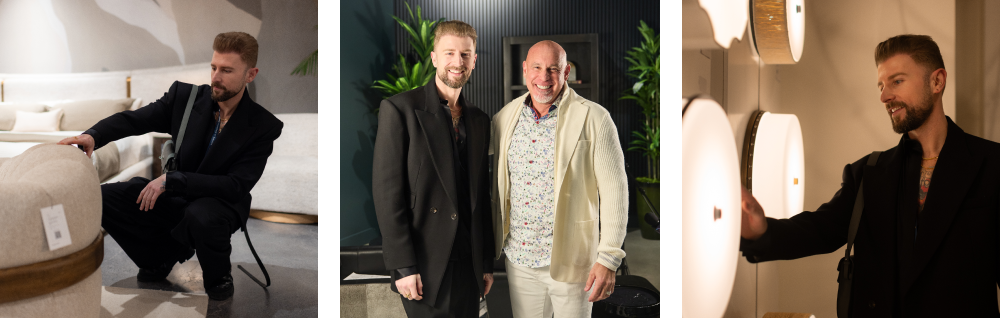
On this week's episode of The Market Makers, host Jon Pertchik explores Grey’s design instincts, his ever-growing social media presence and why explaining the process behind good design matters more than ever.
Despite his viral following, Grey never intended to become an on-camera personality. A self-described private person, he credits the idea to his partner, who encouraged him to share his design knowledge online. The concept was simple: break down interior design in a way that everyday homeowners could understand. That clarity quickly struck a chord, and changed everything.
One of Grey’s earliest videos, explaining how he makes a bed, unexpectedly went viral. The clip generated millions of views and revealed a clear appetite for accessible design education.
“You can spend so much money on a space,” Grey shared. “But if you don’t have balance, it’s always going to feel off.”
Balance, proportion and visual weight are concepts Grey believes anyone can learn. His ability to explain those ideas traces back to his academic path. After studying architecture and interior design, Grey pursued a Bachelor of Education, sharpening his ability to translate complex design principles into digestible insights. That combination of design training and teaching instincts ultimately shaped the content he shares today.
“I want people to understand why something looks good,” he says. “Once you understand the principles, you can apply them anywhere.”
That approach has helped Design Daddy grow rapidly in less than three years. Fans now regularly recognize Grey in public and occasionally call out the brand name that launched his digital presence.
Behind the viral clips, Grey remains deeply focused on his residential design work. After starting his career in commercial interiors, he eventually launched his own firm and shifted toward residential projects, where he says the work feels more personal and collaborative.
No matter the project, the process always begins the same way: walking into a space and observing. “The space tells me everything I need to know about what I want to do.”
For Grey, great design isn’t simply about creating beautiful interiors. It’s about helping people understand how their homes function and giving them the tools to make those spaces better. As his growing audience suggests, people aren’t just looking for inspiration. They’re looking for the explanation behind it.
Phoenix Grey:
It's definitely one of my superpowers, but it's also very annoying. I can walk in a space and I immediately know what I want to do to change it, what I want to do to make it better. My friends hate it when I come over because they're like, "Don't. Don't even tell me. I already know."
Jon Pertchik:
Today on The Market Makers, Phoenix Grey, the designer behind Design Dad, a social media phenomena that started with a video about making a bed. Phoenix never wanted to be on camera. He's actually a very private, humble guy, but his partner saw something he didn't and pushed him to share his brain with the rest of the world. Now, strangers stop him in airports and designers everywhere are trying to copy what he does. Spoiler alert, they can.
Well, welcome Phoenix Gray. I am so excited to have you here.
Phoenix Grey:
Thank you for having me.
Jon Pertchik:
In doing some research, I spent some time watching some of your shows and other things, and tell me why you don't like hanging pots. Most designers gatekeep. Phoenix does the opposite. He gives you the why, and we'll get there. But first, back to why he hates hanging pots.
Phoenix Grey:
In a kitchen that's already very busy, you're in there every single day, all the time. There's things all over the place, to have hanging pots, just obstructing a lot of that visual. It creates a lot of visual clutter in a space. So that's one of the big things that I'm always against. I've always kind of created form and function together in a lot of my interiors, and I think that's what's kind of grown me so much for people to see and appreciate that interior design isn't just about the aesthetics anymore. It's about the function of how you're living in a space. And hanging pots is one of those things that's on my chopping block. I'm like, "Don't put them up."
Jon Pertchik:
I love that. One of the things that you're really amazing at is converting sort of design and emotion into words. You really have this incredible uncanny way of taking abstract concepts and expressing them. Tell me a little bit about that. Tell me about how that started you on the journey to where you are today.
Phoenix Grey:
So definitely from my Bachelor of Education, I went to go take it because I wasn't sure what I was ready to do right after I'd finished architecture and interior design. And I think it gave me a lot more insight into how to divulge information to people that may not understand from a design perspective. And I think that's one of the greatest things that a lot of my clients come to me for is that I explain to them how the design works. Like, why does it look good? Why can you look at an interior and be like, "This looks really nice." I give them a full breakdown of it so they can understand from a very easy standpoint and be like, "Oh, this is digestible. Now you're talking about the visual weight on one side of the room. You're talking about the color and how things just kind of work."
Jon Pertchik:
Where does that come from? It's really a special skill. It's unusual. It's extraordinary. Have you always been a really great communicator from the time you were a kid?
Phoenix Grey:
My partner would say no.
Jon Pertchik:
My wife would say no as well, but going deeper. Yeah.
Phoenix Grey:
The way I express myself generally, whether it's my fashion, how I act, how I behave, I've always been very, I guess, different and out there. And I think explaining things to people has always been a love language to me. I love when people understand what I can understand. And I know my brain works in so many different ways. And if I'm able to communicate for people to understand how my brain operates, it gives a whole new appreciation for myself, but also on the design side of things. I used to work for pretty big firms and it was always very... They would gatekeep a lot of their design secrets or how they would kind of put things together. And I felt like it was a huge disconnect from clients that are paying for a service to understand the design of why their space looks good.
And then yes, it's a beautiful space, but they didn't understand why. And I've also noticed, especially the kind of clients that come to me, that from their understanding of how their space looks good, they're able to then communicate it to their friends. And that gives them a level up on why their space looks good. It's not just like, oh yeah, they come in, they're like, "Oh my God, your kitchen's amazing." They're like, "My kitchen's amazing because X, Y, Z." I think that's one of the coolest parts is balance is really big for me in a space and you can have incredible furniture and art and lighting in there, but if it's not balanced, it doesn't actually look good. You can spend so much money on a space and all the decor that you're putting into it, but if you don't have a sense of balance in there, it's always going to feel off.
Jon Pertchik:
Some of these deeper philosophies, did you always have a sense of balance and symmetry and a decent sense for aesthetic and design, do you think?
Phoenix Grey:
I've always been very artistic. I've always loved using my hands. I would paint, I would draw, I would sculpt.
Jon Pertchik:
From the time you were a kid.
Phoenix Grey:
Yeah. I think that gave me a lot of insight to as I got older when I actually made a career out of this, is I already had so many years of being able to make things. Even though I didn't have that education as a child, me building something with my hands, that kind of gave me a lot more insight to what I thought looked good. And then, once I had the formal education to really understand why it looked good, that's how I explained to everyone else.
Jon Pertchik:
Again, with the benefit of hindsight, you wanted to express yourself creatively. It sounds like it was always there through art and sculpture and other things. As a young person, did you have the self-awareness that that was a big part of you and you needed to find a path that you could express yourself that way? Or was that sort of something you learned later and then look back, go, "Oh yeah, it was always there."
Phoenix Grey:
I think looking back at it, it was always there. It's so funny because when I went off to school, my entrance thesis was revolved around the game Sims and I was like, "I want to do this as a career. I want to be able to design people." I never actually played the game. I just built the house and that's all I did. And that was kind of like the introduction to it. And looking back at it now, that was my precursor into wanting to understand the technical side of how you can really make this work. I think my biggest turning point is when I started my own company because I had worked for a firm for many years, I was on the commercial side of things. So I did restaurants, bars, and I loved the creative side of it. Commercial is so different from the residential that I do now.
You work with a lot of corporate individuals that they all have 10 different ideas of what they want for their restaurant and you're fighting for an idea being like, "I want to do this because..." And they're like, "I don't think so. I want to do this." And you're usually molding a lot of the kind of creative spaces around what they want versus the interiors that I design for clients now for their homes. They come to me because they like my design. And I think that was the biggest turning point of people coming to me because they like my specific style. My style isn't for anyone. It's very niche. And I think that's what really allowed me to flourish and get really excited about every single day. I'm working from 7:00 AM to 7:00 PM sometimes, but I enjoy it. I have so much fun working for it.
Creating interiors on the residential side is so much more intimate with individuals living in their spaces because they need to love every aspect of it. And I think that's given me so much drive into really enjoying it.
Jon Pertchik:
In commercial, clients have ideas and they fight for them. In residential, they hire you for your style. Phoenix made the switch and then his partner had another idea. How does that process work? I mean, I'm curious in what matters when you first meet a new engagement, somebody approaches you and they say, "We love your style, we love your design." How does your process work?
Phoenix Grey:
The first interaction I like to do is I like to see the space. The space for me tells me everything I need to know about what I want to do. I would say it's definitely one of my superpowers, but it's also very annoying. I can walk in a space and I immediately know what I want to do to change it, what I want to do to make it better. And I'm already thinking of ideas. My friends hate it when I come over because they're like, "Don't. Don't even tell me. I already know."
Jon Pertchik:
I am absolutely triple blind to that. Is that how your brain works? If you were to walk into this space and you understand this was a home and it was a living room, let's say, you just start to see things?
Phoenix Grey:
Yeah.
Jon Pertchik:
Why? What is wrong with you in a really good way? What do you do? How do you see that?
Phoenix Grey:
I don't know at what moment it clicked and that started happening, but it's, like you said, it's both great and terrible at the same time. I walk in and then I'm looking at all the different kind of interior design principles from just a different lens being like, "Okay, maybe that coffee table's too big. We need to have a different height. We need to move a few things in the room in terms of spatial planning." I always tell clients, I'm like, "I'm going to come in. We're going to see everything and I'm going to..."
Jon Pertchik:
So you warn them.
Phoenix Grey:
I warn them. I was like, "You've seen my videos where I'm judging Hope Depot or Hope Goods, all those things. I'm going to come in, I'm going to judge your house, but I want you to kind of see it with an open mind and I'm going to show you so then you can understand where things are going wrong now so we can fix them."
Jon Pertchik:
So that's already getting to the why before you've even gotten started really.
Phoenix Grey:
Yeah.
Jon Pertchik:
Sitting here, can you reflect back the first time that happened?
Phoenix Grey:
Honestly, I don't think there's one specific point where that started to work for me. I think it started like a continuation and I just realized, I'm like, oh, I'm going into a space and I'm thinking, "Okay, if we had different lighting here, if we could highlight this wall, maybe this art piece needs to be scaled down." I don't know how it started, but it started and it hasn't gone away.
Jon Pertchik:
So tell me about Design Daddy. Tell me about the genesis of that. How did that start?
Phoenix Grey:
So it was actually my partner's idea. So my partner owns an agency that he handles a lot of big influencers, celebrity level and he kind of manages it from the PR level and all their kind of like marketing, everything. And he's like, the first probably year and a half of us dating, and he's like, "You're so talented. You need to go on social media and you need to tell people how to do stuff."
Jon Pertchik:
Until he said that, did you have any sense like, "Oh, there's this other channel. There's other way of presenting my creativity," or not at all.
Phoenix Grey:
No idea.
Jon Pertchik:
So, I mean, one of the lessons everybody is, he said, "Hey, you're so creative. There's this whole world, channel it this way." That's how it started?
Phoenix Grey:
That's how it started. He was like, "You need to jump on social media and I need you to share your mind with people." And I was like, "No, I don't want to do this." I don't even like being on social media all the time, but I do it because it's part of the business now.
Jon Pertchik:
You seem like a [inaudible 00:10:06].
Phoenix Grey:
And then when we started, he was like, "Okay, we need to think of something clever that's going to be clickbaity."
Jon Pertchik:
Right.
Phoenix Grey:
So we thought and we thought, we're like, okay, what kind of design, something that can get people interested. And he was like, Design Daddy. That's what we're going to call you.
Jon Pertchik:
The name is awesome. It's memorable. You hear it once, it's like, you'll never forget it.
Phoenix Grey:
It's turned into this whole phenomenon now that whenever we go out in public, he always makes fun of me because people come up and they don't even... They know my name most of the time, but they'll be like, "Oh my God, are you Design Daddy?" And it's really cool. Even when we were at the airport flying here yesterday, three people in the airport came up and they're like, "I just want to say that I love Design Daddy."
Jon Pertchik:
Wow.
Phoenix Grey:
So he had me do videos. He's like, "We're going to do celebrity home reviews, like, Architectural Digest." He's like, "I want you to look at the pictures, just do a green screen as if you were talking to me. Just be like, okay, tell me what you like and what you don't like, but explain why."
Jon Pertchik:
So back to what you already do so well, and the same, what you described about a room and looking around and seeing things, it's just like express yourself and give the why. So that one must have been natural to you.
Phoenix Grey:
Yeah. When it came to speaking about it, I had no problem. Being on the camera, a whole different story, but the topics were very easy. And I think the very first video that ever blew up was... It's so funny. I was making my bed one day and I'm very OCD about the way that I make it. And Anthony, who's my partner, he's like, "I'm going to film you making the bed." And he's like, "I want you to explain why you make it and make it so well." And I was like, "No, this is stupid." I think it got, oh my God, like six or seven million views in the first, less than a week. And people was just like, how... For me, it was just such an easy thing that I did naturally every single day, but then explaining to people like, "Oh, I use two duvets if I want that kind of waterfall over the edge, the way I flick it and then it lands perfectly in a nice fold." He was like, "It's so bizarre to see how you do it." And he's like, "I want people to see that."
Jon Pertchik:
There's so much to that.
Phoenix Grey:
My partner Anthony described it, he's like, "The way that you make a bed, it's so perfectly," but he's like, "The way that you do it is so effortless." And he's like, "If I were to try and remake a bed like yours, it would look nothing like it."
Jon Pertchik:
Right.
Phoenix Grey:
So he's like, "I just want you to explain how you do it." And it felt so silly in the moment, but it's just like the little things I'm like, okay, the perspective and the scale of the pillows, how they're placed. This is more of like on the decorating side of things, but I'm like, that's how you complete the space in a whole to make it look good. It's not just about the architectural elements, it's everything that goes in. It just felt very bizarre to explain how to make a bed from an interior designer's perspective.
Jon Pertchik:
Now what about the breadth of what Design Daddy shares with the world, the evolution of it?
Phoenix Grey:
Yeah.
Jon Pertchik:
Was that more Anthony's guidance? Was it intuitively you or you and him kind of like, how did that start to become what it is today?
Phoenix Grey:
When we started, he asked me question, he's like, "What do you want Design Daddy to be?" He's like, "What's your design philosophy?" For me, I've always wanted design to be accessible and you can have a beautiful home, whether you're renting or you have a $10 million home. As long as you are able to apply the design principles that make a space look good, you don't have to be spending $20,000 on a sofa. You can still have a beautiful IKEA piece. And I think that's where it started. And that's, I think what gained so much traction was that I wanted everyone to be able to understand and appreciate designing their home because everyone's got a home. Everyone should deserve to enjoy living in their space no matter what budget they're on. And I think that's what gave such a wide reach.
Jon Pertchik:
Is that, what you just said, almost like the essence of the purpose of Design Daddy to be able to enjoy the home you're in, not on a budget, and make it approachable and accessible?
Phoenix Grey:
Yeah.
Jon Pertchik:
So where are you heading with Design Daddy? I mean, do you have an idea of where it can go? I mean, will this evolve into other things, other places?
Phoenix Grey:
I think so. My partner said his goal for me was to always be on TV. He's like, "I want you to have a TV show. I want you to be able to share everything, all your education, your expertise to the mass market of everyone being able to understand." And social media so far has been such an introduction to that that's grown so quickly. We've been doing this for less than three years now.
Jon Pertchik:
It's amazing.
Phoenix Grey:
To have this many followers at this point, it's kind of like wild and it's very-
Jon Pertchik:
You're definitely striking a nerve. It's obvious. I mean, by definition, by virtue of what you just said.
Phoenix Grey:
Thank you. It's still very humbling for me because I don't consume social media as much, so I'm not on it. As much as I'm on social media, I don't like consume it. I'm not constantly watching other people's videos. So when people come up to me, or even when clients, when they book a consultation and I'm talking through their space, they're always like, "It feels very surreal to actually talk to you in person. I've been watching it for years." People want to be able to engage with a person that they like, especially a designer. Designing an interior for someone is so... A level of intimacy that people don't understand. I ask super weird questions. I was like, "Where you put your toothbrush after you finish it? Do you watch TV and eat dinner? Do you eat a dining table? Do you have your island?"
All of these weird questions I ask people to see how they live their life that a normal person would never ask, which is really cool because by the end-
Jon Pertchik:
Most designers won't ask you. It's just different.
Phoenix Grey:
I end up becoming really good friends with a lot of my clients at the end of it because I get to know them so well. And once they're living in their space, it feels really grateful to know that they've made the right decision to choose me to make a space just for them.
Jon Pertchik:
It's got to be really satisfying on a personal level. It's got to really value-
Phoenix Grey:
The very first project I ever completed when I started my own firm, when I walked in, when it was all done, I got so emotional walking in because I was like, I'm so proud of myself to be able to actually do this myself without any outside help. And I walked in, I was like, "I know what I'm doing. I'm doing a good job and I'm on the right path."
Jon Pertchik:
Six million views, who would've thunk for making a bed? Wow. Phoenix was definitely onto something. He was delivering something that people were hungry for. For someone who's somewhat private, how intrusive in your day-to-day is your social media creation?
Phoenix Grey:
It varies. The one thing my partner didn't tell me that social media was going to be a full-time job on top of my full-time job.
Jon Pertchik:
Right.
Phoenix Grey:
But he has an entire team that's been able to assist me in terms of editing and filming.
Jon Pertchik:
Sure.
Phoenix Grey:
I have a social media assistant that helps my day-to-day interactions on social, so it kind of allows me to step away from it because I have a great team that I can trust. It comes in waves, too. I'll have good days where I'm like, I'm ready to be on and I want to talk. And then I have days where I'm like, I'm so swamped with work. I'm like, the last thing I want to do is jump on my store and be like, "Hey guys, things are like..."
Jon Pertchik:
Or you just want to go do something... We're allowed to have this thing called a personal life, too, and indulge that part of us, too.
Phoenix Grey:
I think the great thing about at least the social media presence that I've built so far is that even though I do talk about the lifestyle, it's not my specific lifestyle. I talk about general interiors. So I've never been pulled into feeling like I need to speak about certain touchy topics online and I can be like, "No, I'm just here to educate you about your interiors." It allows me to have that kind of disconnect where I'm like, I don't need to share everything about me personally, like what I'm doing day to day. I'm like, I don't need to be like, "Oh yeah, I'm going to go watch a movie and I'm doing this." I'm like, "No, I'm talking about a project. These are the samples I'm looking at." Even if it's just all my stories, I'm explaining something that's about work specifically, not more as like... Oh, I mean, yeah, I'll post the pictures of me going to the gym and stuff. I'm not telling everyone my day-to-day basis.
Jon Pertchik:
Speak about wellness, both in your life and in Design Daddy and back to expressing yourself. How does that wellness and sort of fitness tie into all of that?
Phoenix Grey:
Getting into fitness wasn't something that I ever thought I would be interested in until I realized that was kind of like my escape. That was my me time. I'm one of those weirdos that wakes up at 4:30 in the morning and goes to the gym when there's no one there. I have my music on, I listen, I enjoy. That's my me time that kind of sets me up for the day. And it keeps me sane, too. Before I would work out, I would say originally I would go to the gym in the evening after work and I just had so much frustration and I had no motivation to go. And by the time that I would go, if I have to wait to go on a machine, I'm done. I'm like, I'm already onto the next one. If there's multiple machines, it's just a sign that it's not meant for me to be there.
So I was like, "Okay, you know what? I'm going to try going in the morning." And this was probably over 12 or 13 years ago now when I was like, "Okay, I'm going to go early in the morning. I'm going to see how it is." The fact that there was maybe two other people in the entire gym, I could do whatever I wanted. I could take longer on the machines. And it gave me, like you said, I had such an endorphin rush in the morning. I would come home, shower, and that gave me the motivation to start early, like work in the morning. Instead of starting at 9:00, I'm usually, I'm back by 6:30, 7:00. I finish my workout, shower, get ready. I'm already looking at emails before my team even arrives and I don't feel bad about it. I'm also one of those weirdos that doesn't drink coffee. My partner thinks I'm wild for it.
Jon Pertchik:
I drank a Celsius after two cups this morning.
Phoenix Grey:
But the working out in the morning, it gives me that motivation to really keep going throughout the day.
Jon Pertchik:
So putting it all together, balancing that me time, fitness part of who you are, the social media intrusion in your life, but generating content and having a team to help you and then having time to do, I guess, partly what you love and serving your customers, clients, and creating those relationships and creating great spaces for them, how do you juggle those things?
Phoenix Grey:
I would say the biggest lesson was setting boundaries. That was really hard for me. The first few years of my business, I said yes and did everything I possibly could. And the last year, I had a really bad burnout that made me realize that I need to understand kind of not where my priorities lie, but I need to shift a lot of my priorities to what takes precedence over the other. And setting boundaries at certain times of the day, like my phone after 7:00 PM goes on do not disturb, unless it's an emergency and someone's calling me. It allows me to actually disconnect so I can wind down and I can actually fall asleep. Because the other terrible and great thing about my brain is it doesn't like to turn off when I'm thinking about the creative process. If I don't have that disconnect time, I'll wake up in the middle of the night with ideas that I've written down on a pad like chicken scratch in the middle of the night in the darkness.
But we plan everything in advance. A lot of my content is almost like two months in advance. We have specific days where I'm at the studio and we kind of batch film a lot of like our YouTube series where we're doing like between five to eight videos in one day instead of doing like a whole weekly one. It allows us to really kind of like pre-plan for everything because it's a full-time job on top of like working with clients. And as long as we have everything planned well in advance, that makes it work a little bit easier. And then, also having the support team behind me. My partner and his entire team have been able to grow Design Daddy to where it is now and I'm very grateful for having the right people around us.
Jon Pertchik:
So boundaries, balance, organization, planning, and a good team.
Phoenix Grey:
Yes.
Jon Pertchik:
So we're here actually at World Market Center. Are you going to have a chance to walk around here hopefully and see things, get inspired, talk to others in the community? Will you have an opportunity or is this too quickly?
Phoenix Grey:
Yes.
Jon Pertchik:
Oh, good. Okay.
Phoenix Grey:
We came in early yesterday and I had a chance to kind of go a little bit around. And it's so funny. I was telling my videographer, Eric, that I'm here with, is that we just finished the interior design show in Toronto and seeing this in comparison made it look like we had nothing. We had absolutely nothing in Toronto comparison. Just the few little places I stopped in were so inspiring to see such unique furniture and decor and stuff that's like innovative. That's what gets me excited about design is when I see things that no one else has and that are like new and exciting that want to make me design around a certain thing.
Jon Pertchik:
Well, thanks so much, Phoenix Grey. Thank you so much for being here. I'm grateful you took the time in your crazy, balanced, interesting life to spend a few minutes with us here. So thank you so much for being here. I hope you have a productive walk around here at World Market Center.
Phoenix Grey:
No, thank you for having me. This has been so exciting. This is actually my first ever podcast I've been on to talk about design.
Jon Pertchik:
Oh, nice.
Phoenix Grey:
So thank you for being my first one, and I cannot wait to see the rest of these incredible things they have here at the market.
Jon Pertchik:
Here's what Phoenix figured out. People don't just want beautiful spaces. They want to understand why they're beautiful. That's the unlock. Give people the why, make the why matter. I'm Jon Pertchik. If you enjoy today's conversation, follow along and join us each week for more stories of transformation from the people shaping how we live, work, and gather.
Want more conversations like this?
More amazing guests are on deck. Subscribe to stay in the loop.