EPISODE #118
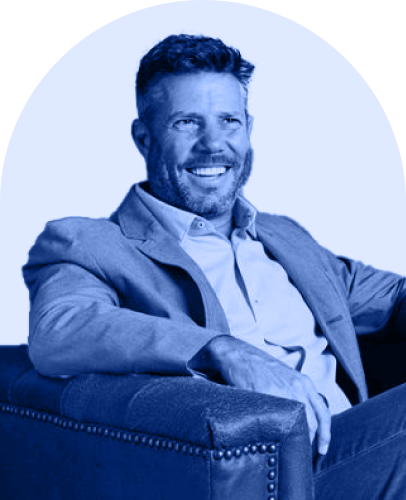
MATT BRIGGS
Why Authenticity Isn’t A Strategy—It’s the Entire Thing




Sometimes, life’s biggest decisions happen where you least expect them. For Matt Briggs, CEO of Four Hands, it happened on the ski slopes of Colorado.
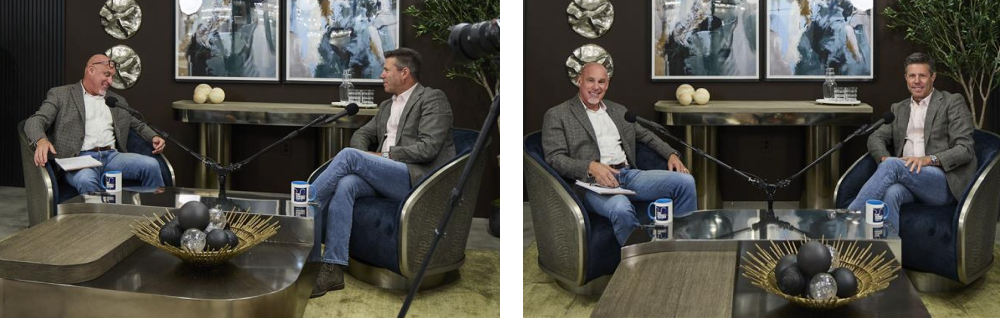
As one of the most compelling leaders in the home furnishings industry, in this episode of The Market Makers, ANDMORE CEO Jon Pertchik sits down with Briggs to trace the journey from his early days growing up in Johannesburg to leading the helm of what Jon calls the hottest furniture company in the world.
Briggs grew up in South Africa in the 1970s, at a time when television had yet to fully enter everyday life—something he often credits for shaping a more grounded, experience-driven childhood. While his family was based in Johannesburg, much of his formative years were spent on a remote farm five hours away. Those memories left a far greater imprint than the routines of city life, rooting his perspective on independence, curiosity and a sense of adventure that would carry into adulthood.
A Rotary Exchange program later brought him to the small town of Peoria, Illinois, where he arrived expecting California sunshine and found something closer to the fictional town in Footloose: cold, gray, and quietly transformative. During this time, his host family took him skiing, and eventually to Colorado. His love for the sport and the state set him on an unexpected trajectory, ultimately leading to Austin, Texas, where Four Hands was born.
Today, Four Hands is a full-line B2B supplier manufacturing across nine countries, with a product range that spans rugs, case goods, upholstery, outdoor accessories and a thriving art business. But what sets the company apart isn't its ability to scale. It’s authenticity. "There's nothing manufactured or synthetic about it," Briggs says. "Everything has been really organic, doubling down quickly on what works and getting away very quickly from what doesn't."
That clarity has defined every chapter of the company's growth. When they tried to build their upholstery business the way everyone else did it, they failed twice. The moment they went back to their own DNA, their own aesthetic and approach, everything clicked. As Briggs reflected, the switch was simple. “We went back to basically why people buy from us in the first place, then it really started working."
Briggs also shares how Four Hands values the importance of physical Markets. "We do all this preparation, develop all this product, put this whole look together, bring it to the showroom, and the customers grade you on it by whether they order it or not." It's a philosophy as simple as it is effective - the product will continue evolving, but the company’s DNA isn’t going anywhere.
Matt Briggs:
I got sent to a little town outside of Peoria, Illinois, with about 4000 people. From watching American movies and stuff, I was picturing something like California, convertibles, great weather. Peoria, Illinois was cold, gray, and not dissimilar from the mythical town of the movie Footloose.
Jon Pertchik:
Hey everybody. I'm Jon Pertchik. Welcome back to another Scale Up story. Today I sit down with Matt Briggs, CEO of Four Hands. Matt Briggs is running not so arguably the hottest furniture company in the world. He has a cult-like following, both amongst his labor base, his teammates, as well as outside, and it's well-earned. Matt is both a big picture guy, he sees the bigness in everything, he looks past what's right in front of him, and yet at the same time, his attention to detail on how he manages the business is truly incredible. Matt sees opportunity where others see transaction. Matt grew up in South Africa, but a trip to Colorado made him fall in love with skiing, and somehow that changed the course of his life. He's famous for changing out and growing SKUs, meaning product development, leveraging technology, and using great photography. He really is the complete package and a leader in our industry. I hope you enjoy the Scale Up story.
I'm here today with my good friend, Matt Briggs, who's CEO of Four Hands. Let's start with just, maybe tell our audience a little bit about Four Hands. Maybe just give a word or two on the nature of the company. Who is Four Hands? What is Four Hands today?
Matt Briggs:
We are a B2B supplier in the industry, and we're based in Austin, Texas, which I think is an important part of the culture and who we are. We're basically a full-line supplier, so anything that you would have in the home, we sell, from rugs through synthetic plants, and obviously case good accessories. We manufacture in about nine countries. I think defining features of Four Hands, for me, it's a highly authentic brand.
Jon Pertchik:
Great.
Matt Briggs:
There's nothing manufactured or synthetic about it. It started as a tiny little import company bringing in antiques, and over the years, I think just always seeing where the market is going, seeing where opportunity presents itself, what we're getting a reaction to. We've built this company up from basically selling really just antiques, and then mostly case goods, and done something that really hadn't been done well in the industry before, which was doing both upholstery and case goods, and then outdoor accessories, and then we have a full, pretty thriving art business. I think how we got that today is literally, everything has been really organic and it's been through just doubling down quickly on what works and getting away very quickly from what doesn't work. We really do care about what real quality means.
One of our views around that is, when people think of sustainability and green furniture, to me, there's nothing more sustainable or green than a product that lasts a long time. For me, that's where quality really starts, and I think it's part of the sort of DNA of the company, is that I think what's hurt the industry so badly or been so challenging for the industry over the years is being tied to old ways. "This is the way things have always been done." I think part of the magic for us of being an Austin company and growing up essentially without the industry around us and without industry people at the company, I think we've always been a lot more open to, how do we make things just in a different way, and just better?
Jon Pertchik:
Right. Right. I want to scratch a little itch and go back a ways. Maybe tell me a little bit about growing up.
Matt Briggs:
I was born in the 1970s. When you grew up in South Africa in the '70s, you were very aware that you were growing up very isolated from the rest of the Western world. All the music we listened to, the books we read, everything came from overseas, but we also grew up through a sort of interesting time warp in the sense that the country didn't have TV, I think, until '76.
Jon Pertchik:
Interesting.
Matt Briggs:
It didn't sort of become common in homes until probably about '79, so I essentially grew up literally without TV. We were based in Johannesburg, which is the largest city in South Africa, but we also had a family farm that was about a five-hour drive away. We spent all the holidays there, and it made a much bigger impression on me growing up than living in the city did. I think back to all my memories of growing up. If I think about it, all much more based around the farm and the culture of that and the things we did that were exciting, more than sort of the mundane, getting up and going to school and coming home.
Probably other defining thing is, my brothers and I all went to boarding school when we were about 12 and did our last five years of school at boarding school, and that also is a hugely defining experience, I think, for all of us. One of the main experiences of boarding school is you get a lot more independent and a lot more self-reliant, a lot younger. You really just have no choice. It was definitely a survive or die environment that was not supportive, in retrospect. It was a very harsh environment, but some of the lessons they taught there that were really invaluable in life was about taking responsibility for your own actions. All the punishments and incentives at the school were surrounded around taking responsibility for your own actions. I think that mindset that I got from that, I think has in a lot of ways sort of defined my adult life.
When I was a senior in high school, I'd never left South Africa. I'd never been out of the country, and at that stage, and I think it still exists, there was a Rotary Exchange program that you could apply for, and you couldn't pick too much. You basically got to go to another country for a year, and you didn't always get the country wanted, but you got to pick the country you wanted, and I picked the US. When I graduated high school, I got sent to a little town outside of Peoria, Illinois, of about 4,000 people. From watching American movies and stuff, I was picturing something like California when I came over here, so I was sort of picturing convertibles, great weather.
Jon Pertchik:
Girls in bikinis and beaches.
Matt Briggs:
Girls in bikinis and great music, and Peoria, Illinois was cold, gray, and the town I was in was not dissimilar from the mythical town in the movie Footloose, which was extremely religious conservative.
Jon Pertchik:
Right. No dancing.
Matt Briggs:
Quiet town, but that year, I went to a semester of high school and then a semester of college.
Jon Pertchik:
Oh, interesting.
Matt Briggs:
The family I lived with took me and two other Scandinavian exchange students skiing, and I'd never seen snow before in my life. The first day on skis, I was like, "This is incredible." Then, I loved it so much they took me out to Colorado and I skied for about four or five days there, and kind of fell in love with it. I went back and did my four years of undergraduate in South Africa, was actually booked in to do an MBA in South Africa, in finance, and I was talking with my two older brothers, and one of them specifically, and he said, "Well, why are you doing that?" The answer was, I really didn't have a good answer. It was because I didn't know what else to do, and he said, "You will never work a day in your life in finance, so I don't know why you would do an MBA in that." I was like, "He's probably right."
Jon Pertchik:
Interesting.
Matt Briggs:
It was pretty common in, I think South Africa, Australia, New Zealand, it definitely is part of the culture to travel for a year after college, because if you settle down in those countries, you may never travel again. I thought, "Hey, I did it for a year and it was fun. Why don't I go do it again?" I'd really liked Colorado, so I got on a plane and I flew to Colorado.
Jon Pertchik:
Did you choose Colorado partly because just that great ski experience, or was there more to it? Was it more studied, you had a plan, or more just a little adventure?
Matt Briggs:
I didn't have a large plan. Part of it was, two girls at university that I knew really well got jobs in housekeeping at Keystone. They said I could sleep on their floor for a few days, so I figured that was as good a place to start as any.
Jon Pertchik:
A free floor to sleep on is what was enticing to fly across the world.
Matt Briggs:
Exactly, so I got there and spent a couple of weeks looking for a job, and I got a job as a photographer on the ski hill. That chance meeting of seeing an ad in a local paper, and I'd been taking the free bus all over the county looking for jobs, and the photo studio was a 300-yard walk from where I was. I walked down and chatted with them and they said, "Come back later and meet the owner," and I met him and he offered me a job on the spot. That really chartered the course for absolutely everything that's happened since then.
Jon Pertchik:
Were you a very good photographer at that point? I mean-
Matt Briggs:
I was a hobbyist. I mean, I had a camera, so I had a camera, enough to be interested in it. I mean, it fascinated me, and my work ethic, the guy said to me, "Well, how many days can you work?" I said, "I don't understand the question." He said, "Well, a lot of people who want to come to Colorado, they want to work two days a week or three days a week." I was like, "I can work seven days a week. I mean, that's no problem, and I can work evenings and nights if you want." He's like, "Well, I'm not going to pay you to do that, but I'll sell you a box of photo paper at cost and I'll let you mess around yourself." I learned how to print, and then sure enough, when the printing guy got sick a few months later, suddenly I was the guy printing-
Jon Pertchik:
Well, so you're already expanding the supply chain of your little nascent business, right? I mean, it's, you're a photographer, now you're moving into other aspects of it. Where did that natural curiosity and the sort of ... Maybe it wasn't intentional at the time, but with the benefit of reflection, what you know now in life and maturity and experience, you were really building out the entire supply chain of a business at the very beginning. Where does that come from?
Matt Briggs:
I knew at that age that I wanted to have my own business, and I viewed life completely as in the form of opportunity. When I realized that later in life is when people were applying to work with me or working for me, even when I ran that business, was they said, "Well, am I going to get paid for that, to do that?" If they weren't, they weren't going to do it, and I just never had that mindset. I had a mindset of, the guy we worked for, he was a master photographer. I said, "Can I come on a wedding shoot with you?" He said, "Well, I don't need an assistant, so I can't pay you." I was like, "I didn't ask you to pay me."
Jon Pertchik:
Right. Where does that come from in you? I mean, I know it probably is just sort of naturally burning inside of you, right? The work ethic, the drive, the curiosity to continue to learn and expand and grow your mind and ultimately challenge yourself, where does that come from?
Matt Briggs:
I have no idea. The turning point was, I worked for this guy for a winter and then he asked me to stay for the summer, and at the end of the summer, he asked if I would stay on, be the assistant manager of the business, but to do that, I had to get a work permit. He sponsored me to get an H1B visa to work for him, which was kind of a turning point. I don't think in this day and age you could get an H1B visa for being a photographer in a ski town, but in those days, somehow that worked. That was a real turning point, and I ran that business for a few years, but how we got into furnishings was, this guy was going down to Mexico and buying mostly pottery. We were putting these things in the photo studios just to have it around, and we were selling this stuff. Pretty early on, I mean, the one that made the impression on me, we were buying these four foot high pots for about $9, and we were selling them for 89 bucks.
Jon Pertchik:
Wow.
Matt Briggs:
I was selling my time as a photographer for about $40 an hour at that stage, and generally, you maybe got four to five hours' work a day. When I started selling three pots to someone for 300 bucks, that cost $27, it sort of was like ... There's something in me that goes, "This may be a better way to make a living."
Jon Pertchik:
Right.
Matt Briggs:
When he sold that business to a national chain, I was sort of left a little bit out in the wind, and I landed up taking over one of the photo studio spaces that was no longer ... The people that bought the business didn't want to keep. He wanted to move to Miami, so he kind of just said, "Hey, if you'll buy the inventory that's in there, you can have it." We went down to Guadalajara and I saw where he was buying the stuff, and I sort of doubled down and filled up a 53-foot truck, brought it in, took up more space, had very, very little money, so the other things I did, I started a rug store, because a rug family out in New York would consign the rugs to me for free, and we started art galleries, because the artists would consign art.
Basically, I did home furnishing, rugs, art, and that was the year, about six months into the business, I wanted to add another aspect to it, and I found these antique Indian trunks in Denver and sort of pursued it back and found out they'd come from this guy, Brett, in Austin, with this company, Four Hands, he just started.
Jon Pertchik:
I see. Right.
Matt Briggs:
I called him up.
Jon Pertchik:
This is '96-ish?
Matt Briggs:
Yeah, '96. I called him up and flew down to Austin and bought about 15 antiques from him and shipped them to Austin, and we became friends, and that was kind of how that all started.
Jon Pertchik:
Interesting, and so just where were you in Colorado?
Matt Briggs:
I was in Breckenridge.
Jon Pertchik:
Oh, you're Breck. Oh, awesome. Okay.
Matt Briggs:
Yeah, so that was when my store was on Main Street, there. I had that store for about four years, and finally, the family that supplied me with rugs bought the store from me.
Jon Pertchik:
Interesting.
Matt Briggs:
That sort of freed me up, and I moved to Austin in 2001 and joined Four Hands then.
Jon Pertchik:
Tell me about, this is 2001, you got to Austin. There's significant changes that have happened in Four Hands between then and now, to say the least.
Matt Briggs:
Sure.
Jon Pertchik:
Maybe speak to some of those bigger transitions, those strategic choices you made along the way to really change that business.
Matt Briggs:
Sure. I mean, there's so many, because obviously next year it'll be 25 years.
Jon Pertchik:
That's amazing. Congratulations.
Matt Briggs:
It's kind of a lifetime, so it's sort of hard to pinpoint any, but essentially, we went from antiques to Indian case goods, and then we did a little bit of leather here and there from Europe. We went from importing from one country, which tended to be the norm in those days. If you were in a building with a bunch of importers, one guy was importing from Peru, someone was from Brazil, we were from India, someone else was Indonesia. I think that was sort of the seeds of our growth, was when we were like, "Hey, there's a fragility to importing from one country that will get you caught out, and it's not sustainable," so we started pushing into sourcing from other countries.
Jon Pertchik:
Right. Well, tell me, one of the transitions was sort of from middleman to creator.
Matt Briggs:
Sure.
Jon Pertchik:
Right? I mean, that was a very significant change in the entire business. I mean, where did that come from? What was the seed behind that?
Matt Briggs:
2001 through about 2009 was when the whole import industry, there was just so much creativity in Asia, so a lot of the most creative Western people were setting up in China and Vietnam and doing incredible things. We were buying from these guys. We had some input, but it was mostly their design, but more and more retailers started going direct and going to these trade shows, and we were sort of fighting it out, and it was just getting increasingly uncomfortable. We'd get into these situations where the retailers we were selling to would squeeze us a little bit, because they'd been to the trade shows, and they were like, "We can't buy from your vendor, but we can get something similar, so we're not going to pay that much more." Then, a lot of the suppliers were like, "Hey, we don't want to give you exclusivity because we want to sell to more people," so this being in the middle was like, it was just getting less and less comfortable. To me, kind of, the writing was on the wall that we were never going to control our destiny while we were basically buying from creative people and selling to retailers.
We did a partnership early on with a couple of creative people, and then really made the decision we had to bring creativity inside and become a design house, which now seems like a foregone conclusion. At the time, I was like, "Well, how are we going to do that? We're going to become a creative ... "
Jon Pertchik:
It's so significant going from middleman, and you start to observe that value proposition maybe getting threatened and diminished.
Matt Briggs:
Absolutely.
Jon Pertchik:
You're pivoting, and I mean, from a how you function standpoint, it may all be furniture, but they're two completely different things, being, in quotes, the middle man, and being a creator.
Matt Briggs:
Totally different. Yeah.
Jon Pertchik:
Functionally, that's why I want to pause on this, because functionally and operationally, it's so different, even if the output to the consumer might seem similar or the same. It's furniture you're selling, and other related. You're starting to develop this awareness that they're maybe getting squeezed out slowly, and now you're starting to have sort of the courage to say, "Wait a second, we need to pivot and change a little bit." What was that like, thereafter? From the moment of that decision, that's a Herculean change.
Matt Briggs:
Yeah. I mean, when you make a decision like that, it's always liberating in some way, because you're like, "We know the direction we want to go and I know what we want to do," but it wasn't without its hiccups. I mean, even the upholstery one, today it seems obviously we're an upholstery company, it's a quarter of our business, but I had two miserably failed attempts at upholstery, where we did a program and got fully behind it and it completely collapsed, twice in a row.
Jon Pertchik:
With the benefit now of what you've learned, what happened? What went wrong?
Matt Briggs:
Several things went wrong. One is, we partnered with the wrong person the first time, who kind of let us down, but the other thing was, we did something that I've learned to never do again, which is, I tried to do what the market was doing. We tried to do North American made, custom, give people different fabrics and give them choices, and there's a lot of people doing that really well here, but what we realized, the reason people came to Four Hands in those days for our case goods was because it was in stock, they liked the way it was designed, they liked our aesthetic. In the end, when we pivoted over to saying, "Hey, we're going to design our upholstery, we're going to cover it in fabrics that we think look good and we're going to have them in stock for immediate shipment," and went back to basically why people buy from us in the first place, then it really started working.
Jon Pertchik:
Right.
Matt Briggs:
I mean, after the second failed attempt, I nearly, nearly gave up on it, really came close.
Jon Pertchik:
Really?
Matt Briggs:
Yeah. Where I was like, "I just don't know if this can be done," because again, no one in the industry was doing it at that stage, where they were doing case good and upholstery well.
Jon Pertchik:
Right, right.
Matt Briggs:
It was always like one was the afterthought.
Jon Pertchik:
I mean, maybe to recap a piece of that, so the learning was you were going after what the market was doing as opposed to being authentic.
Matt Briggs:
Yeah. For the only time ever, we'd done that, because everything else we'd done had been, "Hey, let's do it our way and be authentic, and we don't care what the industry does," but when I went into upholstery, I was like, "Well, we should learn from the industry. How do the pros do it?" The truth is, we could never compete with the people who are doing that well, because they do it phenomenally well.
Jon Pertchik:
Right, and it becomes commodity then, too.
Matt Briggs:
Yeah.
Jon Pertchik:
One of the things that's so special about you guys is, I think you're speaking to it right now, is, and I've started to see this through this podcast and talking to lots of amazing people. Authenticity might be the single top factor of people who've been successful, because ultimately, you and your product people, you pick your product development people and designers who in turn have a sense of who they are and how they want to express themselves. The fact that you've proven there's such a market for Four Hands by virtue of your success, if you stay true to that, that market theoretically is there, and over time you're developing the trend. You're not just, hey, the trend that already happened. You're aiming almost behind the target. Now you're continuing to be authentic and aiming, in effect, in front of the target, and it's kind of catching up with you.
Matt Briggs:
In the early days, I was very involved in it and made some key hires, but the VP of product that we have and creativity, and our chief merchandising officer, are honestly both so talented and so fantastic. I have absolute trust in them. I still love product and I like to see what we're introducing, and I maybe nudge things in one direction or another if I think we're over-indexing on a look or just going too far in a direction, or not far enough, but essentially, they've built those teams, they're incredible leaders, very talented. One of the things that helps us is people want to work for Four Hands, especially in product development, so if a position opens up in product for us, there tends to be a lot of people who would be excited to work for the company.
Jon Pertchik:
That's amazing. Jumping off to something else, how you've grown the business, it's really clearly there's demand and that demand keeps growing. A couple of acquisitions you had made along the way I found interesting, because it's not sort of like you're buying a company that does what you do. It was a tech company and a framing company.
Matt Briggs:
Yes.
Jon Pertchik:
Maybe speak to the strategy and thought behind those two kinds of very different acquisitions.
Matt Briggs:
Let's talk about the art company. For that, we made the decision pretty early on that we didn't want things in the showroom that we didn't sell, and you can't not have stuff on the walls, so what happened is, the guy who founded the art company, Joe Garcia, I knew him pretty well from Austin, and we were buying from him and we were his biggest customer, but he couldn't keep up with our demand. A lot of it was just, the resource to invest in the equipment was pretty substantial, so we went through a few iterations of partnering or something, but eventually we sort of decided the quickest road to success was for him to sell the entire company to us and stay on as the brand president. Then, that way, I felt pretty comfortable sinking a lot of money very quickly into machinery, from the scanners and through the printers.
Jon Pertchik:
Having seen them, I just geek out over seeing how things are made, but that equipment is so, to me, at least, cutting-edge and high tech. It was an obviously big capital investment.
Matt Briggs:
Yeah, no, no, we upgrade it all the time. I mean, the printing companies do allow you to trade in some of the older stuff on new, so I mean, just this year alone, we've had I think two new ... Price-wise, we'd call them, would be the Ferraris of the printing industry. Really amazing machinery that does give you a huge competitive edge. That was just around, it was a simple decision in the sense it was Austin based, it was down the street. We were selling the product, and we needed more, and we knew we wanted art as part of our lineup, so that was a fairly easy decision. The tech company was just a pure math thing, where we were giving these guys so much business, and our chief marketing officer, Mike, was sitting down with them and explaining how much more we wanted to do the next year, and they sort of came to him and said, "This is what it's going to cost you," and we sort of decided it might actually be cheaper just to buy the company and get 100% of their time.
Jon Pertchik:
What were they doing for you? What was the range of ... What kind of tech company?
Matt Briggs:
Mostly web development.
Jon Pertchik:
I see.
Matt Briggs:
At that stage, we were trying to sort of have this industry-leading website at that stage, which was pretty challenging, with our ERP and other things like that, so we were putting a lot of resources into it. Again, we didn't have some of that skill in-house, so we just bought this little company and we picked up, I think, about the five employees they had, and suddenly we had 100% of their attention and it really helped just absolutely turbocharge our ability to grow our online business.
Jon Pertchik:
Now, let's just start to look ahead, so what's next? Where is Four Hands in three years, five years, 10 years? What do you envision? How do you envision the company growing?
Matt Briggs:
There's no big pivot coming along, in all honesty, but essentially the DNA of the company is the same as it was 29 years ago, and it's not going to change, which is about developing a lot of really, really great product. Where is the market going? What does the market want? What are people responding to? We're always going to be pushing on the product side, which is a foregone conclusion. The other is technology, for us. We believe that it's a key part of success, and that you've got to invest in the technology, so for us, digital assets are a huge part of our selling strategy, in the sense that we take great photography. We have a huge photo studio in Austin. We have a large team of full-time photographers and assistants, so we're always turning out new photography and video, which is key to us, but we also make those photographs available to our customers for free.
Again, a huge competitive advantage for us. When people are buying a product, a lot of them, even very big customers, they don't have to photograph it, and they have really high quality images. We are re-platforming our website this year to add more functionality to it, but essentially, we're always going to want to have the industry-leading website backed by good technology and the best product.
Jon Pertchik:
I got to see the studio space and the vignettes, really, really interesting, and some of the technology you shared with me there too. How does market fit into your sort of distribution philosophies, let's say?
Matt Briggs:
I mean, market is still huge for us, in the sense, I honestly think about market, for me, as about like semesters at college, and the market is the exam. We do all this preparation, and you study, and you do all this product development, and then you put this whole look together and you bring it to the showroom, and then the customers grade you on it by if they order it or not. It's the sort of the metronome of the industry. I think for the company, it's still the time we get in front of our customers, we get our sales team together, everyone gets to see the new product. It gives us a lot of time with our customers. It also is vital for our culture of the company that the employees get together. Not only our sales team that are scattered around the country, but we always bring any new key employee to market because we feel like until you see Four Hands at market, you won't understand the company you're working for. It's a very human part of the industry, and I still love it.
Jon Pertchik:
I mean, and it's funny, you can't fight the human condition no matter how badly we as humans try, and I think it speaks to that. At the end of the day, human beings need to engage with other human beings in a physical and literal way, and other tools will come and enhance all of that, but in the end, I think you can't fight the human condition, and people want to be around people. Well, this has been amazing. I'm so grateful, Matt.
Matt Briggs:
Absolutely.
Jon Pertchik:
I consider you a good friend, and to take so much time with me, you're an amazing guy, an amazing leader. Everybody looks up to you, and thanks for taking the time, as a friend and as a colleague. Appreciate it.
Matt Briggs:
Absolute honor. Thanks so much for having me, and hopefully it didn't bore the pants off anyone, right?
Jon Pertchik:
I'm certain you didn't, that's for sure, so anyway, thanks so much, Matt.
Matt Briggs:
Thanks, Jon. Appreciate it.
Jon Pertchik:
Here's what stuck with me from Matt. The only time Four Hands has failed was when they stopped being themselves. They tried upholstery the way everyone else did it, actually twice. Both times it collapsed. The moment they went back to their DNA, in stock, their aesthetic, their way, guess what?
Want more conversations like this?
More amazing guests are on deck. Subscribe to stay in the loop.