
EPISODE #120
MICHEL SMITH BOYD
From Turning Down TV to Winning It All: Michel Smith Boyd’s Unlikely Path




"It's not about the stuff. Whatever you're responding to, it's not the thing itself; it's how it makes you feel."
That belief sits at the heart of everything Michel Smith Boyd does and explains why a kid from a town nobody's heard of grew up to become an HGTV design star.
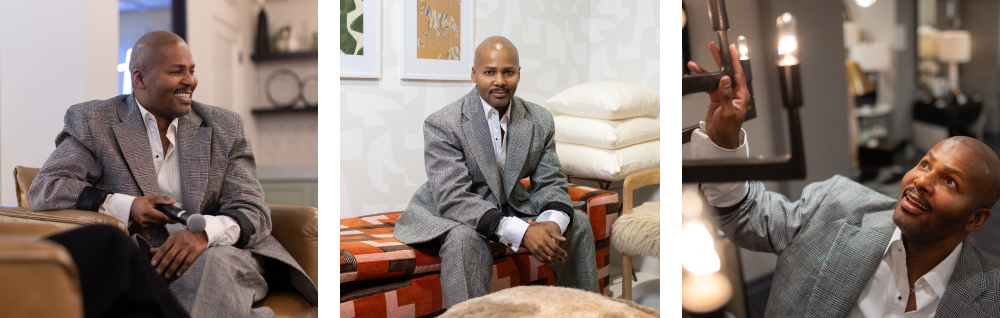
In this episode of The Market Makers, the two-time HGTV Rock the Block winner sits down with Jon Pertchik for a candid conversation about growing up in Thibodaux, Louisiana, discovering design through music and architecture, navigating television fame and what it finally feels like to define success on his own terms.
Growing up in the small town of Thibodaux, Michel was convinced his lack of exposure would disqualify him from what he really wanted. As a kid, he'd flip through magazines, watch television and wonder where those TV stars were and how he could get there. What he didn't realize until much later was that he already had everything he needed to forge his own path. His design influences, his sense of mood, and his understanding of hospitality were right there in Louisiana. "The architecture that I love and the moods that inspired me started out in New Orleans," he said. "They started out in Thibodaux, and in the way my family made hospitality a priority."
For Boyd, great design isn't about the objects; it's about the feeling. He describes a room the way a composer describes music: every room has a score, something that hits you before you can name it. That clarity shapes everything about how he works with clients. For instance, if a $30,000 chair isn't in the budget, he finds what made them love it and gets there another way. "That's what good designers do," he said. "We're thinking people."
Television came calling more than once before Boyd said yes. He turned it down for years. When he finally committed to Bravo, and eventually HGTV, he quickly learned that it demanded a full share of his presence. Winning Rock the Block, HGTV’s most-watched show, changed everything. It opened new doors and brought in a different kind of client. But it also pulled him away from the hands-on, relationship-driven work his firm was built on. This past year, he's been deliberately finding his way back. "What my brand was built on was the nurturing, the attention, the hospitality with clients that I learned at home in Louisiana," he said. "I have to be present for that."
Now, Boyd is in what he calls a moment of pivot — and he's approaching it with a quiet confidence that only comes with time. There's no roadmap for where he's going, and he's made peace with that. "There's no rush," he said. "Stop rushing, Michel." He believes his best work lies ahead of him, and he’s ready to embrace what’s next.
Jon Pertchik
Michel Smith Boyd, you're here with me, and we're already starting here laughing and chuckling. I love it, dude. I love it.
Michel Smith Boyd
Well, I'm laughing already because it felt so formal. I'm like, "Okay, we're not doing that, right?"
Jon Pertchik
Oh, no, no. We're starting there, but we're going to surprise people. No, no, there is going to be nothing formal.
Today on The Market Makers, Michel Smith Boyd, two-time HGTV Rock the Block winner, and one of the most recognized designers in the country. Michel grew up in Thibodaux, Louisiana, a town nobody's heard of. He thought that would disqualify him. Turns out everything he needed was already there.
What I find so interesting, and maybe a place to start, is you've had this fame, this success, all of that, frankly, later in life, but you're also so humble and grateful and wanting to give back. Most people who achieve levels of success somehow lose a little bit of that. Where do you think that starts? Where does that come from?
Michel Smith Boyd
I don't think that I ever had any room or opportunity to not be humble, to be perfectly frank with you. I'm from a really small town, a town that nobody's ever even heard of.
Jon Pertchik
Yeah.
Michel Smith Boyd
So where do I get off being an asshole? There's no room for pretense when you're from a small town because what's important is obvious, right? It's family, it's faith, food. All the F's. I think about what's important to me, what was important to my family growing up, and I thought that, honestly, the truth is that where I came from was going to disqualify me from the things that I really wanted to do because of lack of exposure ...
Jon Pertchik
Interesting.
Michel Smith Boyd
... or watching television thinking, "Damn, where are those people? I want to go do those things. I want to visit these exotic places and experience this part of the world in life." And the more of the world I've seen as an adult, the more I realized that all the things and the tools that I used to get to this space and in my work, they were already available to me in Thibodaux. They were already there.
Jon Pertchik
So what do you mean values, and what were those things? What were those tools?
Michel Smith Boyd
Values for sure, but even my influences. I mean, actual design influences.
Jon Pertchik
Oh, design very specifically.
Michel Smith Boyd
100%.
Jon Pertchik
Interesting.
Michel Smith Boyd
Specifically design influences.
Jon Pertchik
Wow.
Michel Smith Boyd
The architecture that I love and the moods that inspire me that I want to bring back into spaces started out in New Orleans. It started out in Thibodaux, and it started out in the way that my family made hospitality a priority. And even things like specifically music. I mean, that is the beginning of every vibe, every mood. There is like a score in every room that I design, 100%, like a film.
Jon Pertchik
Really interesting. So-
Michel Smith Boyd
I'm from a musical place.
Jon Pertchik
Yeah. So ... Wow. I mean, there's a lot you just said.
Michel Smith Boyd
It took me a while to figure it out.
Jon Pertchik
So that's what I was going to ask. I mean, that awareness you have that a room is a canvas or it's almost a blank sheet of music, you get to design and you get to write, so to speak.
Michel Smith Boyd
It's harmony.
Jon Pertchik
Tell me, when did that open up in your mind, Michel? How did that happen?
Michel Smith Boyd
I would say over the last few years.
Jon Pertchik
Oh, wow.
Michel Smith Boyd
I think the best thing about getting older, especially in a profession like this, is recognizing that you don't have to have a whole bunch of stuff to communicate the messages that you want to, to your clients, to whoever's dwelling in the space or occupying the space. It's not about the stuff because whatever that thing is that you're responding to, that physical, tangible object, it's not it. It's how it makes you feel.
Jon Pertchik
Absolutely.
Michel Smith Boyd
And so my job is to recognize that in our clients and understand how to convey that and get it across as soon as you cross that threshold. And so if we couldn't get the $30,000 chair in this project, oh, no. What you loved about it, those elements and the things that appeal to you and made those endorphins swim around in your body, I can still do that. And that's what good designers do. We're thinking people and understanding how to relate to other people.
I didn't even realize the thing about the music until recently I started writing. And I thought, "Okay, I'm writing a book, and it should look like this, or it should sound like this," and it wasn't working for me because I was doing it like everyone else, and I really wasn't being authentic. And I think my goal all the time is to do the things that only Michel can.
Jon Pertchik
Right.
Michel Smith Boyd
Which sounds ridiculous to say out loud.
Jon Pertchik
No, it doesn't.
Michel Smith Boyd
But if I'm doing it just like my counterpart, then what's the point? And so the idea of starting back at the beginning and understanding how my original influences still show up in my work, I think that's the story that's interesting.
Jon Pertchik
Right. When you look back, what were those influences, let's say, that start to manifest in who you are now? I'm trying to get into the private stuff here, dude, okay?
Michel Smith Boyd
No, it's funny. No, it's just funny.
Jon Pertchik
Work with me. You're a super famous guy who also is super private. I'm trying to break that wall down.
Michel Smith Boyd
I didn't even realize how private I am. Yeah, it's a hazard.
Jon Pertchik
Michel designs rooms the way a composer writes music, but that awareness took time, and it started with a kid who didn't fit in.
Michel Smith Boyd
I think that one of the reasons I'm so introspective, honestly, is just because I lived in my head since I was a kid. While where I'm from is musical and beautiful, and I can appreciate all those influences today and pull the most positive out, it wasn't the easiest thing to be a little gay kid named Michel in the Deep South.
Jon Pertchik
Okay, fair.
Michel Smith Boyd
You know what I mean?
Jon Pertchik
Fair. Yep, totally.
Michel Smith Boyd
So I had a lot of time alone to ...
Jon Pertchik
Interesting.
Michel Smith Boyd
... become creative.
Jon Pertchik
Okay.
Michel Smith Boyd
And hone some of those skills and recognize my value in this space were the things that were really celebrated, like sports. And that wasn't my thing. So I was into academics, but really only so nobody would pay attention to me.
Jon Pertchik
Wow.
Michel Smith Boyd
So if I did well in school, my parents wouldn't bother me. But I really only cared about what I was watching, what magazines I was flipping through, what was happening in fashion, the kind of things that I had really little access to, but I felt most myself when I was experiencing.
Jon Pertchik
Interesting. So I mean, was it isolating a little bit?
Michel Smith Boyd
If I'm seeing this in media, things that I identify with, that means there are people like me out there.
Jon Pertchik
Right. So you're like, "Okay, in my little town, they're not there but it exists."
Michel Smith Boyd
It exists.
Jon Pertchik
Wow.
Michel Smith Boyd
Exactly. It exists.
Jon Pertchik
That's big.
Michel Smith Boyd
And then there's always ... There's my mom who celebrates you. We have our little club, our family, our niche, even if it's created or if born into it, but even there's certain school teachers that see a light in you and pull it out. Like my English teacher, Ms. Lagarde, 100 years ago.
Jon Pertchik
We're giving Ms. Lagarde a shoutout right now.
Michel Smith Boyd
Big shoutout. I think it was ...
Jon Pertchik
English teacher.
Michel Smith Boyd
... sixth. Sixth grade. Creative writing. And so you know teachers are intuitive, right? And they're almost ... They're nurturing in a way. And she was incredibly maternal where I felt protected in her space, in her class. If I didn't look forward to school all day, I knew that in that period, I would be seen, and not just seen, but celebrated. And that meant the world to me. And so every once in a while, just a little dose of courage, a little bit of dose of somebody pouring into you, I carry that until the next one.
Jon Pertchik
Sure. It's almost like investing a little part of herself in you and giving you a little something to go forward.
Michel Smith Boyd
Okay. You just pulled something out. I've never said that out loud.
Jon Pertchik
Wow.
Michel Smith Boyd
And I don't think I ever [inaudible 00:07:25].
Jon Pertchik
Well, I'm grateful. You're a grateful dude. I'm grateful for you sharing that, but that was probably significant. It had to have been.
Michel Smith Boyd
Yeah, because the thing is that you don't even know ... I have a word for it now, gay, right? I didn't even know what the word was. Just different. So I just wasn't really fitting in.
Jon Pertchik
Wow, that's even heavier.
Michel Smith Boyd
Because when you're a kid, you don't think about ... You can't articulate it and identify that way. I just knew I didn't show up like every other little boy.
Jon Pertchik
I see.
Michel Smith Boyd
So I was just a little bit more isolated, a little bit quiet, a lot more reserved and ...
Jon Pertchik
Introspective.
Michel Smith Boyd
... attempting to hide as much as possible, because what you learn before you learn who you are, you learn that it's not okay to be full of yourself.
Jon Pertchik
Right.
Michel Smith Boyd
So I was able to express myself ...
Jon Pertchik
In this moment.
Michel Smith Boyd
... in that writing class, in the arts classes that I had, all the things that I really loved, industrial arts, I loved. All those spaces I got to be celebrated, and I was like, "Man, this feels good." And the truth is, I never thought I wanted to be an interior designer because I didn't know what it was or that it was even a profession. That is not what was showing up in my down south middle-class life. I didn't know that was a thing. And so when I discovered it years later, living in New York, it's like the walls started coming down, and that was the beginning of self-discovery, the beginning of my journey to authenticity.
Jon Pertchik
When Michel was a kid, he didn't necessarily have the word for what made him different. He just felt different, but he had magazines, fashion, TV, and proof that people like him existed somewhere. So what happens when that kid finally walks into the iconic D&D Building in New York City?
So now we're getting to the point where you have this recognition. Tell me a little bit about that first, that design decorator building you went to. I think it was in New York and that impacted you. Maybe a moment on that.
Michel Smith Boyd
You did your homework.
Jon Pertchik
Oh, come on. [inaudible 00:09:26].
Michel Smith Boyd
Honestly, a trip to the D&D Building changed my life completely because I thought, as a kid, maybe I'm an architect, maybe ... Because that's the only thing I knew. We had three choices, right? Because, again, even with ... When I say lack of exposure, we always have more than our parents do. More information, more access, bigger ideas, and more freedom. And so even with what my parents knew, they didn't go to college. You had three choices. A doctor, a lawyer, maybe an architect. I don't really know anything else. You know what I mean?
Jon Pertchik
Right, right.
Michel Smith Boyd
I didn't want to be a school teacher or anything like that. But it's funny how interior design just covered the full gamut of everything. When I went into the D&D Building, I went in with an interior designer, and I was in New York full-time at that point. Retail had taken me to Nordstrom, and then Nordstrom promoted me and moved me to New York. And so then my life was there.
Jon Pertchik
I see.
Michel Smith Boyd
And when I walked in there, it merged all the things I loved, that love I have for textiles when it comes to fashion, the architecture love that I had when I was a kid. And also, it felt like a presentation. And presentation is natural for me. I mean, I'm from Louisiana. What we do is everything is built around hospitality, and socializing, and making people feel good, and creating narratives that foster warmth. So interior design felt like the perfect job. At that point, I had even studied acting and so forth in New York.
And every once in a while when I have one of those moments of clarity that we try to hold onto so tightly, and I'm like, every single thing I did at every step, from a stupid teenager to a silly young adult, to a ridiculous 30-year-old, everything, it all led up to sitting in this chair with you and it was preparing me for all these things. It's amazing how it works.
Jon Pertchik
No, I love that perspective. I mean, life really is a journey, and you take ... For good or bad, it's where you are. And life's nothing more than a bunch of small choices that add up to where you are in that moment.
Michel Smith Boyd
Right.
Jon Pertchik
Period, end of story.
Michel Smith Boyd
Yeah. But I mean, honestly, imagine being centered enough to just sit down, just be still, and get the clarity and understand that this is what you should be doing, or everything is pointing to this. Sometimes a pebble won't do, a brick won't do. There's a wall that has to fall on my head for me to get it. And right now, I'm hoping that I'm moving a little more quickly to the things that are supposed to be as opposed to where I've been before.
Jon Pertchik
I love your point about the stillness.
Michel Smith Boyd
I swear to you, every day, my job is to get to become more of myself. It started out with faith, right? And then it moves into, for me, therapy. And then it moved into coaching. And for the last two weeks, I've been listening to an old book, The Four Agreements, every morning, just because it's a new year. And I'm thinking, remembering all four of them, and the most important one to me right now is to not take anything personally. No matter what it is, even if it's directed at you, it's not personal, which means I don't have to internalize it. It doesn't have to become a part of my internal dialogue or a mantra in any way, and to always do my best. It's the only thing I'll never regret.
Jon Pertchik
There was a quote from you that I just loved. Somebody had asked you about big breaks and you don't really believe in big breaks or major turning points. It's intentional days become small wins that equate to milestones, then the bar moves, and without realizing it, you're living with purpose.
Michel Smith Boyd
Holy shit.
Jon Pertchik
Dude, I love that.
Michel Smith Boyd
I said that?
Jon Pertchik
Yes, you did. And I love it. And it was an interview sometime back, but I love your landing on your living with your goal and that whole thing, what you're really saying, what you're expressing there, and it's what you just talked about a little bit in a different way. So you are your true self. You just showed it ... That was a test. It wasn't a test, but you're trying to live with purpose, that your purpose is to live with purpose. That's amazing.
Michel Smith Boyd
100%, I'll be clear, because that starts with therapy and then also recognizing that these opportunities aren't for nothing. Like the little kid that I described being is watching me. There's one just like me then watching the me that I am now. And so, honestly, if I could be what he needed, that inner child needs, little Michel needed, then I feel like I'm winning. I don't want to sell this to you like I'm a victim because I don't feel that way, but legitimately, I think every artist experiences that.
Well, most creatives, every artist, especially if you are coming from an environment that doesn't know how to nurture that. My parents were practical, very practical, blue-collar working people that didn't know what to do with a kid like me. I give them a lot of grace for that. And now it's funny for even them to see the full circle moment. Recently, I got an award, and my mom, my brother, and sister came up, and it was really wild for me to be super transparent on that stage.
Jon Pertchik
What was that like emotionally? Was it hard?
Michel Smith Boyd
It was.
Jon Pertchik
Was it emotional?
Michel Smith Boyd
It was emotional, but it also felt good. I don't think my mom has heard me say a lot of the things that I did. And the truth is that I describe where I come from. I don't think they fully understand or understood what I did until I landed on television, because interior design, it really is ... You have to have superfluous income in order to even consider this or having this person here and in your wheelhouse. So the idea of making a career out of something like that, it's not the easiest thing to understand.
And then what I do on television versus how it actually works at my firm is also worlds apart. I think them seeing that and the questions people asked, how I answered, it was mind-blowing for both of us, both them and myself.
Jon Pertchik
And it was probably cool for them in that moment, maybe hearing some of the things from your perspective as a child and that weren't necessarily easy or make them happy, but to see you, as you called it, landing on TV, even if they didn't fully understand the journey, all of that, that's kind of a big deal. They've got to be very proud.
Michel Smith Boyd
In hindsight. You know what's funny? I never recognize it in the moment. Looking back now, I'm in this space of pivot, which is what designers do for a living, no matter what, we make all these decisions and all these choices. And then real life happens and we're always pivoting. That's the name of the game when it comes to being a creative and actually executing something with a budget or that involves any other person outside of yourself. We have these great ideas and then we hire a legion of other people to execute it for us. It's never going to be exactly like we saw it in our heads.
Jon Pertchik
Right, right. And so that's a real metaphor for life as well.
Michel Smith Boyd
Yeah, it's interesting. I think it was just really cool, and I really appreciated them. They drove up. They drove up from Louisiana to here in Atlanta.
Jon Pertchik
Oh, to Atlanta. Okay.
Michel Smith Boyd
And ... So it was really cool.
Jon Pertchik
That's pretty neat. Wow. So landing on TV. Now tell us a little bit about the journey to land, as you called it, when your parents said landing on TV and they started to recognize you.
Michel Smith Boyd
This is insane, but it's the truth. The truth is that I didn't want to do it. I'm also a weird Taurus that I nest at home. If I don't have to leave the house, I don't. Listen, but I do love it as well. There's a part of me that loves it and there's a part of me that recognizes that I earned it. It didn't happen by accident, but also, unfortunately, I don't get really lost in it. Fortunately and unfortunately, I don't get lost in it.
Jon Pertchik
Yeah.
Michel Smith Boyd
The unfortunate part is that I understand the highs and the lows, you know what I mean?
Jon Pertchik
Yes.
Michel Smith Boyd
And what it's done for and to my career, positive and negative. So they're both sides when it comes to that. Television was like the Holy Grail when I started design. And I think they ... I don't know where the buzz came from, I'll be honest with you, because I started out doing showhouses, and that was the way for me, that was television for me at the moment, because it was an opportunity for any designer to flex their muscle and say, "This is what I can do if left to my own devices without all the parameters of a client," and so forth and so on. You have a great time with showhouses.
And I wasn't doing traditional work like most of the designers that were visible, the notables here in the city. Atlanta's still very Southern and still trad, and it's beautiful, but my lineage didn't look like that. So my point of view was a little bit more varied, and my influences were beyond what was around me. And so my rooms looked different, and I was really grateful for the opportunity to share that. I mean, it wasn't completely contemporary, but definitely not traditional. So that transitional world left me a lot of license and a lot of room to hula-hoop around design and really show the city something different.
And I think that buzz turned into print, and then television came calling. And I think at the time, reality started to become a bigger deal. And faces like mine diversifying that market is just the way to go.
Jon Pertchik
Television wasn't the plan. Michel turned it down for years, but winning HGTV's Rock the Block changed everything and forced the question he's still answering.
Tell me how you ... Managing your business design and some of the TV stuff, how difficult, how challenging has that been?
Michel Smith Boyd
It's very challenging.
Jon Pertchik
Yeah, imagine.
Michel Smith Boyd
This last year, I've spent the year getting back to my client, which sounds insane, because for the last six years, I've been doing television. Like I said in the beginning, I didn't want to do it. I didn't want a business card. I didn't want a website or anything when I first started working. And then into television, I turned it down like a couple years, and then eventually it's like, "Okay."
But what happens with TV is that unless you're focused on it, you're not doing it well, because if I'm not looking at that lens the way that I'm looking at you, that lens is a friend and I'm talking to a friend, not to a camera, and connecting, and I'm present, it's not going to work.
Jon Pertchik
Right.
Michel Smith Boyd
I'll get one season, I'll never be invited back to do anything again.
Jon Pertchik
Right.
Michel Smith Boyd
And I learned that pretty early on. And luckily, some producers saw, "Hey, there's more in this kid. He can be bigger, he can do more, connect even better than the last time." And so I kept having opportunities. I say keep instead of kept. But, yeah, it's really difficult to do both because what my brand was built on was not only the aesthetic that I described, but the nurturing, and attention, and hospitality with clients that I learned at home in Louisiana. So the combination of the two, honing the talent, understanding what my point of view was, and creating an environment that nurtured our clients, I have to be present for that.
Jon Pertchik
Sure.
Michel Smith Boyd
It wasn't something I could teach to my team. And so it's been a battle trying to play double duty. And after ... Rock the Block, I think, is what changed everything for me. I'll be frank about that.
Jon Pertchik
Right.
Michel Smith Boyd
I did a show on Bravo years ago. And then when I landed at HGTV, from my show to ... I did all the big stuff from my own show to Barbie to Rock the Block Season 4, and then there was a couple things in between, and then Rock the Block again.
Jon Pertchik
Six, right?
Michel Smith Boyd
Then six. Winning Rock the Block 4 changed everything because it's the most watched show on the network. And it has the biggest budget, it's the most viewed, it's the heavy hitter. To win that show was a big deal. And so I was getting calls from that client. That client is very different than the budgets and the clients that I work with prior.
Jon Pertchik
Makes sense.
Michel Smith Boyd
I'm a luxury designer. And I really hate the term at this point. Luxury, it's like saying eclectic. What does that mean exactly?
Jon Pertchik
Yeah, right.
Michel Smith Boyd
Because it's something different for everyone. You get to decide and define what luxury is for you and that client. But just specifically speaking to budgets, it was a lot different because what we do on television has to appeal to that viewer. And every viewer doesn't have a seven-figure budget or multimillion-dollar home. And not every client ... My clients don't all have that either, but most of them do. Many of them do.
What I got to do on television was connect with where I came from. The clients that watch HGTV, that viewing audience, that demographic is one that I understand. Creating something out of nothing, stretching a budget, and making it look beautiful, and being proud about it. It's very, very different.
Jon Pertchik
And so with that backdrop then, as you look ahead, what's next?
Michel Smith Boyd
There are a few things on the board right now. I think what's different this go round or in this particular phase is that I feel like I can do anything, and I've never felt like that before. It's also all right for me to fail publicly. If I try something and I decide I don't like it or I didn't do it well, that's okay, too, because I know that I'm a winner. I know that I'm amazing. I know I can try again, do something different. I'm capable of it. There's nothing that I've done thus far that's been traditional or even made sense. And there's really no roadmap for the kind of goals that I have.
So I'm doing all this for the first time. I went from having a really successful firm with great clients, super private, which I love. That's a great life into becoming more public because I thought, "Well, if I have products and I'm in Crate & Barrel now, oh, I got a line at Z Gallerie now, this is amazing. This is what success looks like." But what it felt like was different than I expected. And the markers that worked for the rest of the world don't necessarily apply to me. That's what I've learned more than anything. And having those lines that'll never go away, I get to be proud of that.
Winning those awards and even having those shows and those really public wins, that's never going to disappear. That's always a part of my lineage. But the idea, and the notion, and feeling empowered enough to define what's next for me, and it just be for me and not for approval, is exciting. But it sounds a little scary.
Jon Pertchik
Yeah. Well, of course it is. But fear is also a really good motivator.
Michel Smith Boyd
Sometimes, yeah.
Jon Pertchik
And I mean, it can be paralyzing if it can't be managed, but it's still-
Michel Smith Boyd
But there's payroll.
Jon Pertchik
Yeah. There's fear and there's payroll, right? That's true. But look, you've gotten to a place, I think it sounds to me like if you really were to be pressed on this in your heart of hearts, there's probably a little bit of that fear, or payroll concern, or whatever. But I think you also are saying you've come to a place, you've earned it. It's not like it was gifted to you. You've earned a place in your headspace and in life that you know you might misstep or do this or that, but those fears aren't going to really manifest to the place that, you know.
Michel Smith Boyd
But even the missteps. Last time I had a talk, I referenced Kanye West, whose famous for his ego.
Jon Pertchik
Yeah.
Michel Smith Boyd
And even mistakes are great because they teach you so much.
Jon Pertchik
Amen.
Michel Smith Boyd
They teach you so much. I'm so hard on myself, and I'm getting better at that, but I've been so hard on myself about things that were the traditional route that I had opportunities to do, like whether it's this massive showhouse or this massive opportunity that a million designers would kill for. And I was like, "It didn't feel right." And that authenticity, I pray, will continue to lead me to the spaces I'm supposed to be in.
Jon Pertchik
It will. One of my favorite sayings, sometimes you win and sometimes you learn.
Michel Smith Boyd
Always you learn.
Jon Pertchik
You only lose if you don't learn.
Michel Smith Boyd
100%. And there's no rush. That's the part that I keep repeating in my head, like stop rushing, Michel, stop rushing.
Jon Pertchik
That's where we started so you slow it down.
Michel Smith Boyd
Stop rushing, Michel.
Jon Pertchik
That's the stillness you talked about before.
Michel Smith Boyd
What's funny, too, is that somehow I felt like always at the very beginning of my design journey, that you don't get great at this job, like really great, until you're older. You have an opportunity in this particular profession to get better and better and better. And that's exciting to me. That's exciting.
Jon Pertchik
Well, it is because whatever great work you've done, your best work is ahead.
Michel Smith Boyd
That's amazing, right?
Jon Pertchik
Which is exciting.
Michel Smith Boyd
That's amazing.
Jon Pertchik
Well, Michel Smith Boyd, formerly Puna, from back in little Thibodaux, Louisiana.
Michel Smith Boyd
I can't believe this man is calling me my childhood nickname. That's crazy.
Jon Pertchik
I told you we were going to break those walls down. I told you. But anyway, thank you so much. Again, you're such a gracious person. I am so grateful to have you. I've so enjoyed our time together. So thank you so much. Really grateful to have you.
Michel Smith Boyd
It's been a pleasure. It's been a pleasure.
Jon Pertchik
No, I really enjoyed it.
What I keep coming back to with Michel is he really leaves an impression, a lasting impression. And I find it just fascinating because he's introspective, he's quiet, he doesn't sell himself in any way. He's just got a quality, something about him that's very thoughtful, and people are drawn to. He's got a natural curiosity. He has an ambition and a drive. That's what's so endearing about him is this deeply thoughtful aspect to him. I think Michel speaks to the criticality of authenticity. Just trying to be more of who you already are is really impressive. And I think there are lessons for all of us in that.
And even now, his daily job is to become more of himself. I'm Jon Pertchik. Thanks for listening to The Market Makers. If you enjoy today's conversation, follow for more stories of transformation from the people who are shaping how we live, work, and gather.
Want more conversations like this?
More amazing guests are on deck. Subscribe to stay in the loop.