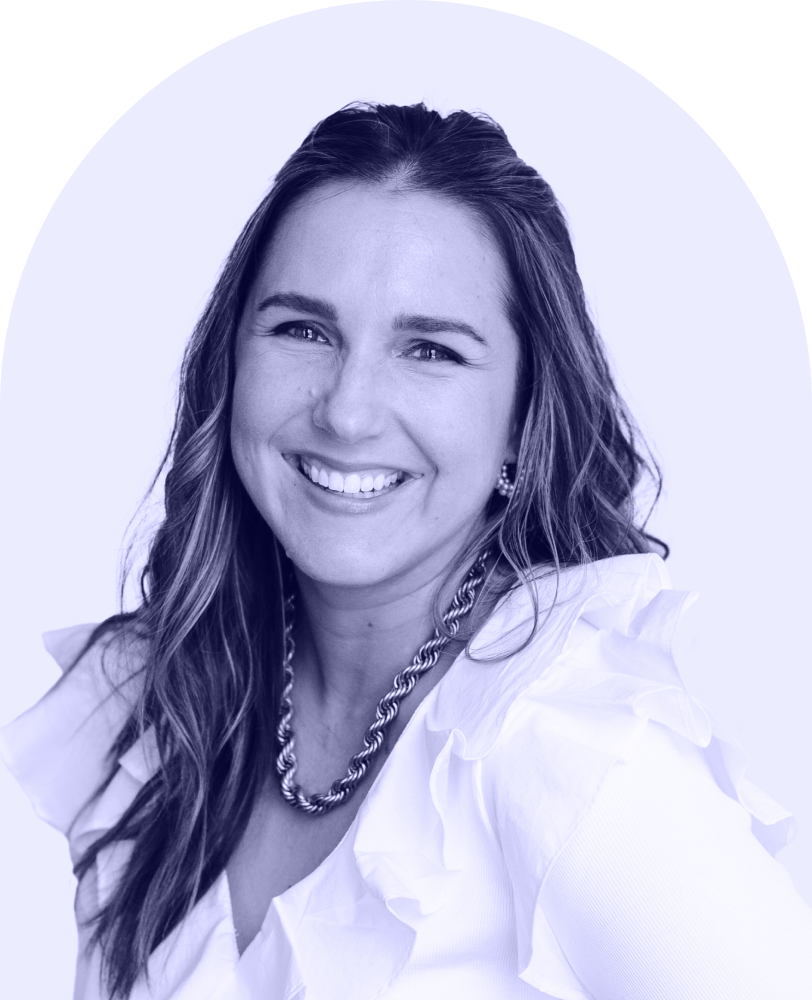
EPISODE #106
ALAINA KACZMARSKI
The Story of Alaina: How Everyday Challenges and Conversations Became THE EVERYGIRL




“Hard work, great fricking ideas, trying new things…even when scared. I don’t think luck has anything to do with anything.”
That’s how CEO, co-founder, and owner of The Everygirl Media Group, Alaina Kaczmarski, describes the resourcefulness that turned rejection and lack of access into a seven-figure digital media brand reaching over two million readers each month. Her conversation with with ANDMORE CEO Jon Pertchik is a masterclass in backing yourself and building exactly what you need when you can’t find it anywhere else.
Kaczmarski’s story is both grounding and inspiring. She walks us through her humble beginnings, her college rejections and her early attempts to find footing in a journalism world shifting rapidly into the new century.
Many of us can relate to her childhood understanding of success: “get good grades, get into THE school, get the dream job.” But instead of acceptance letters, she found herself facing rejection from her top college choices. Her first big pivot landed her in Syracuse University’s journalism program, where she quickly embraced the work.
Her vision of becoming a magazine editor seemed within reach—until the logistics of unpaid internships got in the way.
“By junior year, I was getting offers in New York City to be at the big magazines at Condé Nast. But I had to turn all of those internships down because I could not afford to live in New York unpaid for the summer. And I never really got my foot in that door.”
Disappointed but not deterred, Kaczmarski shifted again. “Fortunately, blogging had become a thing in those early 2000s. So, I sat down at my computer and started a blog. Maybe if I start writing about all the things I love, I thought, the things I’m supposed to do with my life should present itself.”
And they did.
What began as a personal creative outlet became a connection point for like-minded women and young professionals seeking authenticity, guidance, and community. Those conversations planted the seed that eventually grew into The Everygirl Media Group.
But that beginning was just the start. Kaczmarski describes to Pertchik the many ups and downs of learning how to turn a growing audience into a sustainable, profitable business. She broke down commission links, RFPs, brand partnerships, and the tricky balance of turning inspiration and thought leadership into revenue.
“You’re trying to build a business and it’s getting popular but not necessarily generating revenue,” she explains. “But would we be talking to this brand if there wasn’t a paid partnership? You’ve just got to be authentic to who you are and where you’re heading.”
Kaczmarski’s persistence and adaptability are as compelling as the content she creates. After all, The Everygirl, and its kin, The Everymom, are purposefully relatable from their core mission to their execution.
Kaczmarski’s story is rich with lessons on resilience, creativity, and the power of building what you wish existed. That’s why this special Scale-Up Stories episode of The Market Makers podcast is one worth replaying. As Kaczmarski reminds us, “You need community. You want to feel less like you’re the only one in it, and you need help. And there’s a big focus…on living a good life and taking care of yourself. So our content addresses that.”
For every girl and every mom out there, Alaina Kaczmarski gets you.
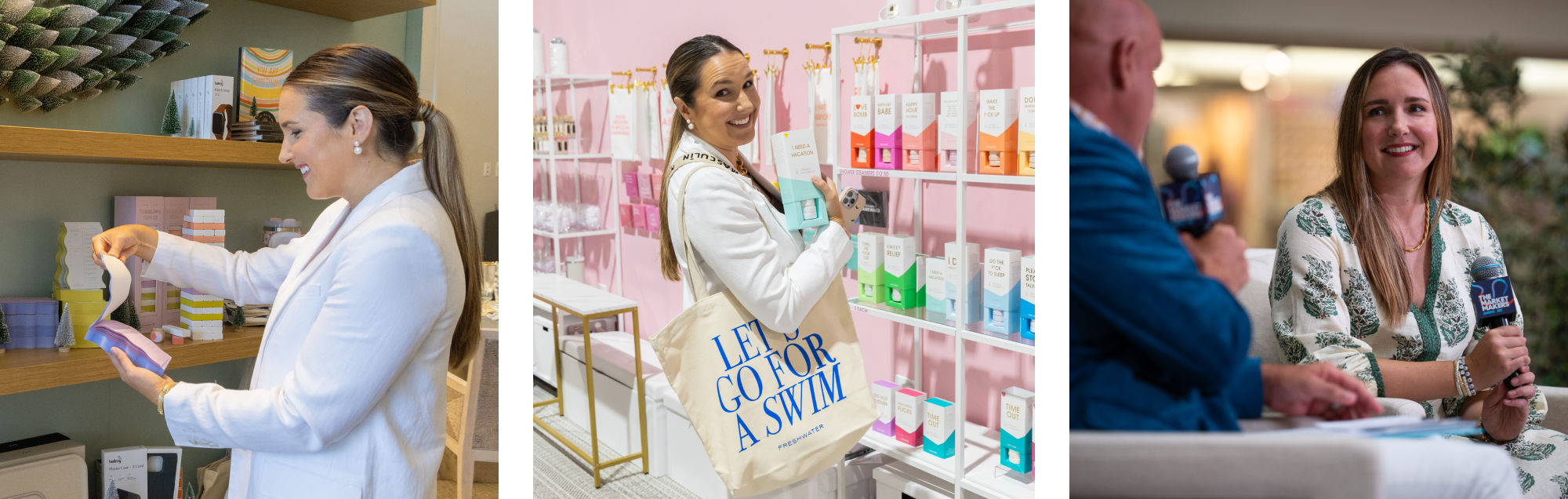
Jon Pertchik: Hey, everybody. I'm Jon Pertchik, and this is Scale Up Stories, a special series from the Market Makers Podcast. In these episodes, we step out of the showrooms and into the boardrooms speaking with CEOs, founders and business leaders who shape the design, furniture and lifestyle industries. Today, our guest is Alaina Kaz, CEO, co-founder and owner of The Everygirl Media Group, a woman-owned-and-run digital media company. What began in 2012 as The Everygirl, a site created to support and inspire career-driven women, has today grown into a seven-figure business, reaching over two million monthly readers and with a team of 33 full-time staff. Alaina's story is a masterclass in what happens when you back yourself and build what you can't find elsewhere.
Alaina Kaczmarski: In 2009, I was 23 and I sat down at my computer and started a blog, and it was, okay, maybe if I start writing about all the things I love, the things I'm supposed to do with my life, should present itself.
Jon Pertchik: Her journey is filled with authenticity, rejection, resourcefulness, and bold decisions. You'll hear how she broke into media without any connections, turned her own early career experiences into a powerful brand voice, and how she's inspiring that next generation of young professional working women. It's essential listening for anyone wanting to establish themselves as a lasting presence in the lifestyle industry. Thanks so much for being here, and I hope you enjoy this Scale Up story.
We're really here to introduce Alaina Kaz. I know that's not your real last name, but you're a big-time famous person, so you get to be like Cher. So go ahead, what's your full name?
Alaina Kaczmarski: It's actually Kaczmarski, and it's long and no one could get it right. My first email was to Alaina Katz, with a TZ. That didn't work, either. So you just call me whatever.
Jon Pertchik: I'll call you Alaina. I'm teasing, but we're all so honored to have you here. I'm really excited-
Alaina Kaczmarski: Thank you.
Jon Pertchik: ... to be part of the podcast.
Alaina Kaczmarski: I'm excited to be here.
Jon Pertchik: There's a lot of places to start. You have a website you started in 2012, The Everygirl, that's grown to The Everymom, The Everydad, which I've now since signed up on. You have Elizabeth Street Post blog. Tell us a little bit about the business today, who your teammates are, et cetera. Let's just start there.
Alaina Kaczmarski: The company is The Everygirl Media Group. We are based out of Chicago, but have a team of 33 full-time employees and they work all over the country, we're predominantly remote, and hundreds of writers, all women around the world. We are a media company by women for women. Our two main sites are theeverygirl.com and theverymom.com. I've been around since 2012 and we've seen it all in the age of, gosh, when we launched, Pinterest was around, but Instagram wasn't yet.
Jon Pertchik: I encourage everybody to get on, men or women, get on The Everygirl and The Everymom and The Everydad. It's amazing the presence you have. How do you do all of these things with so few people? I know you have a lot of writers out there, but your presence is way greater, way larger, way more impressive and deeper than you would think with 33 people.
Alaina Kaczmarski: Thank you.
Jon Pertchik: It's amazing.
Alaina Kaczmarski: The simple answer is the women that work at our company are just above and beyond talented, hardworking, creative and, if I can be cheesy, we have fun working together. I know there's a lot of turnover and people often leave companies after a year or two nowadays, but most of our team has been there over five years, some as long as 10 years, literally since the beginning. Everyone's just great and they all cheer each other on all the time, but everything you see out there is the brainchild of all of these talented women.
Jon Pertchik: It's not cheesy at all. I think that's awesome. Let's get into it a little bit and maybe now we talk a touch about the company today. I want to go back. Because really the intent of the podcast is for audience members to learn how people have gotten wildly successful in the industries we serve and all parts of it, what's been their personal journey. The thing that stood out to me, I read your tenure letter, I guess 2022 to speak to 2012 and your origin story, and the punch line I took away is how authentic you are.
Alaina Kaczmarski: Thank you.
Jon Pertchik: It blows me away. You share some of your struggles, career and what have you, coming out of college. What I took away is, that's the story of the rest of your career almost so far is this deeply personal authenticity. So maybe speak to that origin story and maybe a little bit about who you are in terms of what brought you here.
Alaina Kaczmarski: Yeah. Gosh, as far back as I can remember, my childhood was all like, get the grades, get into the school, get the dream job, be successful. I came back senior year from spring break to six rejection letters from all the schools I wanted to go to. That stunk, and it was like, okay, what are we doing? I ended up going to a school that I hadn't even considered. It was the Syracuse journalism program. I wanted to be a magazine editor. It was May of senior year and I didn't know where I was going to college. Ended up being a wonderful journalism program out of upstate New York at Syracuse. By sophomore, junior year I was getting internship offers in New York City to be at the big magazines at Conde Nast. Well, I could not afford to live in New York unpaid for the summer, so I had to turn all of those internships down, and I never really got my foot in the door in that regard. I'm emotional thinking about it. It was just really hard.
After graduation, I could not get a job. The more I talked to people, it was all a who-you-know kind of a world out there, right? Well, my dad was in sales in Chicago and my mom didn't work outside the home. I didn't have a lot of connections to call on in any industry I wanted to go into. Fortunately, blogging became a thing those early 2000s. In 2009, I was 23 and I sat down at my computer and started a blog and it was, okay, maybe if I start writing about all the things I love, the things I'm supposed to do with my life should present itself well. I was always shy. I wasn't very good at networking, never liked asking people for anything, which is how I always viewed networking.
It opened a world of meeting people, other women blogging at the time, and I got to meet like-minded women. We decided to start an online magazine to answer the question, how is the everygirl who has the vision, the work ethic, the dream to get ahead, how does she get ahead if she doesn't know the right person? We wanted to feature women with beautiful studio apartments that they put together beautifully on a budget or that stylish girl who everything is from the thrift store, the everygirl, the girl on a budget getting ahead on her own. So we were all about authenticity and relatability before it became a trend. At the time, all the magazines out there were high-end luxury, very unattainable, so we wanted to create an online magazine that had content that not only inspired women, but that could actually help them attain those things in their own life.
Jon Pertchik: So you're now building these relationships online. You start to express yourself, you're creating yourself as much as you can. You're just finding your way, you're meeting people. How did you go from this informal period to this next level of formality and websites and really something?
Alaina Kaczmarski: I met my co-founder through blogging, and this was again a time where people were making online magazines. It was a software that was available and it looked exactly like a print magazine. I was actually a part of that with a different group, so I knew a lot about it. I had my degree in magazine journalism. We sat down to start talking about this idea of creating a resource for women. We both love aesthetics and wanted it to be beautiful. We both had a graphic design background as well. I just kept coming back to the point of we do not want a burst of traffic once a month when the new magazine launches. We need daily traffic. Unfortunately we didn't get that perfect, beautiful digital magazine, but much like you read any news source on the internet today. It was the very early beginnings of that.
So we designed it ourselves in Photoshop and we each put in an initial investment of $3,000 to hire the developers to build out the website. That was the whole investment. Otherwise, it was our time. It was our time. We both had full-time jobs. We were doing this all night and all weekend for months and launched the site, and we had a lot of people in the blogging space talk about it. That was our marketing and our big announcement push that drove traffic those first few months. People were really excited about it and it was like, finally, something that I can relate to in terms of content.
Then four months after launching, someone messaged us somewhere and was like, "Did you guys see, Forbes mentioned you as a top website for women?" We were like, "What? No, we did not see that." They had a top 100 website for women and a top 10 websites for millennial women, and The Everygirl was on both of those lists. We couldn't believe it. People are responding to it. It's touching people in a way that needs to be, and we're going to stick with it. We didn't make money for at least a year before any dollars started coming in, but the audience was there, which was an important first step.
Jon Pertchik: If I could ask about, coming out of school, you obviously were ambitious because even you got emotional earlier, you really cared for that next thing. Wherever you were heading, you deeply cared and you had some very specific goals. A lot of 23-year-olds don't have such clarity about what they want to do, you did then, and also don't really have ambition in the same way that... your drive that you did. Give us a little bit, if you don't mind, about where does that come from.
Alaina Kaczmarski: Well, the clarity came from, honestly, high school, and I know because so many of my peers, I had so many conversations with so many friends who were trying to figure out the thing they wanted to do with their life. I had a wonderful teacher freshman year of high school who, she's my English teacher, told me to join the school newspaper, and I did. My dad picked me up at 11:00 at night from school, and he's like, "Why the hell are you at school at 11:00 at night?" and I was like, "I was copy-editing." I just had my nose in the pages checking for commas and whatever, and I love it. I love it so much, it brought me such joy, and I loved the team experience of working on a publication together. I was hooked.
Jon Pertchik: Now back to where we were. So you've gotten this validation, Forbes. What's interesting is you're in this what is a relatively new sort of universe, blogging and what have you and creating these relationships, and this very traditional stamp of validation comes along. That had to have had an impact on the business.
Alaina Kaczmarski: Yeah. The business that is now a multi-billion-dollar business of influencer marketing didn't exist. In 2013, 2014, I'll never forget, we got our first RFP, didn't know what that meant, had to Google it, came in from Coach, the handbag, famous handbag company that, oh, my gosh, Coach just emailed us with an RFP. Okay, what are we supposed to fill out in this document? Literally Googling it while trying to fill it out and get them what they were looking for back into these numbers. In the same vein, we would have conversations with brands who are saying, "We know we're supposed to work with you, but we don't know what that looks like. We don't know what you should charge, what we should be looking for as far as our performance goals." Literally everyone was learning as the industry was changing and unfolding.
Quickly between 2010 and 2015, rewardStyle came about figuring out how to monetize all of the links we were just putting up for brands anyway, a holiday gift guide, "Shop these hundred items," "These are our picks." We were just doing that for our audience and our readers. These third-party companies came around figuring out how to monetize that for the digital creator so that we would get a tiny percentage of commission should people shop them. Like I said, the whole industry was unfolding in real time, and the fact that we were so small let us just make decisions and pivot really, really quickly as things evolved and changed. We still are doing that. Gosh, we're still doing that. There's not a week that goes by that we're like, "What algorithm changed on social media this week that we need to change our entire strategy for?"
Jon Pertchik: It's funny because so often you hear people talk about luck, like an outsider looking, you could tell, "Well, you were lucky," but if you really think about it, right, it gets to these definitions of luck. And the wind may have blown your direction that period, but you had already taken steps to put yourself in that position, and that just carried forward. Maybe speak to a little bit of that.
Alaina Kaczmarski: I don't think luck has anything to do with anything.
Jon Pertchik: I agree, by the way. That's built into the question.
Alaina Kaczmarski: Again, take myself out of it, I know who I work with and I know the value that they've all brought over the years. Anecdotally, we tried doing the commission links thing with, again, this company rewardStyle. We had all but chalked it up to... We weren't seeing much luck. We were like, "Oh, our readers don't shop. They come to us for inspiration. They're not coming to us to shop." Allyson Trammell, who's our editor-in-chief at The Everygirl who's been with us since the beginning, she said, "Give me one month. Give me one month to try to see if I can turn this around and make something work." She doubled our business that year by bringing in and growing the commerce side of our business in that way. So it's not luck. It is hard work, great fricking ideas, a willingness to say yes and try new things, which I think a lot of people are often scared to do.
Jon Pertchik: I totally agree, and I'm being facetious about luck. So keep going if you don't mind. There's lots in how the business went from that blog or that hotel room to the blog to now building a business, getting some of this external validation.
Alaina Kaczmarski: Again, that first RFP came in a year after.
Jon Pertchik: Oh, wow.
Alaina Kaczmarski: I'm kind of making that up. Maybe it was into the second year, but there was no revenue the first year as far as I can tell. Another key moment that happened very early on that stuck with us as a business and just our ethics as a business was, we were so excited to get anyone offering any kind of money to be on our site because, again, like a magazine, we knew we should have advertisers and all that. One came. We put them into our content. It was great. Another one came, and we knew it wasn't really a fit from just a brand aesthetic viewpoint. It was a this-or-that. Would you rather have this look or that look? It was with products from this brand that they were advertising to be on the site.
All of the comments sadly were very negative and it was like "Neither of these. These don't feel like a fit for your brand. This doesn't feel like The Everygirl." That was a never-again moment. If it is not a fit... So it is not just anyone who wants to advertise we say, "Yay, let's make it work." It's, "Is it a fit?" and our guideline is, would we be talking about this brand if there wasn't a paid partnership behind it? If the answer is no, then we're not moving forward with that partnership.
Jon Pertchik: It's back to the authenticity thing with you from where we started.
Alaina Kaczmarski: Yeah. And being reliable for your audience. They are coming to you. Well, they have the entire internet to go to and they're choosing to come to you. Yes.
Jon Pertchik: It's also interesting aside, another perspective on that is, again, I mean this wildly respectfully, but that was a failure in a small way.
Alaina Kaczmarski: Yeah.
Jon Pertchik: You did something, because out of urgency to generate revenue, you're trying to build a business and it's getting popular, but not necessarily generating revenue. Most people would probably go there. So the takeaway there was what you just said was you've got to just be authentic to who you are and where you're heading and who your audience is.
Alaina Kaczmarski: I'm glad we learned that lesson early on, because we wouldn't have grown otherwise.
Jon Pertchik: Picking up on that, where did you then go from there? You've gotten the RFP responded to, maybe had that learn-and-adapt opportunity that you just shared where you didn't necessarily bring on a brand that was just right for your audience, you learned, pivoted. Where did you go from there to start to generate revenue?
Alaina Kaczmarski: It was partnerships, and that is still our largest revenue stream as a media company. People always ask, "How do you make money?" Well, a few ways. There's a diversified revenue stream, but direct partnerships with brands, creating campaigns, creating events, creating ways to get their brand in front of our audience. That is our number one. That's just grown over the years and we now have a sales team who is selling and handling all of those deals. We also have expanded to have branded content editors, so a team devoted to creating that content for the site.
Second, we fortunately, thanks to third parties who developed the software and all of the deals with brands, have a commerce affiliate line of revenue stream. We've just continued to expand with brand partnership deals. We're in Target. We have planners in Target with Day Designer. Then thirdly, of course, ads that run on both of our sites. That is also with a third party.
Jon Pertchik: Did you eventually or at this time have round out sort of a leadership team?
Alaina Kaczmarski: Oh, God, no.
Jon Pertchik: No? Oh.
Alaina Kaczmarski: Oh, my gosh, no. We were flying by the seat of our pants.
Jon Pertchik: Sorry for that old-man question.
Alaina Kaczmarski: Oh, no. I remember someone was like, "So do you have your operating agreement?" and we were like, "No, we do not." No. It was all very, you had two creatives running a business together, so a lot of trust, a lot of alignment on ideas and vision and a lot of conversations. When there's disagreements, you don't move forward until you come to a solution. Fortunately, we were able to start growing our team. Yes, there is now a leadership team, but that took, what, we were 13 years in? It took a while to get there. No, I didn't know what I was doing at the beginning. I had never taken a business class or a finance class.
Jon Pertchik: So it's on-the-job training?
Alaina Kaczmarski: Yeah, on-the-job training.
Jon Pertchik: So maybe speak to that transition, that period where you're going from three of you doing everything and everybody doing everything together to then really truly becoming a mature organization, getting us closer to where we are today.
Alaina Kaczmarski: Yeah. It's scaling. It was really, really hard, for a lot of reasons. Figuring out what departments you needed, a lot of us had multiple interests and things we wanted to do. So figuring out what you were going to let go of, that's a conversation I'm always having with my leadership team is like, "Let go of that. Let them do that. You're only one person." It's a bottleneck if you don't let go and let other people do their jobs. All that to say, it just happens slowly and organically, like adding one person at a time, two people at a time. And it's always been a most pressing need. We always knew the hire that was needed or the role that was needed because someone's plate was too full.
Jon Pertchik: You're probably hiring right now, or at least you will be at some point with the steady growth that continues. Maybe if you could share a little bit about then the evolution from The Everygirl, The Everymom, The Everydad, maybe speak to that aspect of the growth of the business if you could.
Alaina Kaczmarski: We bought theeverymom.com I think a year after we launched theeverygirl.com. That vision was always there, one, as the next step for our reader in many cases, not all, but that vision was there. It took going to a networking dinner of bloggers, and I was sitting next to a friend in Chicago and she's like, "Oh, I signed on with this company. They put ads on my site." I was like, "Well, that sounds nice," because we don't have the in-house tech. We still don't have in-house tech. "Connect us with them. Let's see if we could chat with them." She's like, "Oh, yeah, well, I'm bringing in X and your traffic is way higher, so you guys should definitely talk with them." We're like, "We will do that. Thank you."
Two weeks later, we're signed on with this ad company that we're still with, and all of a sudden it was an influx of revenue that we were just sitting on and not capitalizing on because we already had the thousands, the millions of page views coming in. So it was like turning on a switch of revenue that we didn't even know we were missing out on. That allowed us to then invest and launch theeverymom.com, which took the site build-out, hiring a few editors. That was probably our largest hiring-at-once moment.
Jon Pertchik: Maybe just if you could share with folks, what is The Everygirl, if you were to say it succinctly? And then secondly, what is the breadth of what kinds of information, advice, et cetera, content you're sharing?
Alaina Kaczmarski: The Everygirl was always, we defined her as that wannabe girl boss, that creative career-driven women trying to get ahead, who didn't necessarily have the financial or personal connections and means that others did. Answering that question, how does she get ahead? We are providing that resource for her. Nowadays, the main goals of 20-somethings look a lot different, and that was a big shift of our culture and our offerings. Where are people's values and goals right now? And there's a big focus in the mental health and wellness space and less just career drive and more living a good life, taking care of yourself. So our content has shifted to address that.
The Everymom's the same thing. You're in it, you need community. You want to feel less like you're the only one who's in it, and you need help. A lot of people, we hear from our audience all the time that they feel alone and they come to our sites not only for answers, but to see stories of women who are experiencing things similar to them.
Jon Pertchik: Well, so I'm going to ask you the same question, but I'll shift to The (A) Lister.
Alaina Kaczmarski: Yeah.
Jon Pertchik: What is that? And then followed up with, how do you do that? How do you identify trends? How do you look ahead?
Alaina Kaczmarski: My first time coming to market was in Vegas last summer and I was so excited to ask to be a part of it. The (A) Lister is, I was fortunate to join and get a sneak peek at a lot of the vendors that were going to be here today. It was very, very difficult to pare down just a small curation of some of the picks that my team would look at when sourcing our holiday gift guide. The gift guide is something magazines have been doing for a long time, and we started doing I think in 2013. Crazy popular, crazy popular. It is one more thing everyone needs to do every year is buy their holiday gifts, and it's overwhelming all the people, and then, gosh, especially for moms, everyone you have to shop for and at the budget that you're allotted.
Our team starts working in July on what will come out in October and November, it gets earlier every year, to put together this curated gift guide for our audience with items from around the internet, from around the world curated into these beautiful little groups. There are definitely certain things we look for when doing that. We've been doing it for over 10 years and we've seen what gets the clicks, what gets the sales, and we use that knowledge year over year to create the next one and pivot and hopefully bring and find new items every year to add to it.
Jon Pertchik: Now, being really serious, what happens to those (A) Lister items? You have 10 million? Speak to the reaction you get now and what happens to those products when you put them on The (A) List?
Alaina Kaczmarski: The guides alone get over 10 million views every holiday season. The impressions when you bring in Pinterest and social media is in the hundreds of millions. We've had Etsy shops close early because the number of orders they're receiving. It's an honor to be able to do that and help.
Jon Pertchik: Anything you can share that has surprised you to the positive that's something that you thought, yeah, this would be good, and it went wild, or frankly, the other direction? Any examples?
Alaina Kaczmarski: Yeah, we've had-
Jon Pertchik: Oh, it happens, yeah.
Alaina Kaczmarski: Yes. Yes, it does. It happens a lot. I sadly don't have the visual to show you, but even just the images we choose to use to present the product to people can make or break whether it's getting clicks or not. One of my favorite examples was, they're reusable produce bags, they're lovely, knit, draw-string, you take them to the farmer's market, you take them to the grocery store. The flat lay image of that product is nothing to write home about. It's not jumping out on a page of hundreds of images. Our editor-in-chief saw that, and she had the product in her own home and she's like, "I love this thing. I give these to everyone." She went to their Instagram page, found a beautifully styled version of it, and a farmer's market bag, and thousands of clicks. The difference between crickets and thousands of clicks all just from changing to that image was crazy.
Jon Pertchik: That's super interesting. You've said a few times, I want to shift to something slightly different, but on topic, you've referenced data several times and your clicks, et cetera. Maybe share a little bit about the science of that. In other words, how are you relying on data when you look at clicks? Maybe speak a little bit to the data side of your business.
Alaina Kaczmarski: Everything. Everything from tweaking a headline after a story's been live for a few days when you know the story's there, but it might not be getting the clicks, and trying a new headline to get people in. Again, we are in the age of TikTok and, I'm going to keep saying it, very short attention spans, and you have this long to suck someone in or not and they'll decide whether they want to shop your product or read your article. The amount of thought that goes into the photo that's chosen for the story to the headline to the first few sentences, to the photos of the products, the order that we're presenting them in to keep you going is all thought out times 10.
We're tracking. We're tracking the views to the site, the clicks to each of the products. Oftentimes you might see a large amount of clicks out to a product, only to see that not convert to sales. Why? Probably a price point, probably the image piqued their interest, but it's not actually something they want to buy, they just want to see what that was. We dive into it and try to figure that out on our own and adjust if needed. If something's not performing or if something's performing really well, we'll use that data to know to push it on Instagram. It's changed the game.
Jon Pertchik: All right, so taking the insights you have, the data you look at that others don't necessarily aren't privy to every day, what should people think about putting it in market context? Share a little bit about what's trending. What are some things that come to mind people should be thinking about or buying?
Alaina Kaczmarski: There are five things, and I said this last year and I'm going to say it again because they hold true, when you're looking at the holiday season or gift-giving in general, Mother's Day, birthdays, whatever it is that, there are five categories that really round out our gift guides every year that people want.
The first one is the big-ticket items. That's your three-figure price point or higher. Whether it's in the tech space or the luxury space or the skincare space, but those big-ticket items, that's a big one at the holiday season. A second one is the personalized items. It doesn't have to be something you're waiting a month to turn around for the custom embroidery. Gosh, there's so many brands here that are just so good with either the zodiac or the month you were born or the area of the country you live in, the state, the school you went to. So personalized for that person, not necessarily customized, but both are amazing.
A third one is the classic favorites. This is your comfy slippers, your robe, your jogger set, your wonderful scented candle, the kind of fail-proof gifts that, one, you can't really have too much of, two, it's nice to get a new one of. Four are the things that catch your eye in a really unique way. So not just a notepad, but a notepad that is designed so beautifully and special. That's what I mean when you take a product everyone knows and sees often and you just really dial up, that really extra attention to detail when it comes to the design of something or the saying that's on it or the quirkiness of it. So those are the things that really help round out our guides every year.
Jon Pertchik: Hopefully everybody has some very specific takeaways right there. Maybe one in our last few minutes, one last area to ask you about. What can we expect next from you, Alaina? Looking ahead, what's next then? What's the next chapter of Alaina Kaczmarski and every what? What's next?
Alaina Kaczmarski: The main thing we're talking about and everyone in digital media is talking about is, what does the future look like in the age of AI? What we're hearing from our audience, what we all feel as our own team, is that need for human connection. We've done events a lot in the past, but we are hoping to bring our community together a lot more in the future. We actually just launched Camp Everygirl that is happening in October. It's 105 women, it's sold out in a day, are meeting together at truly a camp that has air-conditioned cabins, elevated camp, for a summer camp experience.
Hearing from all of those women that want to come together is why they all want to go to meet people, to make friends, to unplug, to just relax and feel light for three days is really promising. So we're hoping to bring, just connect with people in real time. Aside from Camp Everygirl, events can look a lot of different ways. It can look a lot a different ways, bringing moms together for The Everymom. It might be digital meetups. We're really going to be talking a lot about community and bringing people together in person and however they're able to come together.
Jon Pertchik: Just on behalf of everybody, myself included, thank you so much for being here, Alaina.
Alaina Kaczmarski: Thank you.
Jon Pertchik: Your story is amazing. Hopefully, people both here physically live as well as listening and watching take away a lot. I know they will. So thank you very much.
Alaina Kaczmarski: Thank you.
Jon Pertchik: How about a round for Alaina, everybody?
Alaina Kaczmarski: Thank you. Thank you, everyone.
Jon Pertchik: I think two takeaways for me from my conversation with Alaina are, one, rejection can be a catalyst. Don't give up when confronted with adversity. Two, create what you can't find. Just because it's not out there and you don't see it, doesn't mean you can't make it be.
Thanks for listening to this episode of Scale Up Stories, part of the Market Makers podcast. I've been your host, Jon Pertchik. Make sure you're following the show wherever you get your podcasts, and I'll see you next time.
Want more conversations like this?
More amazing guests are on deck. Subscribe to stay in the loop.