
EPISODE #109
DOUG COFIELL
Dinner Table Deals That Built a Business




What better way to jump into a new year than having Doug Cofiell, owner and CEO of sales agency Ivystone, reflect on a journey that began as a family legacy and evolved into one of the industry’s most formidable independent sales organizations? In conversation with ANDMORE CEO Jon Pertchik, Cofiell traces Ivystone’s path from its 1960 founding by his father to the growth-minded, acquisition-driven company it is today, shaped by vision, timing, and a willingness to take risks.
Cofiell starts by acknowledging that the business was a break, an inheritance of opportunity rather than something he built from scratch.
But that break, as he explains, was only the beginning. Through turbulence, industry fragmentation, and 18 strategic acquisitions, he transformed Ivystone into a national powerhouse, often sparked by his now-legendary dinner-table conversations that turn into meet-and-merges.
One such dinner with his father proved pivotal. Cofiell recounts, “He told me, ‘I know you’re going down the route of interviewing and doing stuff, but I don’t want to stay [in the business] that long. I’m open to you buying [the company] pretty quickly.’” That conversation triggered an “aha” moment that reshaped his future.
After that meeting, Cofiell returned to business classes at the University of Richmond. As he sat in class, hashing over a case study with fellow students, he thought, “This is crazy. I know this is not me.” The decision followed swiftly: “So, I’m like – you know what? I’m gonna try it!”
Just days after graduation in May 1989, Cofiell was already on the road, attending a New York stationery show and beginning his life in sales. “I’m traveling to see accounts…driving around. I don’t even know how to buy a car,” he remembers. “I’m sitting at a really lousy table in this rental apartment with a giant map and stuff circled.”
It was at a time when orders were written by hand and mailed to a supplier. No cell phone, no tech tools, all community-building – one person, one appointment, one business at a time. “To this day, a lot of those customers have great stories about how they met me,” recalls Cofiell.
That grassroots momentum quickly built. “We went from our first hire to three people within 18 months.” Over the next several years, Cofiell expanded from managing a single territory to overseeing the East Coast. By the time his father retired, Ivystone was thriving organically, supported by seasoned sales professionals and expanding reach.
Then came a turning point. Reflecting on his first merger, Cofiell says, “I’m looking at it and saying that it’s time to get aggressive. And the timing was perfect.” January 1, 2001, marked not just a new year, but a new chapter of growth through acquisition.
Along the way, Cofiell gained understanding of what Ivystone’s strength and allure was. “This industry’s a little unusual, right? It’s super fragmented, with lot of creative people, a lot of great salespeople. But, a lot of the time, they don’t want to do the nuts-and-bolts side.” So, Cofiell decided Ivystone’s strength would become its infrastructure—removing operational burdens so salespeople could focus on what they do best.
Looking ahead, Cofiell sees consolidation as both inevitable and necessary. “Sometimes people don’t have the realization that the entire industry is consolidating to an extent…‘cause it was just so fragmented.’” Technology plays a role, but relationships remain paramount. “All the technology things we’re doing, they’re all enhancements…But you still need the physical touch…We have kind of a dual mandate.”
That’s why Cofiell views what’s next on the horizon with the same clear eyes and gumption that brought him and Ivystone to this 66-year mile marker.
Lots of people inherit businesses. But few reshape them so boldly. And fewer still continue building with the same clarity and momentum that have defined Doug Cofiell’s journey—and Ivystone’s future.
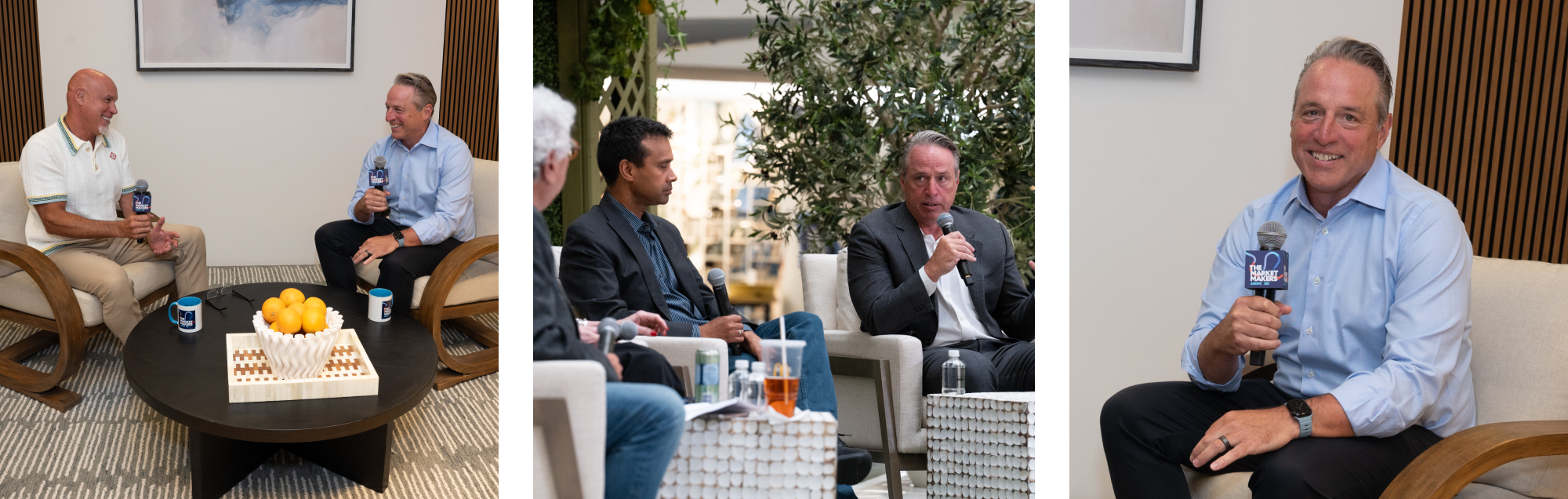
Jon Pertchik:
Hey, everybody. Happy New Year. I'm Jon Pertchik. Welcome back to another episode of our Scale Up Stories. In this series, we step out of the showrooms and into the boardrooms, speaking with CEOs, founders, and business leaders who shape the design, furniture, and lifestyle industries. Today, I sit down with Doug Cofiell, CEO and owner of Ivystone, one of the most respected and successful independent sales agencies in the gift and home industry. Doug himself is one of the top dogs in all of ANDMORE's universe and is looked to as a leader amongst his peers. What started as a small business by Doug's father, Doug grew into a powerhouse through M&A, through great leadership, through hard work, drive and ambition. Doug's story is about strategic growth and how a series of diner meetings can build an empire. It's about leaning on the skillset of others and knowing how to intentionally build infrastructure with scale in mind.
Doug Cofiell:
The lesson was basically you could do it. We didn't have those conflicts. We solved everything. If we couldn't solve it, we pushed pause, got a meal together, and worked it out.
Jon Pertchik:
I'm fortunate today to talk to Doug. He's a great guy. He's become an amazing friend in a short period of time. I envy and admire the relationship he had with his dad and how he learned from and leaned on his father. It's incredible to know that just in college, he had an epiphany and a self-awareness that he had to work for himself to do his own thing. Doug's also a risk-taker, but not a foolish risk-taker. He's a calculated, thoughtful, risk-mitigating risk-taker. He does the preparation and advanced thinking, and prep and advanced thinking is how you mitigate risk. He's also learned along the way that delegating to smarter people than himself is what leadership is all about. Thanks so much for being here, and I hope you enjoy this scale-up story.
We got Doug Cofiell here from Ivystone, so, thanks for being here, Doug.
Doug Cofiell:
Absolutely. Love it.
Jon Pertchik:
It's funny. You're definitely viewed amongst many folks, clearly on the gift side, but across the industry, as someone people look up to in, both how you run your business, in particular, how you grow your business, how you look ahead into the future, and how you leverage technology. Those are things that I think, you're a little bit famous for, and I know you're a humble dude, but really those are real things. That's what I heard about you and those things are all clearly true. So for today, maybe we can start at the beginning a little bit, because part of this is to really understand how you got to who you are, to build this really successful, incredible business. I know your dad started the business in 1960. Where was the business when you were coming up? Where was your dad with his business?
Doug Cofiell:
Yeah. So it was the two martini lunch and selling the major accounts, New York, back and forth. He was on his own until the '70s. In the '70s, the business became a little more diversified, I guess, you'd say. We started to see real gift companies, and I think he hired the first rep in 1974 or something.
Jon Pertchik:
Wow. So it was your dad from '60 to '74, more or less. For some reason, I picture a guy in a gray suit. I picture almost traveling salesman, kind of distribution. Is that what he was doing more or less?
Doug Cofiell:
Yeah. It was pretty normal to run into the apparel guys at whatever bad hotel, around was.
Jon Pertchik:
Smoking cigarettes in the room kind of thing.
Doug Cofiell:
Yeah, yeah. It was a totally different thing. And then my parents got divorced before high school. So I predominantly lived with my mom. So then I'm in school in Jersey.
Jon Pertchik:
Where is this in Jersey? Where are you?
Doug Cofiell:
I'm in Southern New Jersey, Medford Lakes is the town. Yeah. So I went to high school there. I had summers. I'd go to trade... The temporary shows used to be around Philadelphia. There was one in Pittsburgh.
Jon Pertchik:
So why did you do that then? Were you tagging along with dad or it was just summer gig that you could tag along with your dad and make a few bucks, learn something?
Doug Cofiell:
Yeah, exactly.
Jon Pertchik:
Okay.
Doug Cofiell:
Yeah, just trying to do the little stuff, pick up little odd jobs, stuff like that. I'd do a little work around their office sometimes just to get a feel for it.
Jon Pertchik:
Was the business in Pennsylvania at this point or was it always?
Doug Cofiell:
Yeah, so it was based in Pennsylvania.
Jon Pertchik:
Okay.
Doug Cofiell:
The names actually from Ivystone basically... Well, Cofiell's not the easiest last name to pronounce.
Jon Pertchik:
Like Pertchik, I mean.
Doug Cofiell:
Right. Yes. He was in a group called Club 35 and it was groups of reps. And they came back and they're like, "You got to change the name of the bit." I think it was Douglas C. Cofiell Associates. And he came back, they're like, "You got to change that name." And he went back and he lived on a farm out in Downingtown, Pennsylvania. And they actually, stonewall, ivy growing up at-
Jon Pertchik:
Oh, interesting...
Doug Cofiell:
Just seemed to make sense. So they named it Ivystone at the time. So that was the rebrand. The first rebrand.
Jon Pertchik:
That's pretty neat. And where were you in life? Is this high school age for you or?
Doug Cofiell:
Yeah, so we're high school age. So I graduated from college in '89.
Jon Pertchik:
Okay. We're exactly the same then.
Doug Cofiell:
Yeah. Yeah.
Jon Pertchik:
Okay.
Doug Cofiell:
So I literally graduated and started the next three days later.
Jon Pertchik:
Wow.
Doug Cofiell:
So basically, I wasn't going to go into the business. I was interviewing like I was going to do something else. And then my dad did an awesome job with this. I went to a dinner around Thanksgiving time. He said, "Hey, this is a strange business. It's really hard to sell. Would you ever consider it? I know you're going down the route of interviewing and doing that stuff, but if you want to set it up, I don't want to stay that long. If you like it, we'll work it out. You'll sell on the road, you'll do this stuff. And then I'm open to you buying it pretty quickly because I'm not going to stay in Pennsylvania that long," basically is the premise.
Jon Pertchik:
And so this is right after college?
Doug Cofiell:
This is a pitch while I'm in school still.
Jon Pertchik:
While you're in school? Wow.
Doug Cofiell:
Yeah, he makes this whole... He's a good salesman.
Jon Pertchik:
What are you studying at the time? Is it business? What did you study undergrad?
Doug Cofiell:
Yeah. So I'm doing business at University of Richmond. And it was a fantastic experience. Did finance and marketing.
Jon Pertchik:
Okay.
Doug Cofiell:
But I was going to do more of a corporate thing for a couple years, but I got super lucky with a bunch of things. One, I was set up really well by my dad, but I also, for whatever reason, you have these moments. I'm sitting in a class, I think it was my junior year and I just said, "I don't really want to work for somebody." And I knew it right then. And it was just really strange.
Jon Pertchik:
To be that young, really. I put an exclamation point at that because a lot of... Part of what I hope with this podcast is people learn how people become successful like you, and that's an inflection point. That's a moment. Can you reflect back and say what you think happened, something in the class, something internal within you? What happened? How did this moment happen?
Doug Cofiell:
It was one of those, I think the class was like marketing case study. It was a case study class. And I was like, there was all this corporate back dealing and politicking and all that stuff. And I'm just like this is-
Jon Pertchik:
That is just not me.
Doug Cofiell:
This is crazy. I know this is not me. I'm going to get out of here and I'm going to do it for a couple years and learn my thing and then figure out what I want to do. But just had that moment. I don't know how, I just felt really lucky after that.
Jon Pertchik:
The half of that that's interesting too is having that self-awareness to know that that's not a match to you. I know I didn't have it at that point in college.
Doug Cofiell:
The rest of the stuff I was a mess with.
Jon Pertchik:
So you saved it all for that moment?
Doug Cofiell:
Yeah. I didn't know what I wanted to do. Surety level was terrible. All that stuff, [inaudible 00:06:50] got in trouble. Did all those things too, but-
Jon Pertchik:
Can relate to that part.
Doug Cofiell:
But I did get that moment. I really did. I knew I just didn't want to do it. And so, I always had it in the back of my mind. So when he made the offer, I'm like, "You know what? I'm going to try it." So I literally got out of school. I graduated, I think it was like May something, and I went to the stationary show in New York May 17th. So I went-
Jon Pertchik:
Took a week off.
Doug Cofiell:
Right into the throws. All of a sudden I'm walking in and I'm working a trade show.
Jon Pertchik:
You literally show up at a show. You probably had some sense of what that was like having worked summers for your dad. So it wasn't like you just show up and it's like, what is this thing? You had some sense of that. And then now, you're running a territory. Maybe you knew a little bit from a distance what your dad was doing. So what was that like going to a new place, completely new range of expectations and things? What was that like, that period when you think back?
Doug Cofiell:
It was interesting. I did have friends there.
Jon Pertchik:
Okay, you did?
Doug Cofiell:
All with major corporate jobs. So two friends that were a year older, which was fortunate. So they're already in their gig.
Jon Pertchik:
Okay. So they can introduce you to people and social life and just getting up to speed.
Doug Cofiell:
All that stuff. So that part wasn't hard. I was the only person in that kind of job though. I'm traveling to see accounts and I'm driving around. I didn't even know how to buy a car. It's all that stuff.
Jon Pertchik:
And so that's what you do. You were driving around to accounts?
Doug Cofiell:
Yeah. And just the same stuff you see now, except a little more, we didn't have any... There's no tech tools or anything like that. So you're really driving around to accounts, actually writing orders and mailing them to a supplier. No cell phone. So it was interesting times. What I found basically was that when you do a territory like that, you're meeting all these people that started their own business. For the most part, a bunch of family businesses, but in general, they're all entrepreneurs. And it's like an interesting... I knew I didn't want to tactically be one of those people that's on the road forever. I could tell that too, but I really enjoyed meeting the customers and just getting to know them. And a lot of them had great stories of-
Jon Pertchik:
And tell me about that. During this time, I assume your dad was a mentor through a lot of this earlier on and maybe through this. Anybody you connected with either in your region or either in the company at that time that really influenced you? You mentioned you were getting close to some of the customers. Even a customer, anybody that you really took a lot away from during this, because this is a period you're developing at a pretty fast rate. You're learning things you haven't done before. You're on your own, you've got a company, but you're really on your own doing your thing.
Doug Cofiell:
Right. It's true. It was probably more the other salespeople that you saw. So those days you definitely saw more... And we talk about this a lot, all the guys getting older, ladies getting older, it's like we all used to see each other on the road. You'd be waiting for an appointment to start and the rep before you was leaving, right? So because everything was done that way. So the retail, whoever the buyer was for the store was generally the days they saw reps, they saw them back to back to back. So you build this little community of people you run into. And I still see people that I was out on the road with back then.
Jon Pertchik:
That's pretty cool.
Doug Cofiell:
It's interesting. Yeah. Yeah. And then I'll tell you a pretty funny story. The first more important account I called on, I don't want to say important from a standpoint of high pressure. So a lot of them were just single door people before that. But then I got an appointment where we hadn't done business before and it was with Spain's in Philadelphia. So the buyer, he'll love the story because it's Vince Naviski who's now at Norman's.
So he walked in and I think he'll remember the story. I walked in, I'm clearly young and green and he just looks over at me and he goes, "You got your chance. 15 minutes, go."
Jon Pertchik:
And that's it.
Doug Cofiell:
That was it. I had to try to close something in 15 minutes and it was-
Jon Pertchik:
And did you?
Doug Cofiell:
Oh, yeah. Yeah.
Jon Pertchik:
He must have-
Doug Cofiell:
Yeah, he was awesome. He circled the stores that he was going to ship to, write it all up for me. It was pretty funny. I had that one. Then I had a gigantic learning experience right after that, which was, my dad was trying to expand the business. At the time it was just Pennsylvania down through Virginia, basically, was the only territory we were covering and he wanted to expand into Ohio. That was the plan because we were like, "What are we going to do next?"
Jon Pertchik:
Go West.
Doug Cofiell:
So, one of our big vendors were at a dinner and I'm 25 or four or something like that. And I'm just the accessory at the dinner. They're all talking and not paying attention to me.
Jon Pertchik:
Right.
Doug Cofiell:
And they basically say, "You can start with our company. You can be the reps if he moves," and points to me. I don't answer. He answers and all of a sudden I'm moving to Ohio. So it was take up residence in Cleveland. So the big experience was more than anything else, this was my big learning curve. So we're out there, no established accounts. A couple vendors we're contracted with, drive all over the state, try to meet all these customers, set all the tone. Basically, it's almost like starting a group, then replace yourself, find a second person, because eventually, you're going to have to divide up the state. So I had to find a person who could do the job that I was doing, prospecting, finding all the accounts, and then slowly build it.
Jon Pertchik:
So can I ask you this question? Was this the first time... I think I know the answer, but I'll ask you, was this the first moment in your development where you became responsible for others, were really truly building a business? Before in DC, you're building a business, and you are building a business, but you're building a book of business. Here you're actually building a business, it sounds like?
Doug Cofiell:
Yeah. It's almost like start... Yeah. When you go into a new state like that, there's established players, you're coming in as the new person, even though the business is, as Ivystone at the moment, has a pretty good reputation in Pennsylvania, but nobody in Ohio really knows. So it's like starting it from scratch. And that was just a crash course in what you got to do to make this stuff happen, not the tactical just here's what you got to do. Here's the number of accounts you have to establish. Here's the way you have to do it. Got to get them to trust you. You got to make good hires, all that stuff.
Jon Pertchik:
Is this learn on the fly? Are you getting resources, a company in a position to give you that kind of support in terms of how many accounts before you hire another person? Are you figuring this out as you're going?
Doug Cofiell:
Yeah, there's not-
Jon Pertchik:
So, I figured, but I want people to hear that.
Doug Cofiell:
Yeah, yeah. I'm sitting at a really lousy table in this rental apartment with a giant map with the stuff circled.
Jon Pertchik:
Going to gas stations, asking if you're going the right way. People today don't know what that means.
Doug Cofiell:
Right. Exactly.
Jon Pertchik:
So how did you... You've gotten a certain number of accounts, a certain number of volume. At what point are you just realizing, okay, I need to hire somebody? Is it literally as simple as that?
Doug Cofiell:
Yeah, basically the hire is when they'd be busy enough to be working every day.
Jon Pertchik:
I see.
Doug Cofiell:
There's enough accounts to call on that they could work it and keep going.
Jon Pertchik:
What was that like having that first person and all of a sudden you feel that somewhat of accelerating forward?
Doug Cofiell:
Yeah, it was super interesting. And it all came from the customer. So the customers were like, "Oh, I know somebody who might be interested in that." And we knew we could get some momentum once we set up because there was infrastructure in the other areas. So it wasn't like I'm doing it completely from scratch. I'm not going to pretend it was like that because you had infrastructure, you knew what to do next. So once we were established and up and running, there were other suppliers that wanted to work with us there.
Jon Pertchik:
Got it.
Doug Cofiell:
So it came quick once it got over there, once it went up past the tipping point, it went pretty quick. We went from that first hire to three people within 18 months.
Jon Pertchik:
And you got one person, now you got a couple, three people. Now you're managing. What was that like?
Doug Cofiell:
Yeah, for me, super fun. So first time I really felt like I had something that I was going to stick with. The first hire was way better selling than I was, which was awesome. I'm like, "Oh, spectacular. You got it." She was just a wonderful person and just a great salesperson. So it was great. That's when I knew.
Jon Pertchik:
So was that window, this moment where you had this awareness that, wow, I think I've found what I'm good at or what I like and all of that, did that lead to some specific goal setting or you, "Okay, now I know what I like and I'm just keep going." Did you look ahead and say, "I think I know exactly where I want to go."
Doug Cofiell:
Yeah, it matched up with the original premise, which was, you get established in this, figure out if you like it, and then there'll be a moment when I'm ready to move on that my dad basically told me.
Jon Pertchik:
So it's a progression of those.
Doug Cofiell:
It was a progression. And I knew enough then I'd come back and I knew all the little tricks for managing the rest of the business. So I was only out there. I only lived there for about a year. I went back and forth for years and years because we had a showroom in Columbus, Ohio. So I went back and forth a lot. It's only about, it's seven, eight hours, so it's not that bad. That was years of doing that, but I started to manage all then the rest of the business in the East.
Jon Pertchik:
Okay. So that's when it started. In your development, that was a real shift. And at this point, you're starting to run a bigger piece of the company, not territory with a few people, now shifting. So are you in Pennsylvania at this point?
Doug Cofiell:
Yeah. So I moved back to PA and then I'm just going back and forth to Ohio a bit. But yeah, I'm managing the reps basically is what ends up happening.
Jon Pertchik:
Okay. And where are we historically? What is this window now?
Doug Cofiell:
This is then like '94-ish.
Jon Pertchik:
Oh, okay. Got it.
Doug Cofiell:
Yeah. And then I basically work out a deal to buy the business from him in '96.
Jon Pertchik:
Okay. Oh, so you buy the business from your dad, '96. Does your dad continue to play an active role, more like chairman role?
Doug Cofiell:
This was pretty funny. So we're doing it, obviously, friendly deal, still paying him.
Jon Pertchik:
Hopefully. Well, that's good to hear.
Doug Cofiell:
But I'm still paying him and he was going to be still involved five years. We're just going to progressively, I'd get 20%, 40, 60, 80, 100. So I assume I'm not really taking it over until '2000-ish. And '96, the deal happens. We get past the 20%, he moves to North Carolina. And I barely...
Jon Pertchik:
I thought you were going to say you cut him out of the end of the earn out or something.
Doug Cofiell:
No. Everybody was totally shocked because he's one of those people who wanted to be involved in everything and all of a sudden, he's just calling me once a week. It was pretty funny.
Jon Pertchik:
It's funny, but it's also worth pausing. He clearly trusted you. The fact that he went from that snap a finger and he's in North Carolina, there was a level of trust. So you guys must have been pretty close.
Doug Cofiell:
Yeah. At that point, we got close from the work first and then it went back to the family stuff because we were not tight for that 10 year period or whatever it was. So it was pretty cool. It was a cool experience. And he did. He did a great job setting it up. Exactly what he said in that first meeting while I was still in college is what we did. So most people don't get that kind of break. So you just have to take advantage of the break.
Jon Pertchik:
Now, you own the company, dad's out of the picture pretty much, which I imagine, knowing your personality and knowing this progressive development, you're probably not concerned about that. And maybe it's liberating. I don't know. You're probably excited you've got a chance to really now do something, really grow this thing. What was your mindset during that window?
Doug Cofiell:
I was a little surprised at first, but we were in the groove. We were doing pretty well. Business was established. We had a lot of veteran salespeople, so it wasn't like we were in major hiring mode or anything like that.
Jon Pertchik:
And how big of a sales force?
Doug Cofiell:
We're at about 27-ish, 27, 28 at that time.
Jon Pertchik:
And how much of the country are you covering at that? Is it still the same states?
Doug Cofiell:
We're literally just Pennsylvania, New Jersey, Maryland, Delaware, Virginia, DC, Ohio.
Jon Pertchik:
Got it. So it's the Northeastern Seaboard sort of?
Doug Cofiell:
Yeah. Yeah.
Jon Pertchik:
Okay.
Doug Cofiell:
Yeah.
Jon Pertchik:
So things sounded like they were buttoned up. You've got a veteran sales force, so not a lot of issues in any of those areas. Is this the moment where you're starting to think about growth or expansion? What are your priorities at that point?
Doug Cofiell:
Yeah, it's all growth. It's all growth.
Jon Pertchik:
Got it.
Doug Cofiell:
But it's still the organic kind.
Jon Pertchik:
Got it.
Doug Cofiell:
So we had not maxed it out. We're relatively new in Ohio, so we're building that business, going pretty fast. The core of the business is there. The Pennsylvania, Ohio customer is very similar. So we're doing really well there. We're adding a few territories and stuff like that, but we're just growing it organically. We're in that mode.
Jon Pertchik:
So basically, building out regions that are established and getting them closer to their potential.
Doug Cofiell:
Correct.
Jon Pertchik:
Over how many years was that the primary or maybe the exclusive part of the company? Because where the company has gotten to, which we'll get there has become something very different in terms of growth and expansion. But during this window of this organic growth and building out what is already there, how long was that the priority?
Doug Cofiell:
Until 2000.
Jon Pertchik:
And what starts to shift?
Doug Cofiell:
Well, it's the 100% year, so it's the last year of the deal. So now, I have 100% of the business.
Jon Pertchik:
Oh okay. Got it.
Doug Cofiell:
Okay. So that's the first thing. Then I get a reach out from Ted Goldberg who's running Drummers Inc, which is a New York based firm. He had been a key account rep for them, bought the business from the original owners. He's a little older than me, but we have similar philosophy. He basically asked me to breakfast. I thought he was going to buy us. And then we start talking and we ran our numbers and did our stuff and our revenue numbers were like $1,000 apart.
Jon Pertchik:
Wow.
Doug Cofiell:
And he's like, "Okay, this is a different conversation." Then we just got to know each other and scheduled another breakfast for the next time because he's like, obviously, we're not in a straight purchase thing here. So we just started, we went to a diner halfway in between. So we're probably every other week to maybe once a month, depending on the time, we'd just meet and talk.
Jon Pertchik:
And are you just simply sharing notes as two industry guys who maybe have a curiosity about what one plus one could be? Or was there a mutual expectation during those meetings and window? So that persisted beyond that first meeting, even though he was surprised at how far you had gotten in terms of revenue?
Doug Cofiell:
Correct. And we did opposite things. So Ivystone's entire base was independent retail, just regular independent retail. Drummer's predominant base, more than 50% of their business was major accounts.
Jon Pertchik:
Okay, got it.
Doug Cofiell:
And it was mostly due to the New York-
Jon Pertchik:
So you're not really competing. When you really look at the businesses, they're complimentary.
Doug Cofiell:
Correct.
Jon Pertchik:
And what is your expectation during this time? Is there a curiosity? Is there a-
Doug Cofiell:
Yeah. I'm looking at it and saying time to get aggressive. If we can work this out, we got along really well. We just wanted to make sure our heads were in the same place as what the business was going to do, what it was going to look like. He was at the moment where he wanted to do other things and we looked at it... Really from that time, we looked at it as this is a cool business where you can get involved in a lot of other stuff while running a business because you make so many contacts and all those kinds of things. So he wanted to invest in some different stuff and do different things and timing was perfect. We ended up merging January 1, 2001.
Jon Pertchik:
Mergers can be funny things, right? From integration challenges, different expectations, although you'd met a lot, so maybe not. There's who's going to lead what? How did that all come together? And what were the pain points during that moment or maybe the next year or two?
Doug Cofiell:
Yeah. The key to it was setting up those conversations. We knew exactly what we wanted to do. If we were going to do it, here's the way it was going to lay out.
Jon Pertchik:
Okay.
Doug Cofiell:
From that moment on, and we still have this philosophy, our key accounts are handled totally differently than the field is handled. We hire differently, all that stuff. So that was established in those meetings leading up to that deal.
Jon Pertchik:
Interesting. Right.
Doug Cofiell:
I was going to run the everyday, the daily stuff that the sales managers would report to me. Ted was going to be, he's a rainmaker style guy, set up the key account team. They'd all report to him. He was going to start looking to some other businesses, stuff like that.
Jon Pertchik:
Sounds like there was a personality fit that you could really... Anything that might come along, you could soften. Things must have come along, whatever they were because you can't anticipate every situation. It sounds like you guys were able to work through that fairly readily?
Doug Cofiell:
Definitely. And we ran stuff very similarly. We handled people similarly. Their finance department was more sophisticated, which was super helpful. We then have a New York office and a PA office, so there's clear separation. New York was just generally the major key account market thing. So it made sense to everybody.
Jon Pertchik:
Were the cultures similar?
Doug Cofiell:
I'd say no.
Jon Pertchik:
Okay. And did that create pain at any levels?
Doug Cofiell:
It's tough. It's the part I like though. So I thought it was entertaining. I enjoyed it.
Jon Pertchik:
I'm sure to the heads of HR, I think it was entertaining. It always leads to funny situations, but that's great. So a couple of things that come to mind when I think of you are the success you've had through M&A and how you think of and leverage and apply technology, M&A and technology. So looking back to this moment, trying to see how it affected who you've become, was this the first M&A activity that you directly were involved with and/or played a leadership role in back in this moment when the two came together?
Doug Cofiell:
Correct. Yes, 100%.
Jon Pertchik:
What did you take from that? And then when you look at, in your mind, jump ahead and think back to then, what takeaways really came out of that for you?
Doug Cofiell:
Yeah. The feel in the business world at that time, at least in this business, was that that's dangerous. You're not going to be in control of the business. You do a merger, there's multiple people. And the lesson was basically, you can do it. We didn't have those conflicts. We solved everything. If we couldn't solve it, we'd push pause, got a meal together and worked it out. You can do it and don't be afraid of it. So I was not afraid of it after that because it worked really well.
Jon Pertchik:
One of the things that, I remember one of our early conversations, which so impressed me, you were sharing this sort of... These probably maybe not the words you used, but what I took away, I conceptualized is, you almost have a pre-M&A technology infrastructure team, for lack of a better term. I'm sure you have a more eloquent way of putting the resource that you've dedicated to M&A that allows for some targets that may not be as sophisticated financially or technologically that would otherwise be at choke point. You effectively almost put that resource into them before they become part of you. I just find that fascinating. I have yet to see in my career, something so thoughtfully laid out to overcome a choke point in a very, very creative and unusual way.
Doug Cofiell:
I guess the best way to describe it is the industry's a little unusual. It's super fragmented, a lot of creative people. And then on the agency side, it's great salespeople that a lot of times, are then running an agency because they were a great-
Jon Pertchik:
Revenue drivers.
Doug Cofiell:
He or she was the best salesperson, and a lot of times, they don't like that part of the business. They don't want to do the nuts and bolts side. So this one was more of a feeling out. We were still learning. At that point, we then had 58 reps. Then the whole level of what we're dealing with is totally different. You have a real finance department, you have real separate commissioning people, separate offices, all that stuff. So once we established that and we realized the space we're in, we're like, we have to solve the backend of how the business is structured and then we can use all these great salespeople. If you do a deal with somebody, a lot of times, they are really happy to just be selling.
Jon Pertchik:
You're liberating them from the stuff they don't like. It makes total sense.
Doug Cofiell:
Yeah. I would say I think it's 18 deals. 16 of them are the people didn't want to be doing the structural end. So we build the structural end. We establish it like, here's the way we do finance. We've never been late on a commission payment ever. In our entire history, it's like an industry problem that people are not financed that well and stuff like that and people get in trouble and can't do it. We know we're getting that. Whatever systems we're using, we have them all laid out. We have them scaled to be able to be larger, be able to handle more reps. So we do all that stuff ahead of time. It's built in, right? And it's very much based on the fact that that's what the industry is.
Jon Pertchik:
Sure.
Doug Cofiell:
So it's the same way you'd look at a situation and say, "Hey, my average tenant is this. Here's the business they're in. Here's their pain points. Let's take away the pain points." These deals, the conversations are not the normal high and corporate situations. They're usually a personal deal. And the question's always, where would you like to be? It's where do you see yourself? How would you like to make this happen? We have, I'd say, more than half the deals that people are still with us or they at least stayed for some number of years until they were hitting their retirement time. A lot of times, it's a plan where a person's getting up around my age where they're going, "Okay, I want to be out in five years, but I'd love to not be dealing with all this stuff."
Jon Pertchik:
Right. It gives you a competitive advantage. If it's a competitive circumstance, which it may not be in many of the cases, even if it's not directly competitive, there's always others out there who might be interested in a successful business, even if it's not like true side by side competition. Having the ability to look someone in the eye and say the stuff you don't like, not only are you going to get a check and a significant check and be a part of something that's going to continue if you choose to be, but we're removing the part of the business you don't like. A lot of others probably can't say that, certainly not to the extent you can say that. And that's got to be a competitive advantage.
Doug Cofiell:
We viewed it that way.
Jon Pertchik:
Yeah. It's proven out. How many acquisitions over what period of time?
Doug Cofiell:
That was the first one, merger and/or acquisition, right? And it's 18.
Jon Pertchik:
Wow.
Doug Cofiell:
It's 18 total.
Jon Pertchik:
That's pretty amazing.
Doug Cofiell:
Yeah. Some of them are pretty small.
Jon Pertchik:
But still, the process can be very similar from small to big deal.
Doug Cofiell:
Totally. Totally true.
Jon Pertchik:
And it often, sometimes the opposite even, the inverse relationship, smaller deals, a little bit harder even potentially. If was a more mom and pop, even less sophisticated.
Doug Cofiell:
A lot of relationship deals. So some simple ones. And then there's other ones where it's more the agency might be under stress, they're looking for an out, there's leads like that, but they're generally relationship sales.
Jon Pertchik:
With some of the headwinds that we face generally, not this industry, but frankly, the world economy right now, what opportunities do you expect might present themselves in a window like this from now to looking ahead a little bit?
Doug Cofiell:
Yeah. So I talk about this quite a bit, that sometimes people don't have the realization that the entire industry's consolidating to an extent, not necessarily shrinking, but consolidating. And the only reason it's consolidating is because it was just so fragmented. It's the most fragmented business in the United States. The smallest percentage of retailers that control the pie and the smallest percentage of suppliers that control the supply. And so, it's just naturally been consolidating since the '90s. So if you don't recognize that you're in that environment, you can make errors. And we've always recognized that you're in that environment. So we expect it. Everybody hates it, but it's going to consolidate to a certain degree because it just went from a completely regional business into now like a regional and national business on the sales side and then the scope of the vendors.
There's just some vendors who don't want to do the business at the size they're in and you see it, right?
Jon Pertchik:
Yeah, for sure.
Doug Cofiell:
You can see it all over the place. I don't think it's necessarily a bad thing as long as we can keep the free flow and keep the brands, keep all the stuff, but the whole industry's consolidating. It's just a fact of life. So, I'd say the opportunities that are going to come up are going to be based on that. And then the other gigantic opportunity for us maybe and for most others is all the technology.
Jon Pertchik:
Yeah. That's what I wanted to get to too.
Doug Cofiell:
How it plays together, right?
Jon Pertchik:
And share some of that too. You've got a great chief technology officer, super smart. Maybe share a little bit about today, the kinds of things at a medium to high level that you're... Whether it's AI or otherwise you're leveraging, thinking about, starting to take in, etc. Maybe share some of that if you could.
Doug Cofiell:
Right. So the big thing is we try to rate ourselves as best we can. The organization was really growing, but in 2017, '18, we gave ourselves, I think, a four out of 10 on a technology score. So we really mapped out a plan and three to five year, here's where we want to be, we got to get this better. And when COVID kicked in, we had done about a year of the plan and we put the rest of the five years in five months because we needed to. And basically, what we did is we went through the methodology that we don't want to build it ourselves. We want to pick the best partners. So the mission was basically, we're going to run our website separately. Each thing we do, we pick a partner on that stuff. We're not building our own stuff. So we're picking the partners and then we're integrating, all our works on the integrations.
So we're using our base of knowledge. We're trying to take our assets and convert them to technology in essence. So we're not replacing things with the technology we're enhancing in all aspects. So we're taking all the stuff we think we're good at and we're trying to layer technology to make them all better. So that's the mission. And we create an ecosystem and we're getting it down. And now basically, what's happening is because we chose some good partners, all their AI tools. This is what I'd say in a meeting, literally when I woke up today, our system's better than it was yesterday.
Jon Pertchik:
What I love about what you just said is, summarized it differently, to characterize it differently is knowing the difference between distinguishing between what is core and what is non-core and then living to that. Core are the things that are essential to do what you do. Non-core are the other things like becoming a software developer and then count on experts to be that for you. And if when you do that and live by it, the takeaway can be what you just summarized. And that is the burden to some extent, is lifted from you to figure out how to adopt AI into your universe because these great partners are just, it's happening because they are the experts and taking you through that journey in effect.
Doug Cofiell:
In essence. Yeah. Yeah. So we like to use... The web platform's probably the easiest one to describe. We use Optimizely. That's what they do. That's their thing. So we invested heavily during that coming out of COVID. We made some big investments in '21 and '22 during those really good years. We chose to do it then and we really amped it up and we're at the highest level of what Optimizely does. And we're not even using 50% of what they can do. So we can still grow into it and it just, all the stuff gets better constantly and it's crazy.
Jon Pertchik:
That's amazing. And you can't fight the human condition whether you want to or not. Human condition always wins.
Doug Cofiell:
That's exactly where we are. We literally think that all the technology things we're doing, they're all enhancements. They're all just making it easier. We're trying to create the same experience as much as we can, but it's not perfect. But you still need physical touch. B2B, it doesn't follow exact B2C trends. It doesn't really work that way. Our best buyers want to be in front of product. We still write the best order when we're here at market. Our best customers see us in all three areas.
Jon Pertchik:
And it's having those touchpoints. It's the reps. Obviously, it's some kind of digital opportunity and it's some kind of physical opportunity. If you combine those things, I think you win and I think that matches back to this point about the human condition. You can't fight it. You might want to, but you can't.
Doug Cofiell:
Right. Can't do much about it. I'd love to say, yeah, in some of the tougher to cover areas, it would be a whole lot better if everybody just used the technology, but that's not what everybody wants. You got to figure it out. So we battle through, we figure out a way to do it as best we can and try to give the customer we're servicing in the field and the vendor, the best experience. We have a dual mandate.
Jon Pertchik:
Well, you've done an awesome job. Ivystone is just, not a, but the powerhouse in the rep agency business. And well, I'm grateful to have you as a friend, to have you as a colleague and a professional, and also for joining me today. This has been awesome.
Doug Cofiell:
Thanks.
Jon Pertchik:
Well, thanks for being here, Doug.
Doug Cofiell:
You bet. I appreciate your time.
Jon Pertchik:
You're awesome. Thanks.
Doug Cofiell:
Thanks.
Jon Pertchik:
Look, Doug inherited a business. There's no changing that. The key isn't the handoff itself, it's what happens after. What do you do with it? And Doug engaged in 18 acquisitions over several decades to build an empire. That's not luck. That's taking initiative, that's being thoughtful. That's really caring. It's having self-awareness. It's learning your industry. It's surrounding yourself with people smarter than you. And then it's about execution. Doug found himself in an industry full of fragmentation. There are victims of fragmentation and there are successors of fragmentation.
Doug had the thoughtfulness, foresight, relationships, intelligence to look at that fragmentation, to understand it. And instead of falling prey to it and becoming one of the small companies that gets gobbled up or goes away, Doug ended up on top of that. That's the lesson here. It's not about the hand you're dealt. It's not about luck blowing your way. It's about what you do with it. It's about self-awareness and recognizing your strengths and recognizing your weaknesses. It's about knowing what game you're actually playing and building the infrastructure that turns headwinds into opportunities.
Thanks for listening to this episode of Scale Up Stories, part of the Market Makers Podcast. I've been your host, Jon Pertchik. Make sure you're following the show wherever you get your podcasts and I'll see you next time.
Want more conversations like this?
More amazing guests are on deck. Subscribe to stay in the loop.